
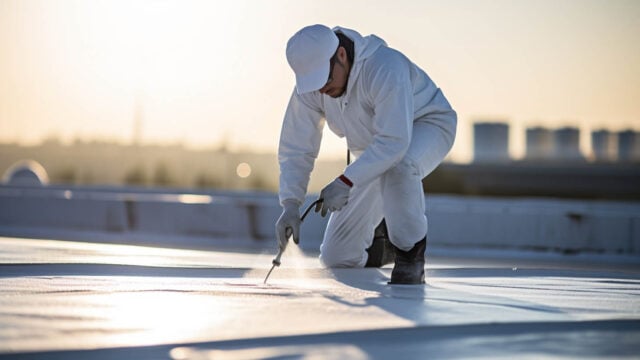
If you are searching for flat roofing Salt Lake City, you are probably trying to solve one of two problems. Either you need a low-slope roof system that will perform well on a local building, or you already have a flat or low-slope roof that is leaking, aging, ponding, or reaching a decision point between repair and replacement. Both are common because Salt Lake City puts real stress on low-slope assemblies. The combination of intense UV exposure, winter moisture, thermal movement, wind, and rooftop mechanical traffic means these roofs have to do more than just look finished from the ground.
Flat roofing also creates confusion because multiple systems can look similar to a property owner while behaving very differently in installation, repairability, and lifecycle cost. TPO, PVC, EPDM, modified bitumen, coatings, and metal-adjacent low-slope assemblies all show up in the local market. One contractor may push a membrane replacement. Another may recommend restoration. Another may say the roof only needs maintenance and localized repairs. Without a framework, it can be hard to tell whether those answers are competing solutions to the same building or responses to completely different assumptions.
This guide is built to help Salt Lake City owners, managers, and homeowners understand how flat roofing decisions should be made in 2026. We will cover which systems are common, what local climate does to low-slope roofs, how to compare repair, coating, and replacement paths, and what questions make contractor proposals easier to judge. If your goal is a roof that stays dry instead of just a bid that sounds decisive, start here.
Why Flat Roofing in Salt Lake City Is a Climate and Drainage Problem First
Flat roofing Salt Lake City decisions should start with one simple truth: low-slope roofs succeed or fail based on water management and membrane discipline. Salt Lake climate adds pressure from multiple directions. Summer sun can push roof-surface temperatures high enough to stress seams, flashings, and rooftop accessories. Winter snow and melt cycles test drainage paths and edge details. Wind can lift weak perimeter components. And the city's broad mix of older commercial buildings, mixed-use properties, and residential additions means many roofs are carrying years of retrofit history that influence today's leak behavior.
This is why flat roofs are often misunderstood. From the street, they can look simple. In practice, they depend on very precise details. Drains, scuppers, overflow strategy, tapered insulation, seam integrity, rooftop equipment curbs, edge securement, and penetration flashing all matter more than the broad field membrane alone. A large percentage of low-slope failures are not caused by the membrane being conceptually wrong. They happen because drainage was weak, details were rushed, or the assembly was maintained too loosely for the building's exposure.
Salt Lake buildings also bring logistical challenges. Some roofs carry a lot of rooftop equipment. Some have parapets and tight access. Some need work staged around tenants, traffic, or operating businesses. All of that affects what system makes sense and how the scope should be priced. The roof is not just a waterproof layer. It is a building asset that interacts with operations, maintenance, and long-term planning.
Once owners frame the problem that way, flat roofing becomes easier to understand. The right question is not what is the best flat roof. It is what low-slope system and drainage strategy fit this building, this climate, and this ownership horizon.
Professional Takeaways
- Low-slope roofing in Salt Lake City is heavily shaped by UV, snowmelt, wind, and drainage demands.
- Flat roofs often fail at details such as drains, edges, and penetrations rather than in the open field alone.
- Building access, rooftop equipment, and occupancy constraints all affect system choice.
- The best flat roof is the one that fits the building and its water-management realities.
- Owners make better decisions when they treat low-slope roofing as an asset-planning issue.
Which Flat Roofing Systems Make Sense in the Salt Lake Market
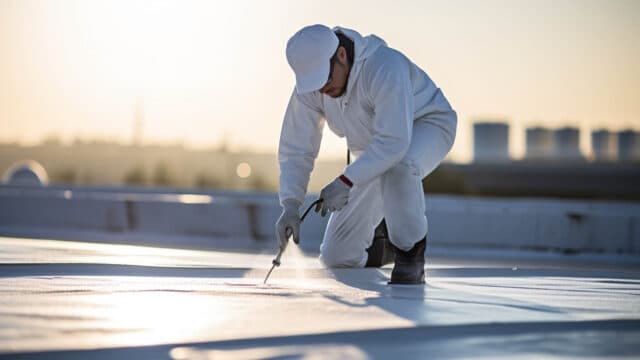
The most common low-slope systems in this market include TPO, PVC, EPDM, modified bitumen, and restoration coatings used on qualifying roofs. TPO is popular because it is reflective, widely available, and capable of delivering strong seam performance when heat welded correctly. PVC can be attractive on buildings where grease, chemicals, or more demanding exposure conditions matter. EPDM remains relevant for certain applications because of its flexibility and proven history, though seam strategy and repair planning deserve close attention. Modified bitumen still appears on many roofs and can perform well when installed and maintained properly, especially where layered durability and traffic resistance are priorities.
What owners should avoid is assuming one system is always best. A restaurant roof, a warehouse, a small office, and a residential low-slope addition may all need different answers. Reflectivity, foot traffic, contamination exposure, attachment method, repair culture, and future service needs all shape which membrane makes sense. Some roofs also qualify for restoration rather than replacement, but only when moisture conditions, substrate integrity, and drain behavior support that path honestly.
Accessory design matters just as much as membrane family. Cover board selection, edge metal, tapered insulation, walkway pads, curb details, and warranty level often affect real performance more than the simple system label on the proposal. This is why a generic square-foot price pulled from the internet tells owners very little. The membrane category helps, but the assembly details decide whether the roof is truly appropriate for the building.
A useful approach is to ask contractors why they prefer a given system for your building specifically. If they cannot explain the choice in terms of use, exposure, maintenance needs, and drainage behavior, the recommendation may be more habitual than thoughtful.
Professional Takeaways
- TPO, PVC, EPDM, modified bitumen, and coatings can all be valid in the right low-slope context.
- The best membrane depends on building use, exposure, maintenance strategy, and detail complexity.
- System choice should be explained in relation to the actual building, not just contractor habit.
- Accessory components and insulation design influence performance as much as membrane family.
- Restoration is only viable when the existing roof still qualifies structurally and moisture-wise.
What Usually Causes Flat Roof Leaks in Salt Lake City
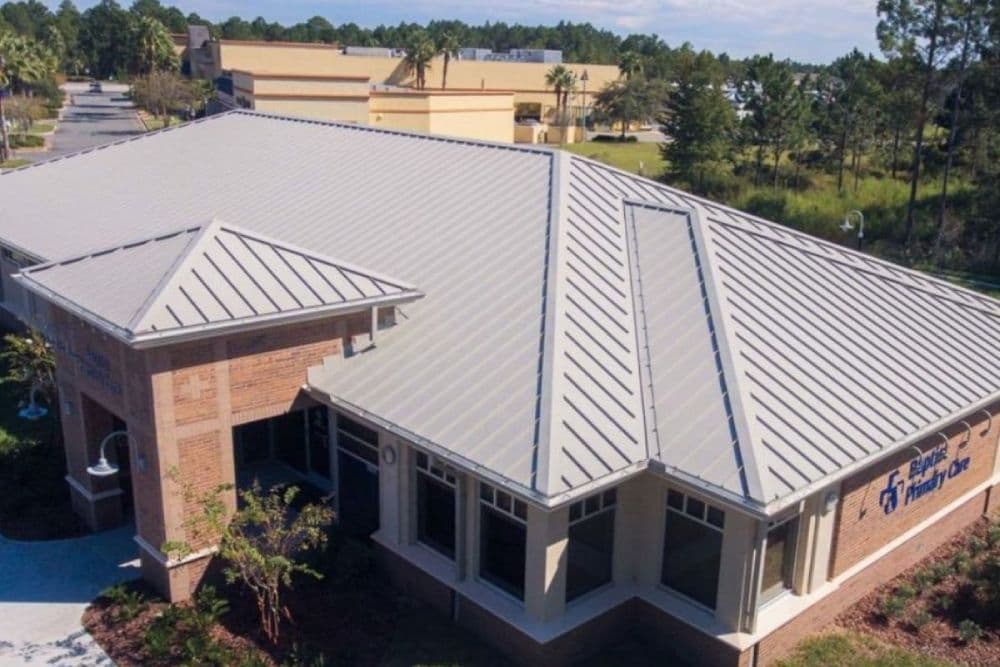
Most flat roof leaks in Salt Lake City trace back to a short list of recurring conditions: poor drainage, seam stress, flashing failures, edge-metal issues, punctures from rooftop traffic, and aging around equipment curbs. Ponding water deserves special attention because it is often treated like a cosmetic nuisance when it is really a structural clue that the roof is not shedding water efficiently. Persistent ponding adds weight, increases exposure time at seams, and can accelerate the decline of already weak details.
Drainage issues do not always mean the membrane is wrong. They may point to tapered insulation design, clogged drains, blocked scuppers, or settlement that changed the roof plane over time. That distinction matters because a roof can be repaired repeatedly without solving the reason water keeps concentrating in the same area. Owners often spend years funding leak response when the real issue is a drainage geometry problem hiding in plain sight.
Edge conditions are another common failure point. Low-slope roofs take a lot of stress at parapets, perimeter metal, and wall transitions. Wind and thermal movement work those details continuously, and once the edge starts to loosen, the membrane system often follows. Rooftop mechanical trades can also become part of the problem. HVAC work, service traffic, and penetrations added after the original roof installation are classic ways a disciplined low-slope system gets compromised over time.
The practical lesson is that flat roof leaks should be diagnosed as system problems, not only as wet spots. The source may be a seam, but the cause may be drainage. The leak may appear by a wall, but the real issue may be movement at the edge metal. That is why inspection quality matters so much on low-slope buildings.
Professional Takeaways
- Drainage problems and ponding water are among the most common low-slope failure drivers.
- Many flat roof leaks are caused by detail failures, not by open-field membrane alone.
- Settlement, clogged drains, and weak taper design can keep creating repeat leak zones.
- Perimeter metal, parapets, and rooftop equipment areas deserve close inspection.
- The visible leak location is often different from the real root cause on a flat roof.
Repair, Coating, or Replacement: How Owners Should Compare the Options
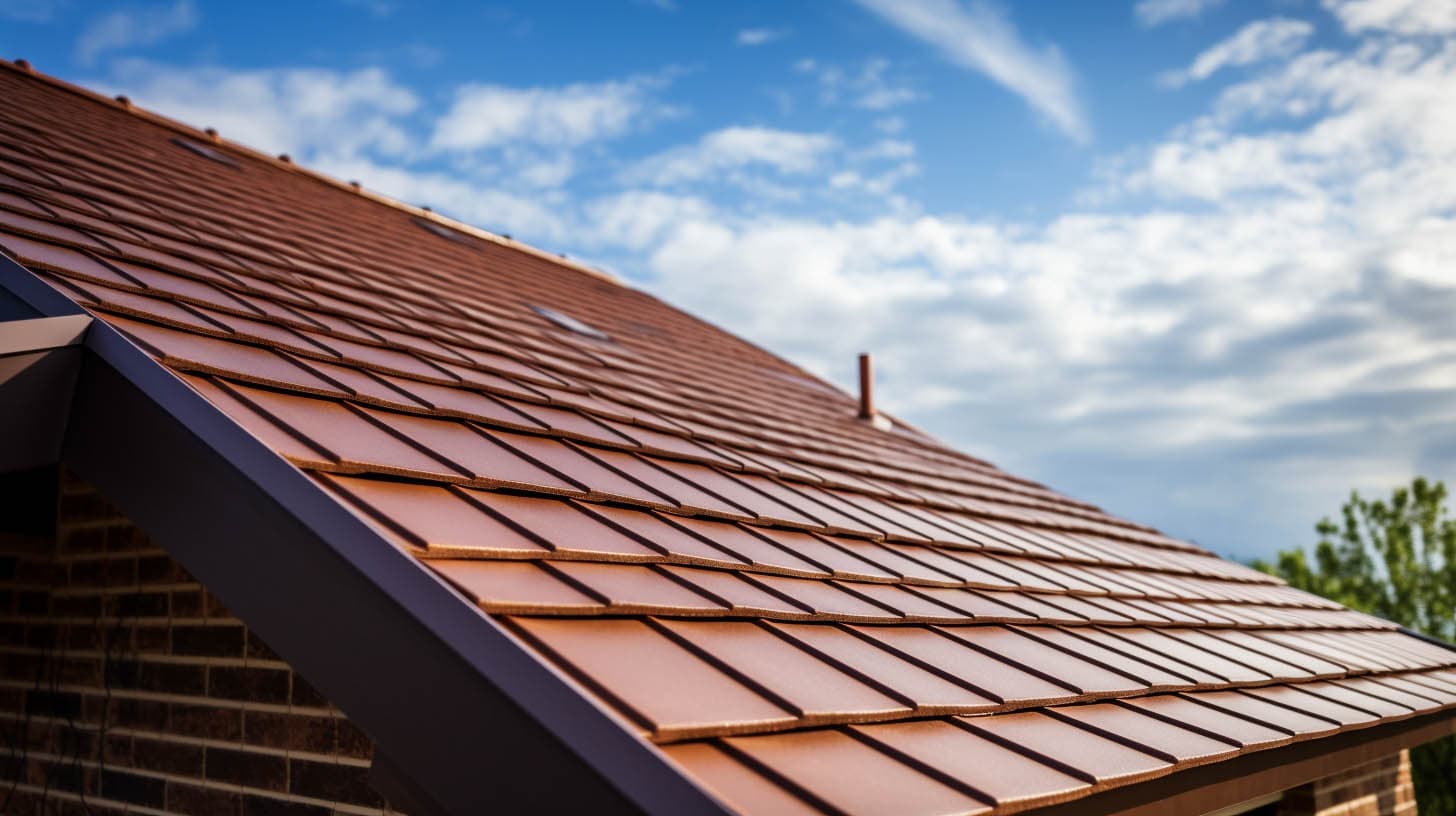
Owners usually end up comparing three paths on an aging low-slope roof: targeted repair, restoration or coating, and full replacement. Repair is strongest when the problem is isolated and the rest of the roof still has structural and moisture integrity. Coating or restoration can make sense when the membrane is weathered but largely salvageable, moisture intrusion is limited, and the goal is to extend life without full tear-off. Replacement is the right answer when wet insulation, repeated leak history, drainage correction needs, or assembly deterioration make partial measures increasingly inefficient.
The mistake is comparing those options only on first cost. A coating proposal may look dramatically cheaper because it is solving a narrower class of problem. A replacement may look expensive because it includes insulation, taper correction, edge work, and stronger warranty value. The building owner has to decide not just what costs less today, but what buys the right amount of certainty and service life for the building's future.
Salt Lake owners should also consider disruption. Some buildings can tolerate staged repair work. Others need a cleaner, more definitive project because inventory, tenants, or business operations make repeat leaks too costly. That operational context often changes the economics of the roof choice more than the membrane price itself.
Good contractors help owners compare these options in lifecycle terms. They explain what the roof likely has left, what hidden risks remain, and what level of performance each option is realistically expected to deliver. That kind of comparison is much more valuable than a flat repair versus replace slogan.
Professional Takeaways
- Repair, coating, and replacement solve different classes of low-slope roofing problems.
- First cost alone is not enough to compare low-slope options intelligently.
- Lifecycle value and disruption risk often matter more than membrane price alone.
- Restoration only makes sense when the roof still qualifies structurally and moisture-wise.
- The right low-slope choice depends on both building condition and ownership strategy.
How to Compare Flat Roofing Contractors in Salt Lake City
When comparing contractors for flat roofing Salt Lake City, the first question should be whether they think in systems or just in product labels. Ask what they believe is causing the current problem, whether they think the roof is a repair, restoration, or replacement candidate, and how they evaluated drainage, edge conditions, and hidden moisture risk. A low-slope contractor who cannot explain those items clearly is probably not seeing the whole roof.
It is also worth asking about documentation. Strong flat-roof proposals usually include photos, drawings or marked-up observations, and written assumptions about drains, insulation, edges, penetrations, and hidden conditions. That level of detail makes the bid easier to compare and reduces surprises when the project starts. Generic low-slope estimates that say little more than install new membrane often look clean on paper while leaving the most expensive variables undefined.
Contractors should also be able to explain how the roof project fits the building's operations. Will they need staging? Are there tenant concerns? How will rooftop equipment and service traffic be managed? What temporary waterproofing measures exist if weather interrupts the project? Low-slope roofing is often less about dramatic pitch work and more about disciplined planning. The best contractors usually communicate that clearly from the beginning.
In the end, the strongest contractor is usually the one who makes the roof easier to understand. If they can tie the membrane recommendation, drainage strategy, scope logic, and likely outcome together in plain terms, the building owner is in a much stronger position to approve the right project.
Professional Takeaways
- Strong flat-roof contractors explain cause, drain strategy, and lifecycle fit clearly.
- Detailed proposals should address edges, penetrations, insulation, and hidden-condition assumptions.
- Low-slope contractor quality often shows up in documentation and planning discipline.
- Building operations and rooftop traffic should be part of the scope conversation.
- The best proposal is usually the one that makes the roof easier to understand, not just cheaper.
What Salt Lake Owners Should Budget for Maintenance on a Low-Slope Roof
One of the biggest mistakes owners make with low-slope roofs is treating maintenance as optional until a leak appears. Flat roofing in Salt Lake City performs better when drains are cleared, seams are reviewed, rooftop traffic is controlled, and small detail failures are corrected before they become interior damage events. That is not glamorous work, but it is often the cheapest way to preserve membrane life and delay bigger capital decisions.
Maintenance matters even more on buildings with lots of equipment or service visits. Every HVAC technician, satellite installer, electrician, or other trade that walks the roof adds some level of risk. Walkway pads, service coordination, and periodic condition checks help reduce the chance that the roof turns into the last trade's forgotten problem. On many buildings, what looks like roof aging is really the cumulative effect of unmanaged rooftop activity.
Salt Lake owners should also budget for inspections after meaningful weather events. Wind, snowmelt, and heavy runoff can change edge conditions or expose weak points quickly. A roof that appears fine from the ground may still need a modest maintenance response to keep one storm from becoming a much larger repair later. These inspections are especially important when the building relies heavily on the roof to protect equipment, inventory, or tenant continuity.
Viewed this way, flat-roof maintenance is not a side issue. It is part of the operating cost of keeping the roof in a repairable, restorable condition for as long as possible. That makes it one of the smartest budget lines an owner can carry.
Professional Takeaways
- Routine maintenance is often the cheapest way to extend low-slope roof life.
- Drain cleaning and small detail repairs help prevent larger leak events later.
- Rooftop mechanical traffic is a major maintenance factor on many low-slope buildings.
- Post-storm inspections help catch edge and seam issues before they become interior damage.
- Maintenance spending helps preserve repairability and delays forced replacement.
Why Access, Occupancy, and Building Use Matter on Low-Slope Projects
One of the easiest flat-roofing mistakes owners make is assuming the roof scope can be judged independently from the building underneath it. On many Salt Lake City properties, access and occupancy shape the roofing decision almost as much as membrane type. A warehouse, restaurant, office, retail space, mixed-use property, or residential addition each imposes different demands on staging, work windows, odors, tear-off planning, and leak risk tolerance. A system that is technically workable may still be the wrong project fit if it creates too much disruption for the building’s actual use.
Access changes labor efficiency too. Tight downtown or urban-adjacent sites, parapet-heavy roofs, rooftop equipment congestion, and limited loading areas can all affect how the work is sequenced and priced. This is one reason low-slope bids vary so much. Two contractors may be pricing the same membrane family but very different assumptions about staging, protection, and project logistics. If the owner does not ask about those assumptions, the cheaper number can look better than it really is.
Occupancy sensitivity matters because some buildings cannot tolerate water intrusion, odor, or repeated small disruptions. In those cases, the value of a more definitive project or better project sequencing can exceed the value of the lowest first-cost option. This is especially true where tenants, inventory, equipment, or business continuity make leak risk expensive. A low-slope roof is not just protecting the deck below it. It is protecting the function of the property.
That is why the best contractors ask operational questions early. They want to know how the building is used, what cannot be interrupted, and what level of schedule discipline is necessary for the project to count as successful. When low-slope roofing is planned that way, owners get a roof scope that fits both the building and the business under it.
Professional Takeaways
- Low-slope roofing should be evaluated in the context of how the building is used.
- Access and staging constraints can change both price and project sequencing significantly.
- Occupancy sensitivity can make disruption risk as important as membrane price.
- The cheapest low-slope scope may ignore logistics that the building cannot actually tolerate.
- Strong flat-roof contractors ask operational questions early because they affect roof strategy.
Wrapping it up
Flat roofing Salt Lake City decisions work best when they start with the building instead of the membrane brochure. Low-slope roofs here have to handle UV, winter moisture, wind, rooftop traffic, and drainage demands that expose weak details quickly. The right roof is the one that fits the building's use, the roof's current condition, and the owner's tolerance for risk, disruption, and future maintenance.
For owners and managers, that means asking better questions. Not just what system is being proposed, but why. Not just what the first price is, but what level of certainty, service life, and drainage correction that price is buying. Once the roof is viewed as a system and an asset, contractor recommendations become easier to compare and low-slope projects become much easier to budget intelligently.
That is how flat roofing decisions start creating fewer surprises and more dependable performance across the long life of the building.
Information Center
Questions this guide answers
Quick answers tied to flat roofing Salt Lake City.
