
Types of Roof Drainage Systems (2026)
By Skyridge Ricky • March 28, 2026 • 14 min read


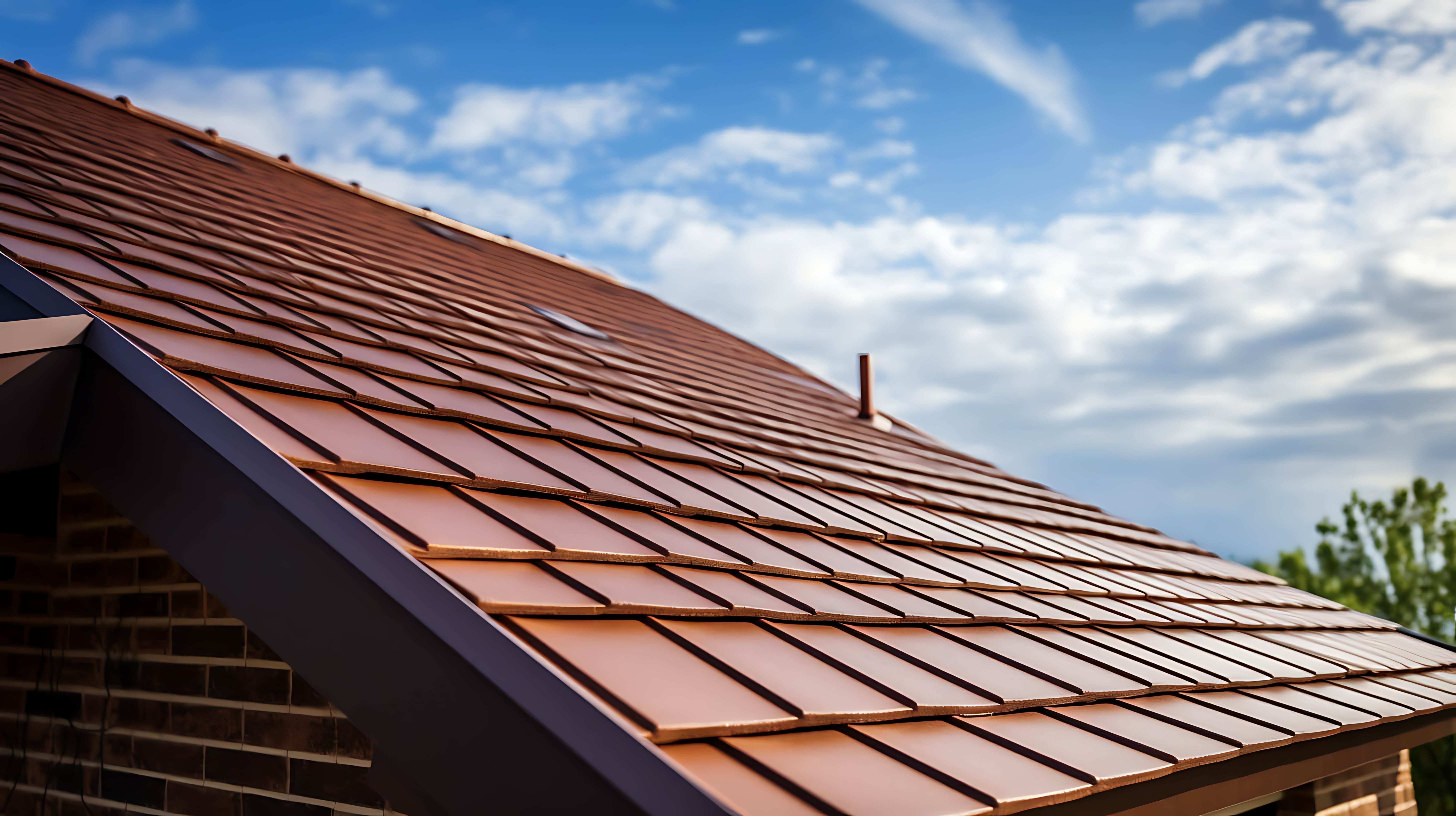
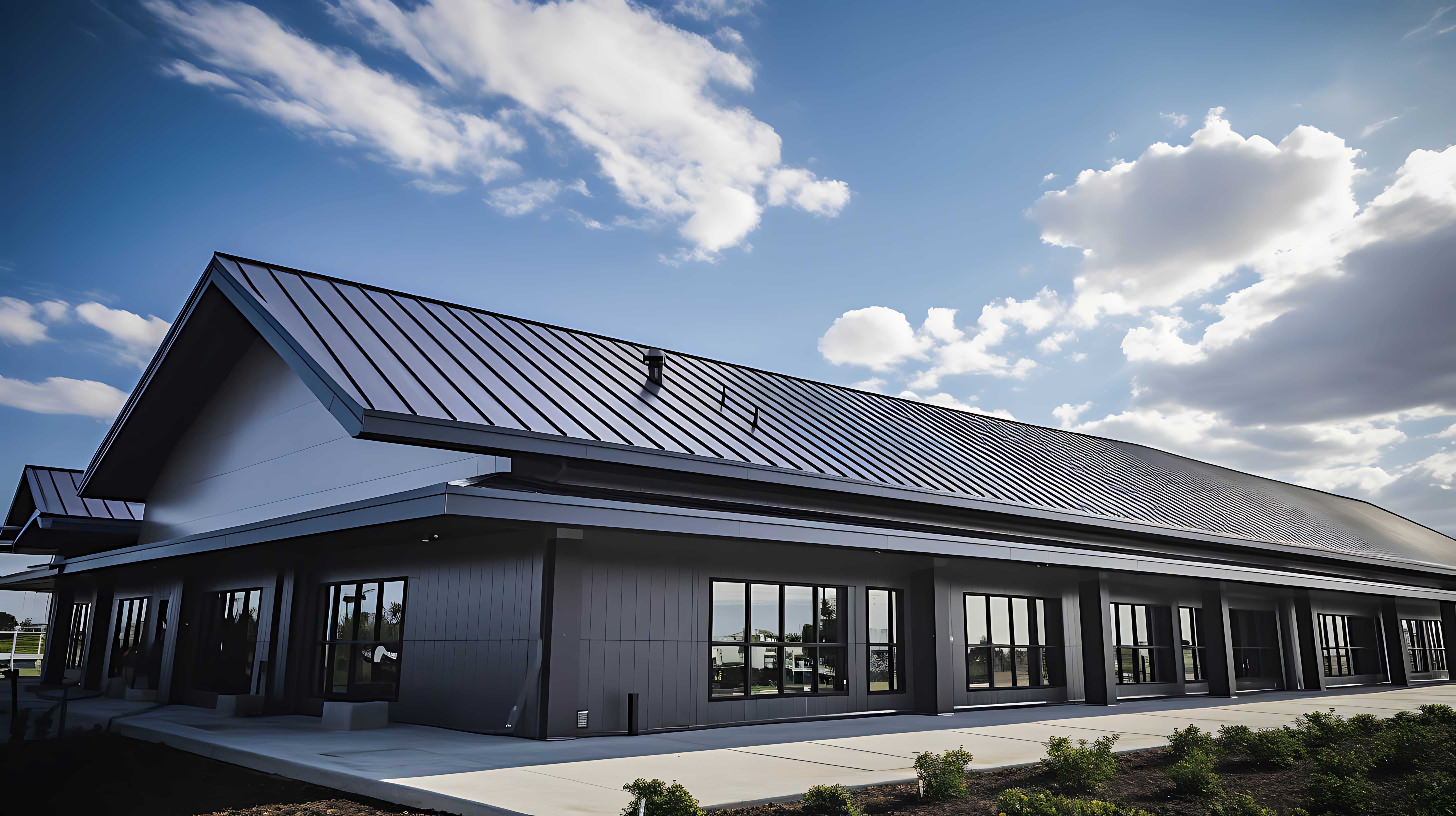
If you are searching for types of roof drainage, you are asking one of the most practical roofing questions there is: how does water actually leave the roof, and what happens when the system is wrong? That matters more than many homeowners realize because roofs rarely fail just because rain exists. They fail because runoff slows down, backs up, pools, overshoots, or gets forced into a weak detail that was never supposed to stay wet that long in the first place.
Roof drainage is also broader than most people expect. On a steep-slope home, drainage may seem like a simple gutter conversation until a bad valley, a missing kickout, or a clogged downspout starts sending water where it should never go. On low-slope roofs, drainage becomes even more technical because scuppers, internal drains, tapered insulation, crickets, and overflow planning all matter. The roof covering is only part of the weather system. The path the water takes is the rest of it.
This guide explains the main types of roof drainage in 2026, how each one works, where each system fits best, and how homeowners or building owners should compare them. If the goal is a roof that stays dry because water moves correctly rather than because you keep chasing leaks after the fact, start here.
Replacement And Buying Paths
Buying guides and replacement articles should route readers into the service pages, pricing tools, and quote path that convert research into projects.
Next steps from this article should include roof replacement services, roof inspection services, shingle roofing services, metal roofing systems.
Request a roofing estimate
Turn buying research into a real estimate.
Request a roofing estimateWhy Roof Drainage Is Really a System, Not a Single Part
When people talk about roof drainage, they often jump straight to gutters or roof drains. Those components matter, but drainage starts earlier. It begins with roof slope, geometry, and the way water is directed toward exits. Valleys, crickets, saddles, eaves, edge metal, gutters, downspouts, scuppers, and internal drains are all part of the same movement system. If one piece is wrong, the water does not politely stop. It finds the next weak point and keeps going.
That is why leak diagnosis so often turns into drainage diagnosis. A ceiling stain near one wall may actually trace back to an overflowing valley higher up. Rot at the fascia may be caused by gutter alignment, but it may also reflect a missing drip-edge kick or a roof plane that overshoots the gutter entirely. Ponding on a low-slope roof may point to clogged drains, but it may also signal poor taper design. The visible symptom and the root drainage problem are often not in the same exact place.
Thinking in systems helps homeowners ask better questions. Not just do I have gutters, but where is the water being asked to go? Not just do I have roof drains, but do I have enough slope and enough pathways for those drains to function under real conditions? Once the roof is seen as a movement problem instead of just a material problem, drainage decisions get much clearer.
This is also why good roofing contractors obsess over transitions. Water picks up speed and volume as it travels, so the exact place where the roof asks runoff to change direction or leave the building is where details matter most. A sound roof covering still needs a sound drainage path behind it.
- Roof drainage starts with slope and geometry, not just with gutters or drains.
- Valleys, crickets, edges, and exits all work together as one water-management system.
- Visible leak locations often do not match the root drainage problem.
- Drainage questions get clearer when homeowners focus on where water is being asked to go.
- Transitions are some of the most important details in any drainage system.
The Main Types of Roof Drainage on Steep-Slope Roofs
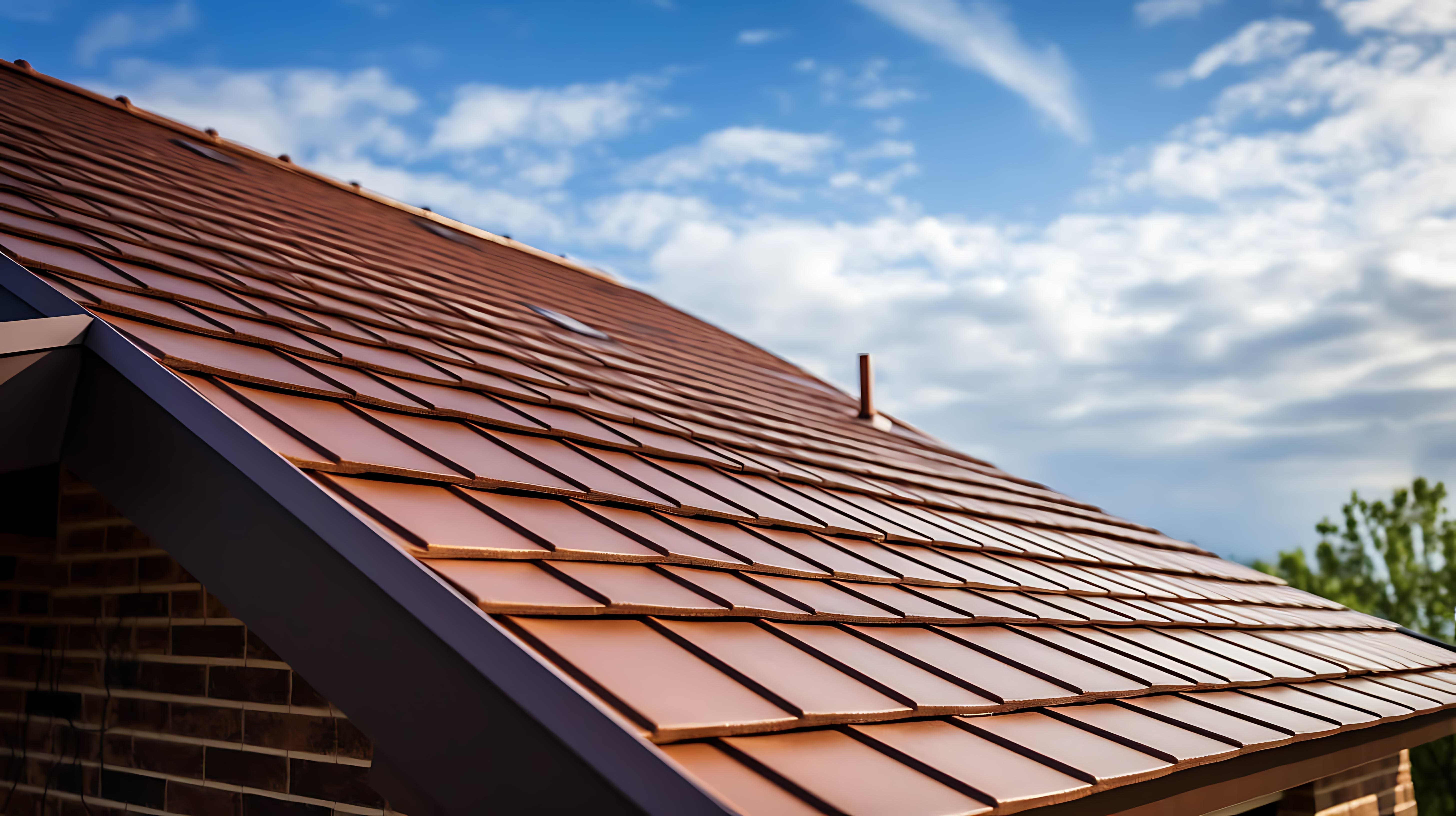
On steep-slope roofs, the most common drainage type is perimeter drainage through eaves, gutters, and downspouts. Gravity does most of the work because the roof pitch naturally moves water downhill. But even on a simple steep roof, valleys play a major role because they collect water from multiple roof planes and concentrate it into a faster, heavier flow path. That means valley flashing, shingle weaving, and debris management become essential drainage details, not cosmetic ones.
Gutters and downspouts are the visible drainage components most homeowners recognize, but they only work well when the roof edge and gutter geometry are aligned properly. Water needs to leave the roof cleanly and enter the gutter, not shoot behind it or overshoot it. Downspouts then have to move that water far enough away from the building that foundation, siding, or soffit problems do not simply replace the original roof-edge issue.
Kickout flashing and diverter details also belong in this category. At roof-to-wall intersections, especially where a lower roof terminates against siding, water often needs a final push away from the wall and into the gutter. When that small detail is missing, the wall can take years of runoff abuse before anyone realizes the problem was really drainage, not siding alone.
Steep roofs feel simple because the water moves fast, but speed is exactly why the details matter. The more confidently a steep roof sheds water, the more precisely the edges and collection points have to be built.
- Steep-slope drainage usually relies on eaves, gutters, downspouts, and valley flow.
- Valleys are major concentrated drainage zones and deserve special detailing.
- Gutter performance depends on roof-edge alignment, not just on gutter size alone.
- Kickout flashing is a critical drainage detail at roof-to-wall intersections.
- Fast-moving runoff on pitched roofs still requires disciplined collection and discharge planning.
The Main Types of Roof Drainage on Low-Slope and Flat Roofs
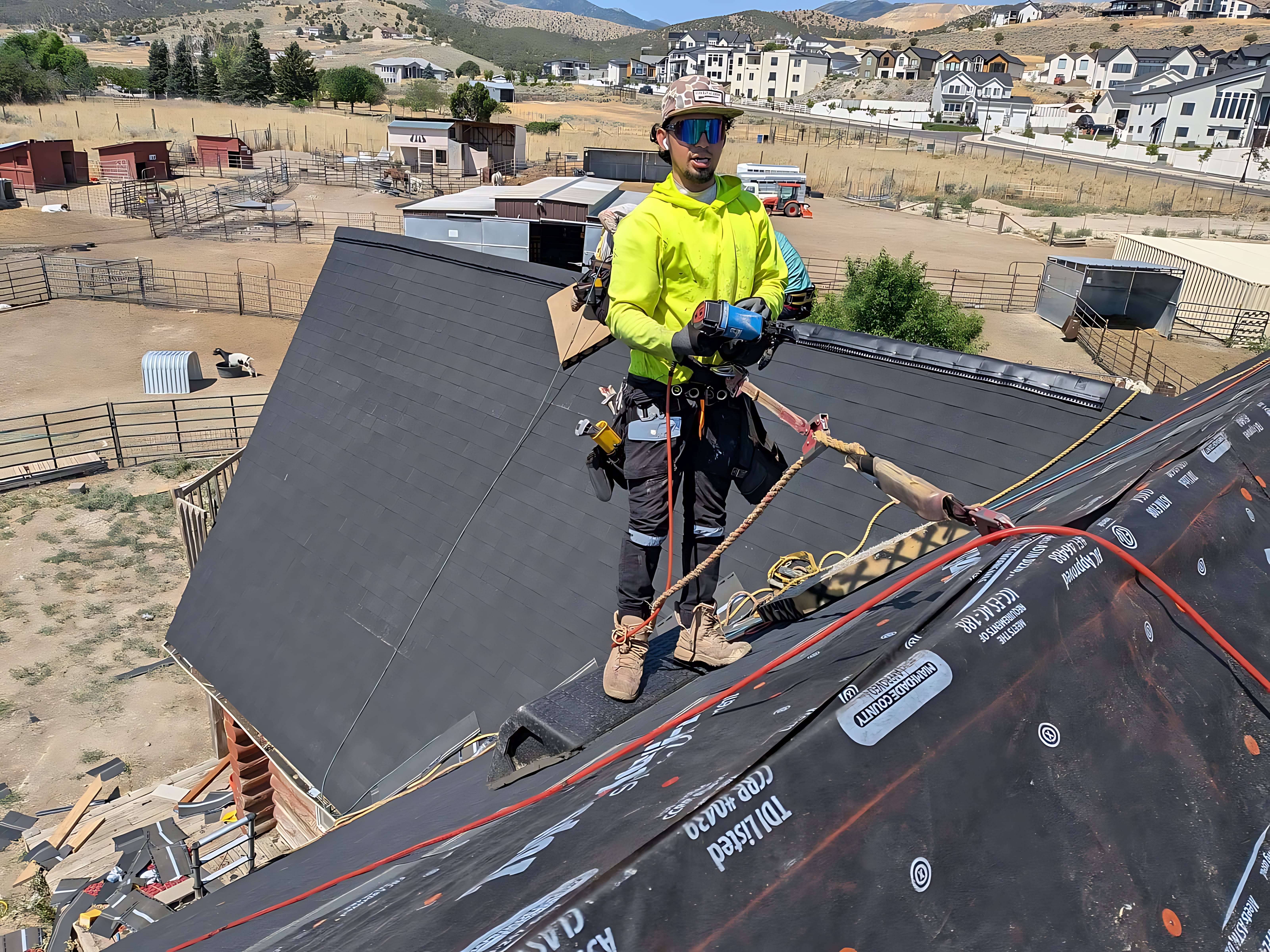
Low-slope and flat roofs use different drainage strategies because water does not leave the building as quickly on shallow pitch. The most common systems are internal drains, scuppers, and perimeter gutters supported by carefully planned slope. Internal drains are roof drains tied into piping that moves water down through the building or structure. Scuppers are openings through parapet walls or edge conditions that let water exit laterally. Perimeter gutters can also work, but only if the roof plane directs runoff effectively toward them.
The key issue on low-slope roofs is that drainage cannot be assumed. It has to be engineered or built deliberately through tapered insulation, substrate correction, or slope design. Without that, water sits. Once water sits, seams, flashings, and penetrations stay wet much longer than intended and the roof becomes far more vulnerable to leaks and premature wear. That is why low-slope drainage conversations often involve design language such as taper packages, sumps at drains, cricketing around curbs, and overflow planning.
Overflow provisions matter too. If a primary drain clogs during heavy rain, the roof needs another escape path. Otherwise water weight and backup risk increase fast. On commercial buildings and complex low-slope assemblies, overflow details are not optional nice-to-haves. They are part of how the roof protects the structure when the main drainage path is compromised.
The practical lesson is that flat-roof drainage is usually less forgiving than homeowners assume. The roof can look broad and simple while hiding a very specific topography that determines whether water moves in hours or stays in place long enough to become a recurring maintenance problem.
- Low-slope roofs commonly use internal drains, scuppers, or perimeter gutters.
- Drainage on flat roofs must be intentionally created through slope planning and detailing.
- Ponding water is often a sign of poor taper, clogged exits, or weak roof geometry.
- Overflow drainage is a major safety and performance consideration on low-slope buildings.
- Flat roofs are less forgiving because slow water movement magnifies detail failures.

How Valleys, Crickets, and Saddles Influence Roof Drainage
Not all drainage components are visible exits. Some of the most important drainage features are the geometric elements that direct water before it ever reaches a gutter or drain. Valleys collect runoff from multiple roof planes and focus it into one channel. Crickets and saddles split or redirect water around obstacles such as chimneys, curbs, and walls. On low-slope roofs, these built-in routing tools can determine whether the water keeps moving or gets trapped behind an obstruction.
Homeowners often underestimate these details because they are not always obvious from the ground. But on many roofs, the difference between a chronic leak zone and a dry transition is one correctly shaped cricket or one valley detailed to handle the actual water volume passing through it. If a drainage path pinches down too tightly or if an obstacle interrupts flow without a redirect strategy, water starts exploring other routes very quickly.
This is especially important around chimneys, dormers, large wall transitions, skylights, and rooftop units.
The bigger or more complex the obstacle, the more likely the roof needs a formal drainage adjustment to get water around it.
In that sense, drainage is partly a geometry problem and partly a flashing problem.
Good roofs solve both together.
That is why good contractors study how water moves across the roof instead of only looking at where it currently leaks.
The leak may show up beside a wall, but the real drainage failure may have begun several feet uphill where a poorly shaped saddle started backing water into the wrong detail.
- Valleys, crickets, and saddles are drainage-routing elements, not just roof-shape features.
- These details help move water around obstacles before it reaches a drain or gutter.
- Poor geometry around chimneys, walls, and rooftop units often creates chronic leak zones.
- Drainage design is partly about slope and partly about how flashing supports water movement.
- The root of a leak may begin uphill from the place where water finally appears.

How to Choose the Right Roof Drainage Approach for the Building
The right drainage approach depends on roof type, building use, climate exposure, maintenance habits, and how much complexity the roof geometry introduces. A simple pitched home may only need disciplined gutters, valleys, and downspout discharge. A low-slope commercial building may need internal drains, overflow scuppers, and tapered insulation. A mixed roof or retrofit project may need a combination of drainage types because different roof sections behave differently.
Maintenance also affects the decision. Internal drains and scuppers can work very well, but they require inspection and debris control. Gutters and downspouts are familiar and visible, but they still fail if they overflow, clog, or discharge too close to the building. Owners should ask not only which drainage type fits the roof, but which one they are realistically prepared to maintain over time.
Climate matters too. Heavy storms, snowmelt, leaf load, wind-driven runoff, and freeze-thaw conditions all change how aggressive the drainage strategy needs to be. Some buildings need more redundancy, more overflow planning, or more carefully shaped transitions than others. The best drainage system is the one that moves water reliably under real local conditions, not just the one that looks simplest on a drawing.
That is why roof drainage should be discussed during both design and repair work. If a roof keeps leaking in the same areas, the answer may not be a better patch. It may be a better path for water to leave the building in the first place.
- The right drainage system depends on roof type, building use, climate, and maintenance habits.
- Different roof sections on the same building may need different drainage strategies.
- Owners should choose drainage systems they are realistically prepared to maintain.
- Local weather conditions often determine how much drainage redundancy is necessary.
- Repeated leak zones often point to a bad water path rather than a bad patch alone.
What Homeowners Should Inspect and Maintain in a Roof Drainage System
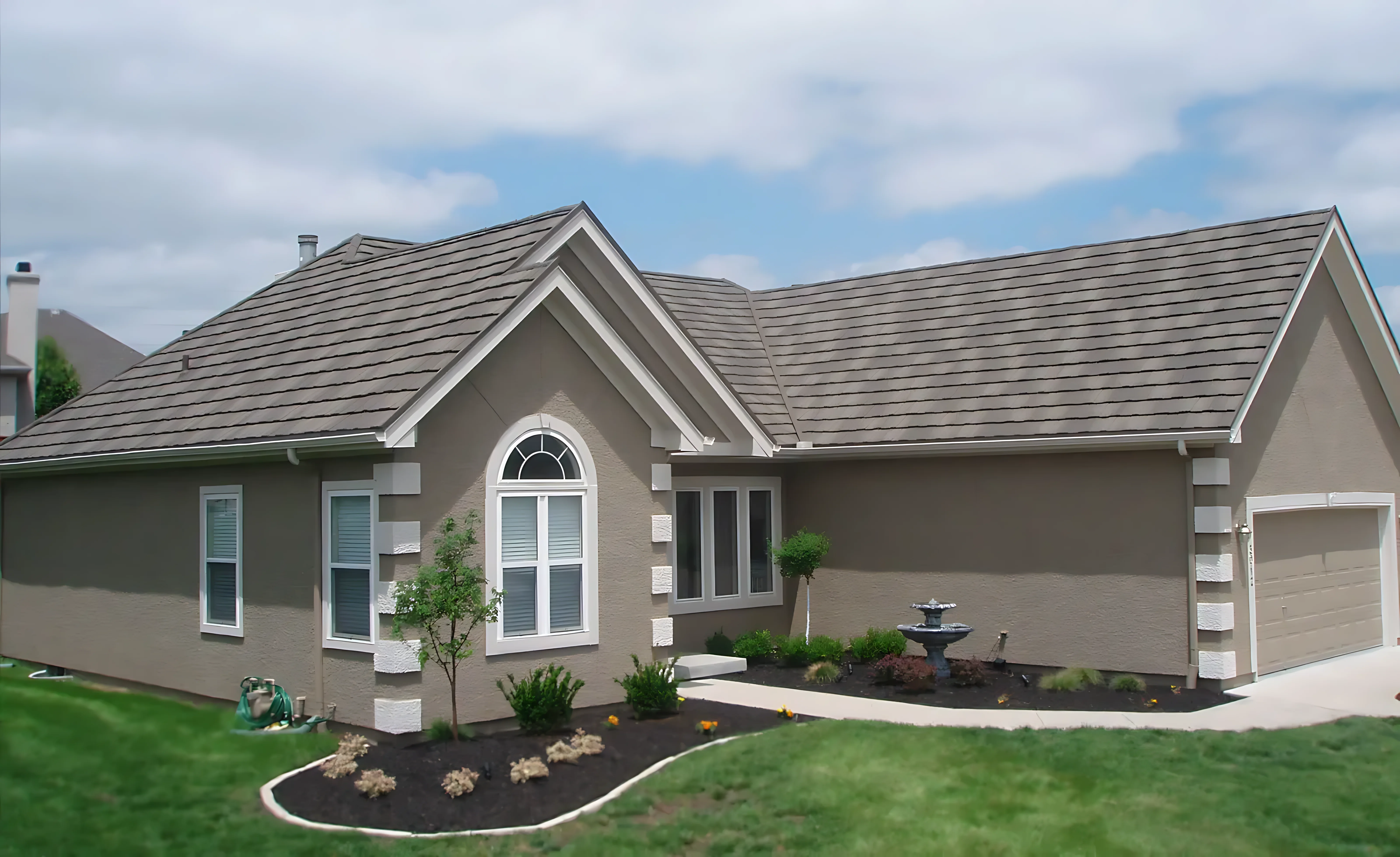
Once a roof drainage system is installed, maintenance becomes the difference between a design that keeps working and one that gradually fails in silence. Gutters need cleaning. Downspouts need discharge paths that stay open. Valleys need to stay free of debris. Scuppers and internal drains need regular inspection, especially after storms or seasonal leaf drop. Crickets and saddles need to remain intact around obstacles. If any of those pieces clog or deform, water starts behaving differently immediately.
Homeowners should also watch for early warning signs: water behind gutters, peeling fascia paint, repeat staining at roof-to-wall intersections, ponding on low-slope areas more than a day or two after weather, overflow marks near scuppers, or concentrated granule and debris buildup in one spot. Those clues usually appear before the major leak, not after. Catching them early is far cheaper than waiting for interior water damage to announce the same drainage problem more dramatically.
One of the best maintenance habits is photo documentation. If a certain area repeatedly catches water or debris, documenting that pattern over time helps a contractor diagnose whether the issue is a clog, a geometry problem, or a failing detail. Drainage issues are often recurring, and recurrence is useful evidence if the owner actually keeps track of it.
In practical terms, drainage maintenance is some of the highest-value roof maintenance there is. Water has to leave the roof every time it rains or melts. Making that path easy and predictable is one of the most reliable ways to protect the roof, the walls, and the structure underneath.
- Roof drainage systems need ongoing maintenance to keep working as designed.
- Gutters, downspouts, valleys, scuppers, and drains are all routine inspection points.
- Early warning signs often appear before interior leaks if homeowners know what to look for.
- Repeated debris or water collection in one area can be valuable diagnostic evidence.
- Drainage maintenance is one of the most cost-effective forms of roof protection available.
How Drainage Problems Show Up Before a Major Leak Happens
One of the most useful things homeowners can learn about roof drainage is that it usually fails gradually before it fails dramatically. Water staining behind gutters, overflow marks on fascia, dirt lines beneath scuppers, recurring debris accumulation in one valley, paint failure near roof-to-wall intersections, and ponding that lingers longer than it should are all warning signs that the roof is not moving water the way it was designed to. Waiting for interior water to confirm the problem is usually the most expensive possible way to diagnose drainage trouble.
These early signs matter because they often point to very different kinds of failure. Water behind the gutter may mean the drip edge or gutter alignment is wrong. Repeat overflow at one corner may signal a downspout restriction or an undersized collection point. Persistent ponding on a low-slope roof may indicate a clog, but it may also reveal that the roof was never sloped correctly in the first place. The visible clue is useful only when the homeowner or contractor asks what kind of water-path mistake would create that specific symptom.
That is why seasonal observation is valuable. Watching how the roof handles snowmelt, heavy summer storms, leaf season, or windy rain events helps reveal which parts of the drainage system are merely present and which parts are actually functioning well. Some problems only show up under certain load conditions, which is why the roof may appear fine most of the year and then suddenly misbehave during one type of weather over and over again.
In practical terms, spotting early drainage warning signs gives homeowners time to solve the water path before they have to solve water damage too. That is one of the biggest reasons drainage knowledge is worth having even if the roof is not leaking today.
- Drainage systems usually show early warning signs before major interior leaking begins.
- Different warning signs point to different water-path failures and should be read carefully.
- Seasonal observation helps reveal whether a drainage system is only present or truly functioning well.
- Early drainage correction is usually much cheaper than waiting for water damage inside the building.
- Understanding symptoms helps homeowners solve the path of water, not just the place it finally appeared.
Wrapping it up
Types of roof drainage is really a question about how roofs move water from broad surfaces to safe exits without letting runoff linger, back up, or force itself into the wrong detail. Steep roofs usually rely on gutters, downspouts, valleys, and roof-edge transitions. Low-slope roofs often rely on internal drains, scuppers, overflow paths, and carefully built slope. In both cases, the visible components only work when the geometry and details behind them are doing their jobs too.
For homeowners and building owners, the best drainage system is the one that fits the roof, the climate, and the maintenance reality of the property. Once water movement is understood as a system rather than a single part, roof decisions become clearer and leak problems become easier to solve at the root instead of at the symptom.
That is the real value of understanding drainage: it helps you protect the whole building by giving water the path it should have had from the beginning.
Questions this guide answers
Quick answers tied to types of roof drainage.
Utah Roof Repair Hub
Compare repair costs, local pros, and professional guidance to ensure your Utah roof is restored correctly and efficiently.
Core Repair Pages
Priority Local Pages
Utah Roof Inspection Hub
Get a comprehensive photo-audit and forensic roof assessment. We provide the documentation you need for insurance, real estate, or peace of mind.