Metal Roof Wind Damage: Is Your Roof Truly "Wasatch-Proof" in 2026?
By Skyridge Ricky • April 5, 2026 • 12 min read
I have spent most of my life on Utah roofs, and if there is one thing I have learned, it is that the wind in this state does not play fair. Whether it is a canyon breeze in Draper or a microburst in West Jordan, our weather is constantly looking for a weak spot to exploit. If you are searching for metal roof wind damage, you are probably wondering if that "lifetime" roof you invested in (or are thinking about buying) is actually as tough as the brochure says. In 2026, metal is still the heavyweight champion of residential roofing, but even a champion can get knocked out if they aren't prepared.
Most folks think a metal roof fails because the "metal breaks." That almost never happens. Metal roofs fail because the attachment fails. I have seen 24-gauge standing seam panels that could stop a literal hailstone get peeled back like a sardine can because the installer got lazy with the clip spacing or used the wrong fasteners. It is heartbreaking to see, especially when it is 100% preventable. We are going to dive deep into what wind actually does to a metal roof, how to spot the sneaky damage that most inspectors miss, and what a "Wasatch-Proof" installation looks like in the real world.
Don't wait for the next storm to find out if your roof is up to the task. Let's look at the forensic details of metal roofing wind resistance so you can sleep through the next big blow with total confidence.
Replacement And Buying Paths
Buying guides and replacement articles should route readers into the service pages, pricing tools, and quote path that convert research into projects.
Next steps from this article should include roof replacement services, roof inspection services, shingle roofing services, metal roofing systems.
Request a roofing estimate
Turn buying research into a real estimate.
Request a roofing estimateWhat Actually Happens to a Metal Roof in High Winds?
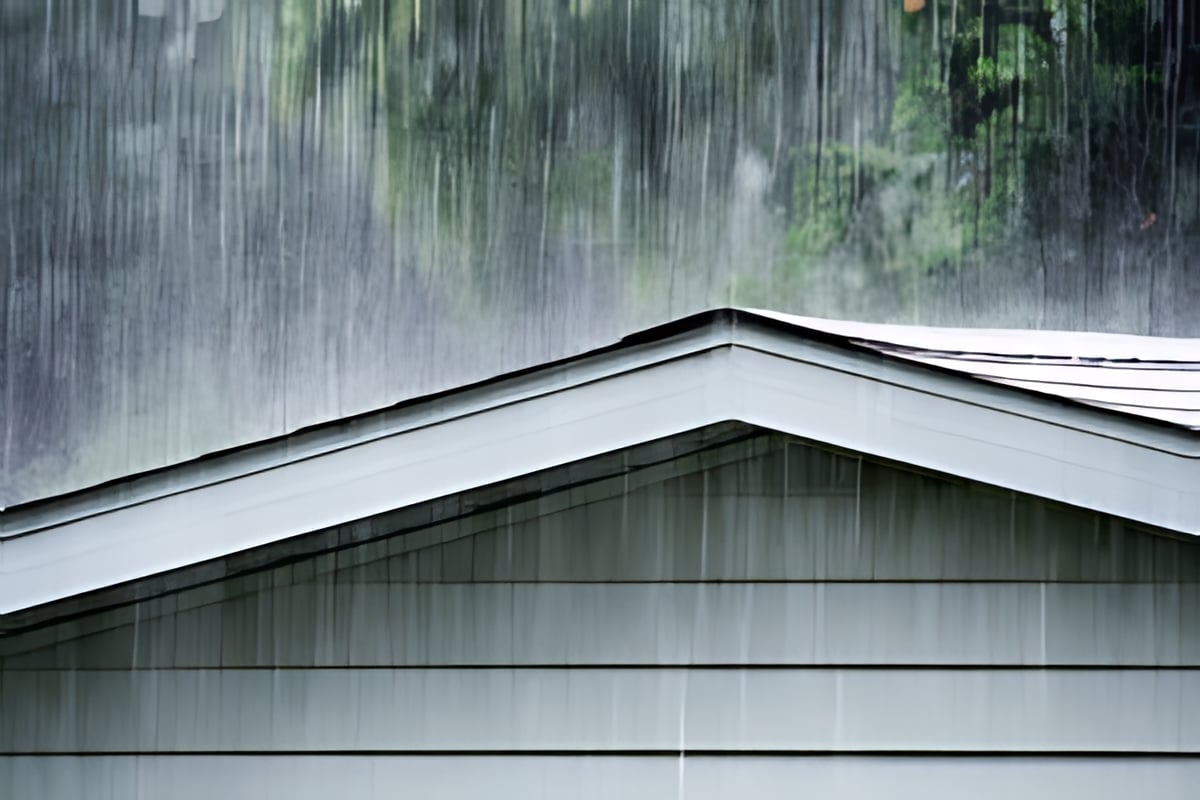
When the wind starts howling down the Wasatch Front, it doesn't just push against your house; it creates uplift. Imagine your roof is like an airplane wing. As air moves quickly over the surface, it creates a vacuum that tries to suck the panels right off the deck. This is why the edges and ridges of your roof are the most vulnerable. If the wind can get a "fingerhold" under a loose piece of trim or a poorly fastened panel edge, the pressure builds exponentially. In 2026, we are seeing more extreme wind events than ever, and those "rated" wind speeds in the product manuals are only half the story.
I remember a job in Spanish Fork where a client called me after a particularly nasty spring storm. They had a beautiful metal roof that was only five years old. From the ground, it looked fine. But when I got up on a ladder, I could see that the wind had actually "fluttered" the panels so hard that it had started to wallow out the fastener holes. It’s called "metal fatigue," and it’s a silent killer for roofs. The panels were still there, but they were no longer truly attached. One more big gust and that whole slope would have been in the neighbor's yard.
It’s not just about the panels themselves, though. The trim and flashing are usually the first things to go. If your drip edge or rake trim isn't secured with the right density of fasteners, the wind will grab it, bend it, and then use it as a lever to start tearing at the main roof panels. That’s why we obsess over the "small stuff" at Sky Ridge. Because in a 90-mph gust, there is no such thing as a small detail.
- Wind creates suction (uplift) that tries to lift panels off the roof deck.
- Edges, rakes, and ridges are the highest-stress areas during a wind event.
- Repeated "fluttering" can wallow out fastener holes, leading to long-term failure.
- Trim and flashing are the "weak links" that often fail before the main panels.
- Proper 24-gauge thickness provides the stiffness needed to resist bending under pressure.
The "Peel-Back" Effect: Why Fastener Choice and Spacing Matter
If you want to understand metal roof wind damage, you have to understand the "Peel-Back" effect. This happens when the wind gets under the leading edge of a panel—usually at the eave or the corner of the house—and starts to pull. If the first few fasteners don't hold, the panel bends upward, exposing more surface area to the wind. It’s a chain reaction that happens in seconds. By the time you hear the "bang" from inside the house, the damage is already done. This is why we use a much tighter fastener schedule at the perimeters of the roof than we do in the middle.
I see a lot of "shingle-hacks" try to install metal roofs, and they always make the same mistake: they use shingle-brain logic on a metal project. They’ll use standard screws with rubber washers on an exposed fastener system and just "eyeball" the spacing. In the Utah sun, those rubber washers get brittle and crack. Once they fail, the screw has a little bit of "play" in it. When the wind hits, that panel starts to vibrate, and it’s only a matter of time before the screw head pops off or the metal tears around it. That is why standing seam is the superior choice for high-wind areas—the fasteners are hidden and protected from the elements.
Spacing is the other big one. We follow strict engineering charts that tell us exactly how many clips or screws we need per square foot based on the height of your house and the local wind zone. If your contractor isn't talking about "uplift pressure" or "clip density," they are just guessing. And guessing is an expensive hobby when it comes to your roof.
- Hidden fastener (standing seam) systems are significantly more wind-resistant than exposed-fastener panels.
- Perimeter zones require a higher density of clips to counteract increased uplift pressure.
- Fastener "pull-out" is the most common cause of catastrophic metal roof failure.
- UV-damaged rubber washers on old screws are a major vulnerability during storms.
- Engineering-based spacing ensures the roof acts as a single, cohesive unit.
How to Spot Wind Damage on Your Metal Roof (It's Not Always Obvious)
Here is the scary truth: your metal roof could be severely damaged by wind, and you might not even know it until the next big rainstorm. Unlike shingles, which blow off and leave a big "bald spot," metal damage can be subtle. You have to look for the "forensic" clues. One of the first things I look for is panel rattling. If you are inside and you hear a metallic "thrumming" or "clapping" sound during a windstorm, that is a massive red flag. It means a panel has lost its bond and is physically moving against the deck.
Another thing to check for is "telegraphing." If you look at the roof from a shallow angle in the late afternoon sun, you might see ripples or waves that weren't there before.
This often means the wind has stretched the metal or partially pulled the fasteners.
You should also walk the perimeter and look for gaps between the trim and the panels.
If you can see "daylight" where it used to be tight, the wind has been working on it.
I once did an inspection in Sandy where the roof looked perfect from the street, but when I touched the ridge cap, the whole thing moved two inches. It was basically just sitting there by gravity!
Don't forget to check your gutters and downspouts too. If you see metal shavings or small pieces of trim in the gutter, that's a sign that the roof has been "chafing" under wind pressure. These are the details that separate a pro inspection from a quick glance. If you suspect your roof has taken a hit, get a "Wasatch-Proof" audit. We'll find the problems before they find your living room ceiling.
- Listen for rattling or thrumming sounds during wind—it indicates loose panels.
- Look for subtle rippling or "telegraphing" across the panel surface.
- Check ridge caps and rake trim for any movement or new gaps.
- Inspect gutters for metal debris or fasteners that may have worked loose.
- Subtle damage is often more dangerous because it goes unnoticed until a leak occurs.
"Wasatch-Proofing" Your Metal Roof: Installation Standards That Stand Up
In 2026, being "Wasatch-Proof" means going above and beyond the minimum building code. The code is a "D" grade—it’s the bare minimum required to not be illegal. If you want a roof that actually survives a 100-mph canyon wind, you need "A" grade standards. This starts with 24-gauge steel. Some guys will try to sell you 26 or 29-gauge because it’s cheaper, but it’s too flimsy for our environment. Thicker metal is stiffer, which means it vibrates less and resists "oil canning" (that wavy look) much better.
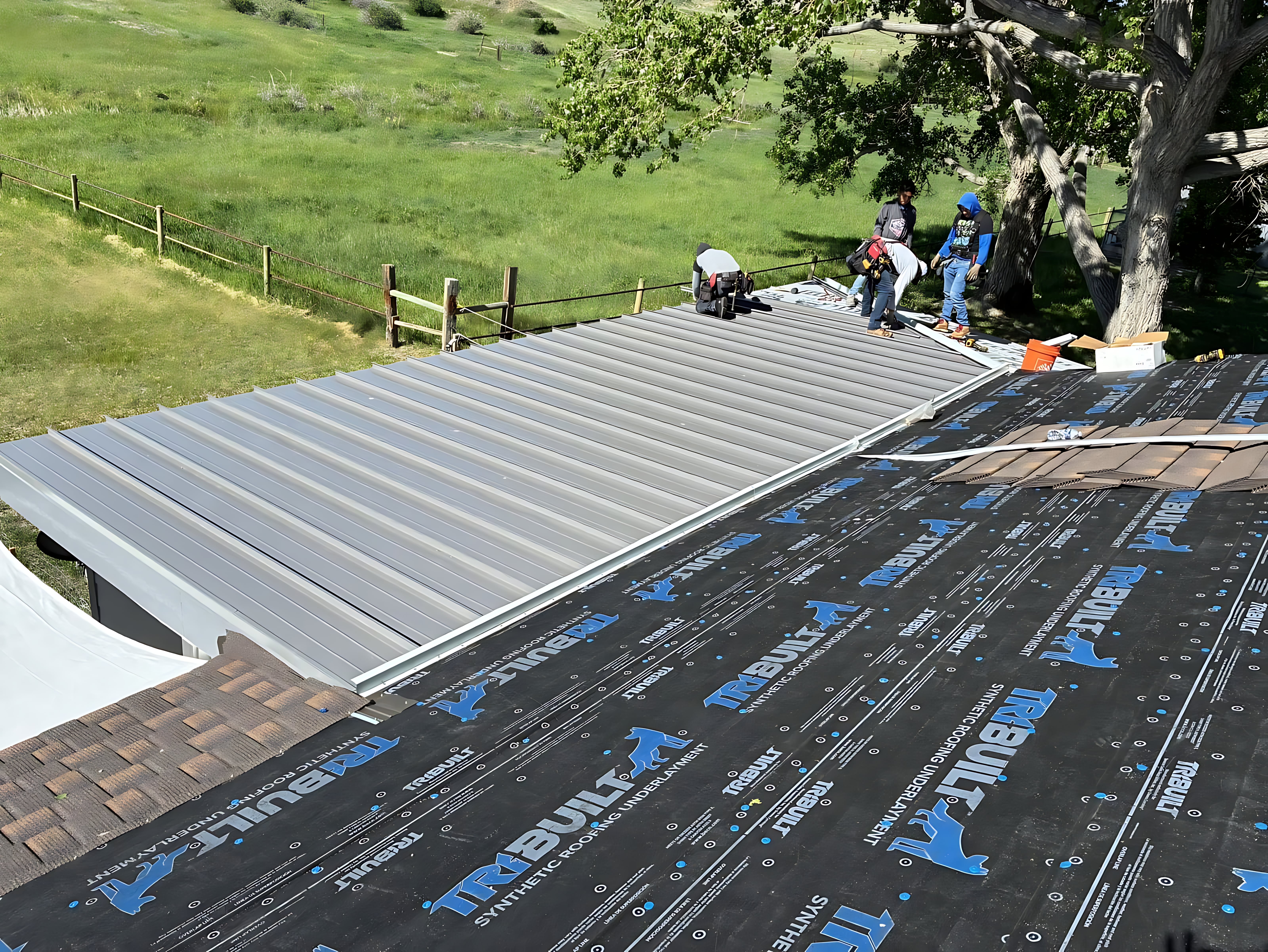
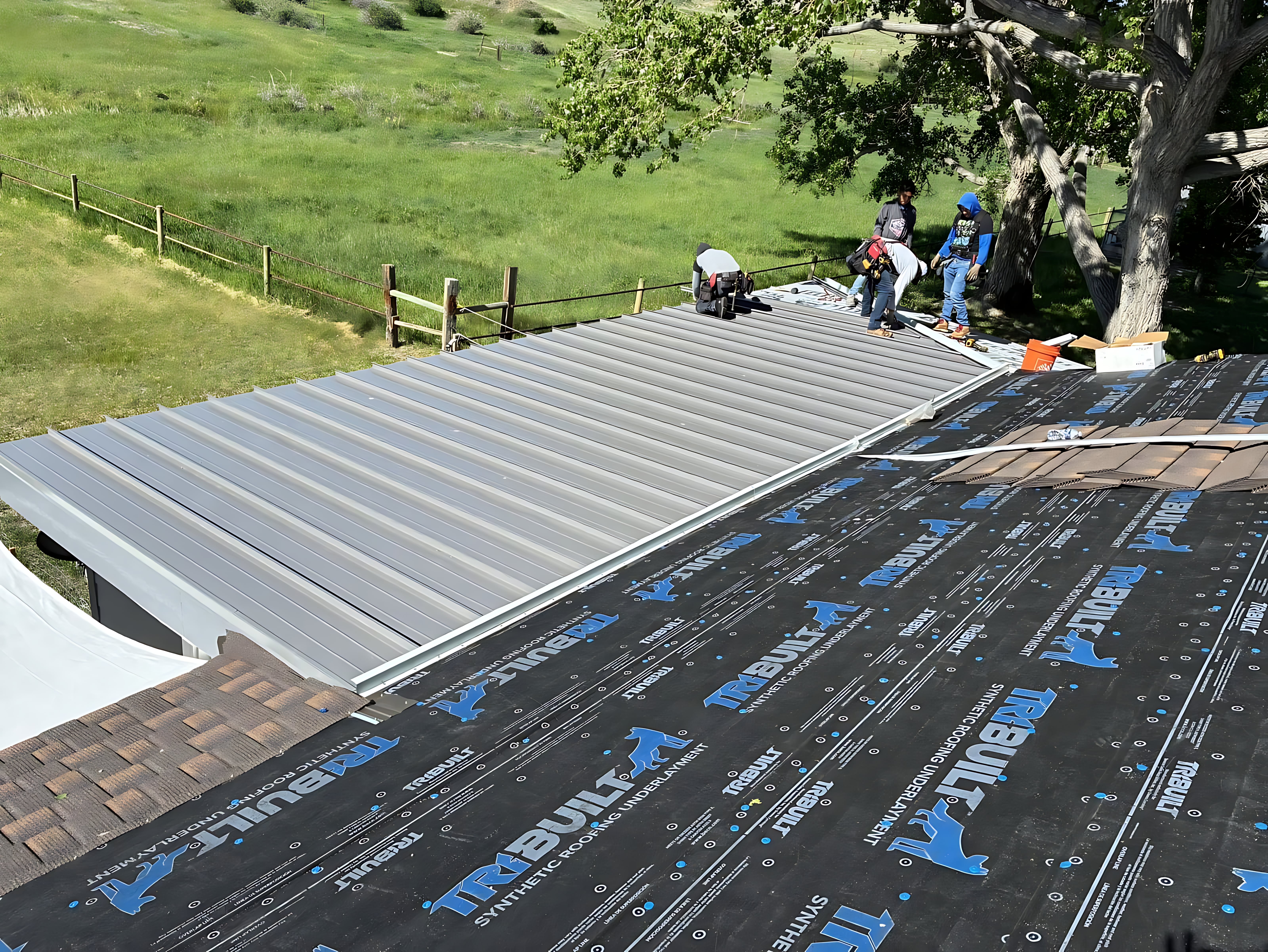
The next pillar of a wind-proof roof is the underlayment. We use high-temp synthetic underlayment that acts as a secondary water barrier. But more importantly, it provides a "grip" for the metal. If the underlayment is slippery or poorly attached, it doesn't support the panel system correctly. We also use "hemmed" edges on all our trim. Instead of just cutting the metal and screwing it down, we fold the edge back on itself and hook it over a continuous cleat. This creates a mechanical lock that wind simply cannot get under. It’s more work, and it requires more skill, but it’s the only way I’ll guarantee a roof in Utah.
Finally, we talk about orientation. We look at the prevailing wind directions for your specific lot. If you live at the mouth of a canyon, we might adjust the panel layout or add extra reinforcement to the windward slopes. It’s about building for your house, not just following a generic manual. That is what it means to be truly Wasatch-Proof.
- Always use 24-gauge steel for maximum stiffness and wind resistance.
- Continuous cleats and hemmed edges prevent wind from grabbing trim corners.
- High-temp synthetic underlayment provides a critical secondary protection layer.
- Custom clip density based on local wind-zone engineering data.
- Site-specific planning accounts for prevailing canyon winds and lot exposure.
Repair or Replace? Dealing with Wind Damage on Metal Panels
If you have metal roof wind damage, the first question is always: "Can we just fix this piece?" The answer is usually a solid "maybe." With standing seam, it is difficult to replace a single panel in the middle of a slope because they are all interlocked. It’s like trying to pull a single card out of the middle of a house of cards. Often, we have to "un-seam" a large section to get to the damaged part. This is why it’s so important to have a pro who knows how to work with metal without kinking it or scratching the finish.
If the damage is localized to the trim or a few fasteners on an exposed-fastener system, a repair is often very effective. We can up-size the fasteners (using "oversize" screws) to get a fresh bite into the wood decking and replace the damaged trim pieces. However, if the wind has "stretched" the metal or if we see widespread fastener fatigue, a replacement is usually the smarter long-term move. I hate to tell people they need a new roof, but I hate it even more when they pay for a $3,000 repair that fails six months later because the rest of the roof was already compromised.
One thing to keep in mind is your insurance claim. In 2026, insurance companies are getting stingier with metal roof "cosmetic" damage. They might try to tell you that a few dents or ripples don't affect the "function" of the roof. That’s where our forensic documentation comes in. We show them the wallowed-out holes, the broken seals, and the structural fatigue. We fight to make sure you get a roof that is actually safe, not just one that "looks okay" from the driveway.
- Standing seam repairs often require "un-seaming" adjacent panels for access.
- Exposed-fastener systems can often be repaired with oversized "repair screws."
- Widespread metal fatigue or "stretching" usually necessitates a full replacement.
- Forensic documentation is key to getting insurance to cover structural wind damage.
- Always verify material matching—different metal batches can have slight color variations.
Wrapping it up
Dealing with metal roof wind damage can be a real headache, but it’s also an opportunity to make your home stronger than it ever was. Whether you are looking at a minor trim repair or a full "Wasatch-Proof" replacement, the goal is the same: peace of mind. A metal roof should be the last roof you ever buy, but that only happens if it is installed with the discipline and engineering that our Utah weather demands.
Don't let a "shingle-hack" treat your metal roof like a side project. Get the experts who live and breathe this stuff. We've seen what the wind can do, and we know exactly how to stop it. If you suspect your roof has taken a hit, or if you just want to make sure your next roof is built to last until 2076, give us a shout. We'll give you a straight-talk audit and a plan that keeps you dry and happy for decades to come.
Stay safe out there, and remember: if it isn't Wasatch-Proof, it's just a temporary cover. Cheers!
Utah Roof Repair Hub
Compare repair costs, local pros, and professional guidance to ensure your Utah roof is restored correctly and efficiently.
Core Repair Pages
Priority Local Pages
Utah Metal Roofing Hub
Explore premium metal roofing solutions for Utah homes and businesses, engineered for snow shedding and lifelong durability.
Storm Damage & Insurance Hub
Expert assistance with roofing insurance claims, hail damage audits, and storm restoration across the Wasatch Front.