
How to Slope a Flat Roof for Drainage (2026)
By Skyridge Ricky • March 28, 2026 • 14 min read
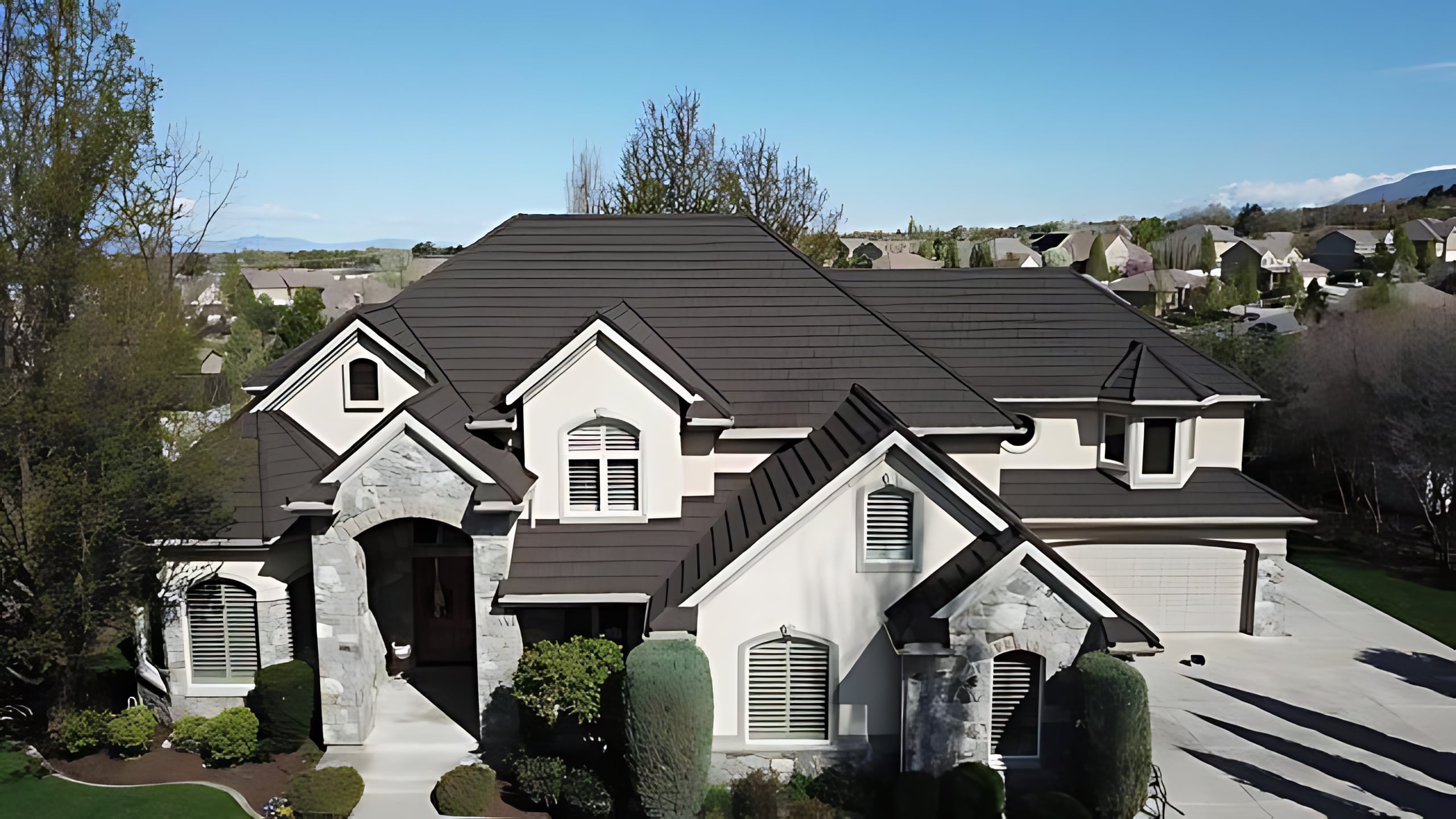
If you are searching how to slope a flat roof for drainage, you are already asking the right question because a “flat” roof is not supposed to be flat in the literal sense. Low-slope roofs need a controlled path that moves water toward drains, scuppers, or edges before ponding can damage the membrane, stress seams, and accelerate failure at every detail. When roofs are built or retrofitted without enough drainage strategy, the leaks that show up later are often blamed on the membrane when the real problem was the geometry underneath it.
This matters on both new construction and remedial work. Some owners are trying to understand a new low-slope design. Others are dealing with an existing roof that keeps holding water days after storms and are trying to figure out whether the answer is patching, coating, or changing the slope itself. In many cases, the roof cannot truly be made reliable until the drainage pattern is corrected. Water management is not an accessory to low-slope roofing. It is the foundation of it.
This guide explains how roof slope for drainage is created in 2026, what tapered insulation and structural slope actually do, how crickets and drains fit into the design, and which common errors create ponding even on roofs that were supposed to be draining. If you want to understand the system-level answer instead of a one-line rule of thumb, start here.
Commercial Roofing Paths
This guide should keep sending readers back into the commercial service cluster so informational traffic supports bid-ready pages.
Next steps from this article should include commercial roofing services, flat roofing systems, commercial roof maintenance, property management roofing.
Request a commercial roofing bid
Turn research into a real scope review.
Request a commercial roofing bidWhy Flat Roofs Need Slope Even When They Look Flat
Low-slope roofs are called flat roofs because they look flat from the ground, not because water is supposed to sit on them. A functional low-slope roof uses subtle pitch to move water toward designated exit points before standing water can become a long-term problem. That pitch may be built into the structure, created by tapered insulation, or improved with supplemental crickets and drains, but the objective is always the same: get water moving consistently and predictably.
Ponding water is not just an aesthetic issue. It adds load, accelerates membrane wear, hides punctures, increases seam stress, and raises the likelihood that small detail weaknesses will turn into larger leaks. It also makes inspections and repairs harder because water can obscure the actual failure point. Owners sometimes assume a low-slope roof can tolerate water sitting for long periods because the roof is “flat anyway.” In reality, persistent ponding is often a sign the drainage design is not doing enough.
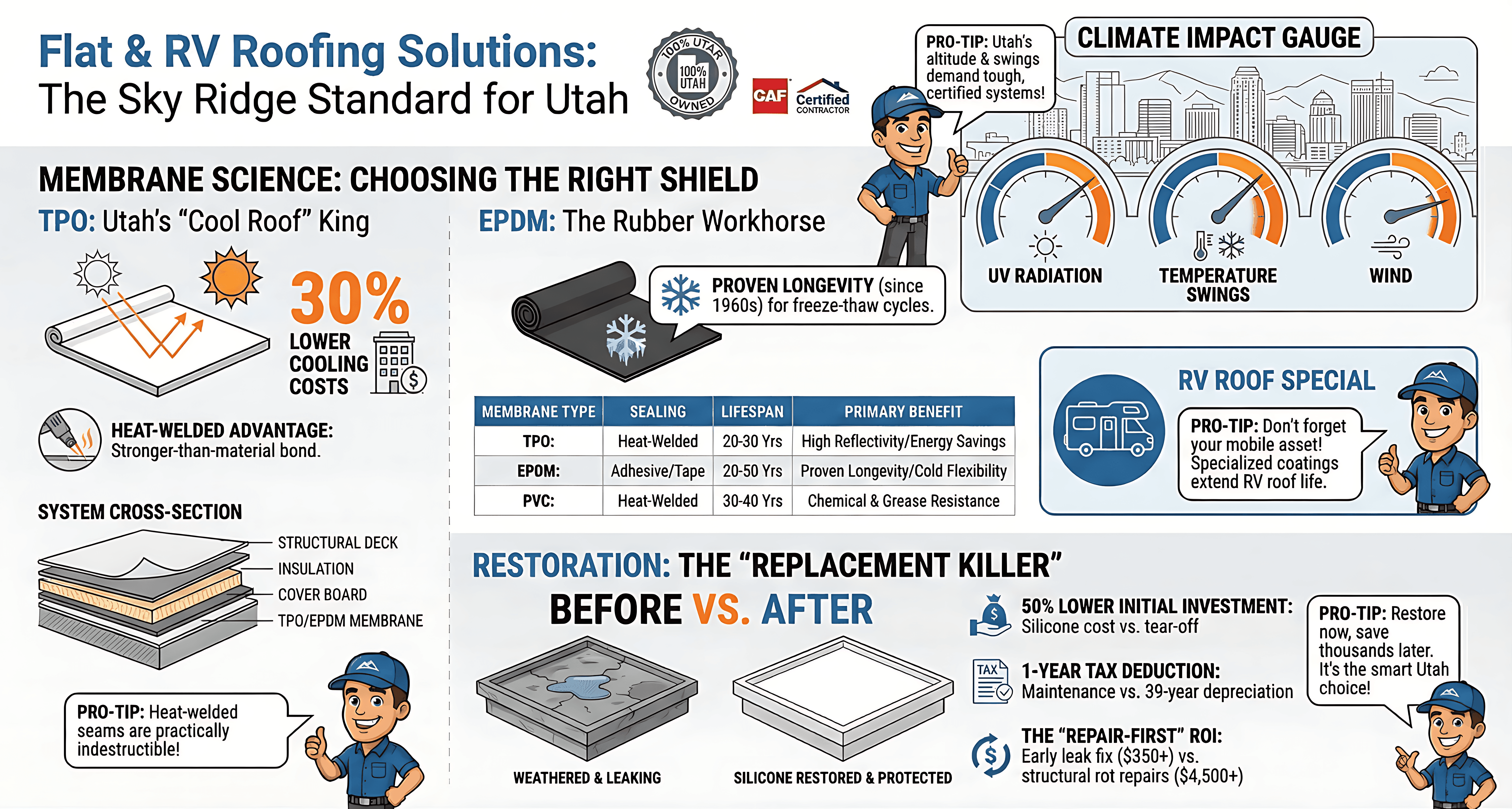
This is why roof designers and commercial roofers care about slope far beyond appearance. The membrane can only do its job well when the roof below it helps water leave. Even excellent TPO, PVC, EPDM, or modified bitumen systems can underperform if they are constantly forced to live under water they were never supposed to hold. The longer water stays, the more every weak point gets tested.
So the first principle is simple: a good flat roof is really a low-slope drainage system with a waterproof covering on top. Once you understand that, slope stops feeling optional and starts feeling fundamental.
- Flat roofs are low-slope systems, not true zero-slope platforms meant to store water.
- Persistent ponding accelerates membrane wear and increases leak risk.
- Drainage design is as important as membrane choice on low-slope roofs.
- Water that leaves quickly is far less destructive than water that lingers for days.
- A flat roof should be understood as a drainage system first and a weathering surface second.
The Main Ways to Create Slope on a Flat Roof
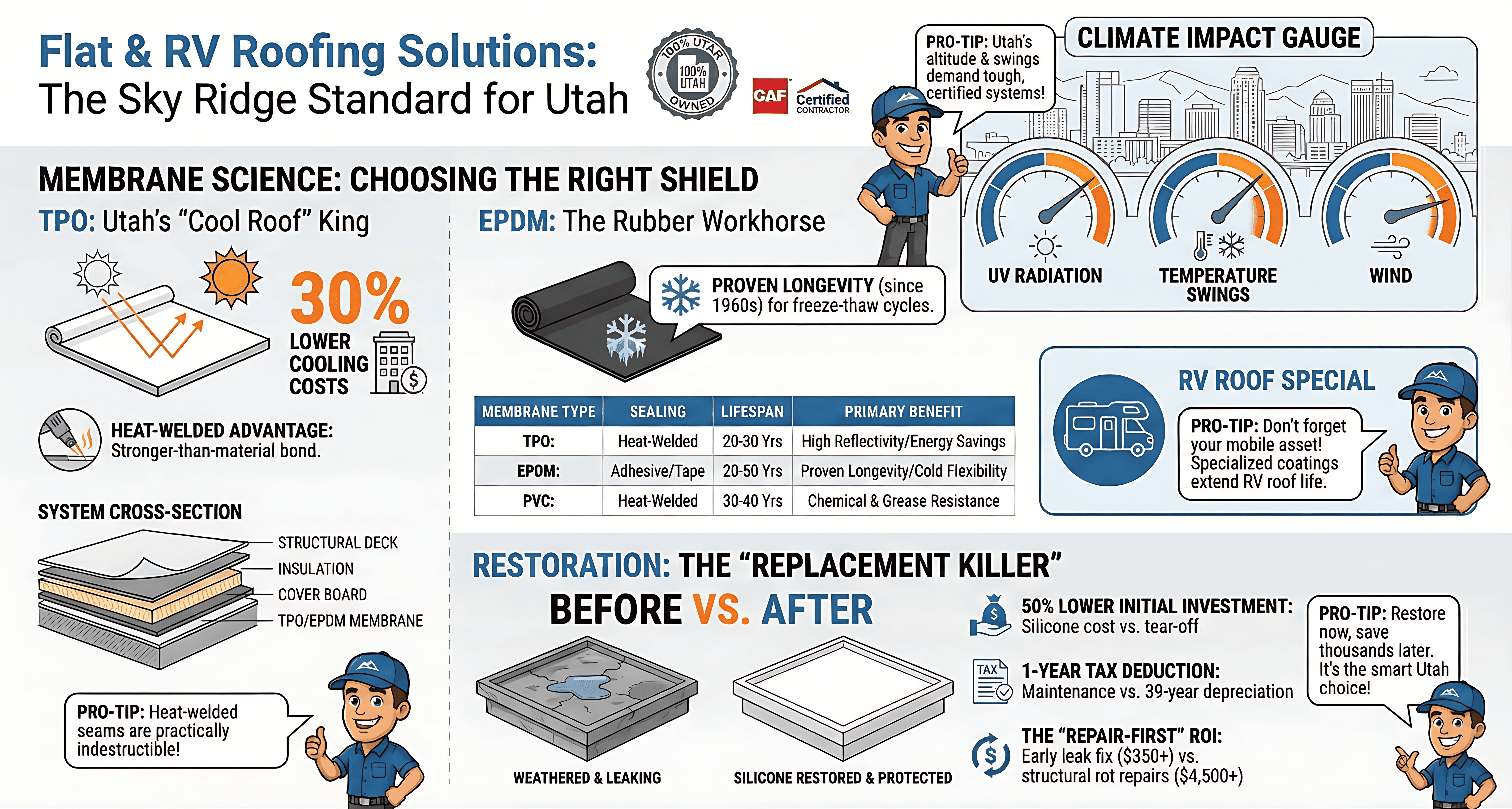
There are two primary ways to create slope on a flat roof: structural slope and tapered insulation. Structural slope means the framing or deck itself is built with pitch so water naturally moves toward drains or edges. This can be done with sloped joists, tapered framing, or deck design that establishes drainage before the roofing assembly is installed. Structural slope is powerful because it is baked into the building, but it is not always practical on existing roofs where the structure is already in place.
Tapered insulation is the most common corrective and retrofit method. Instead of changing the structure, the roofer or designer uses insulation boards cut in varying thicknesses to build pitch above the deck and below the membrane. These tapered packages direct water toward drains, sumps, scuppers, or gutters while also contributing insulation value. On existing commercial roofs, this is often the most realistic way to correct poor drainage without tearing the whole building apart.
Crickets and saddles are another key part of slope strategy. These are localized slope-build elements designed to move water around curbs, walls, and other obstructions. Without them, water can collect behind penetrations and parapet transitions even when the main field of the roof has some pitch. Good low-slope design does not just create overall slope. It also manages local water traps caused by rooftop geometry.
The right approach depends on whether the roof is new or existing, how much correction is needed, and whether the owner is solving a small ponding issue or a broad drainage failure. But the principle is consistent: slope can be created structurally, thermally, or locally, and often the best results use more than one of those tools together.
- Structural slope builds drainage into the framing or deck itself.
- Tapered insulation is often the most practical way to improve drainage on existing low-slope roofs.
- Crickets and saddles help direct water around curbs, walls, and roof obstructions.
- Different slope strategies can be combined when the roof geometry is complex.
- The best approach depends on building age, deck condition, and how much drainage correction is needed.

How Drains, Scuppers, and Crickets Work with Roof Slope
Slope without an exit point does not solve much. A low-slope roof needs somewhere for the water to go, and the entire drainage design should be built around those exit points. Internal drains, scuppers through parapet walls, edge gutters, and overflow routes all work differently, but each one needs the surrounding roof to feed water into it cleanly. If the roof has pitch but the drains are poorly located, undersized, or built without proper sumps, water may still pond around the exit point instead of disappearing into it.
Drains often need local depressions, sometimes called sumps, so that water can gather and enter efficiently rather than sitting on a high ring around the drain bowl. Scuppers need clear pathways and enough edge design that water actually reaches the opening instead of backing up behind parapet conditions. Crickets become essential around large rooftop units, walls, and vertical transitions because those obstacles can create dead water zones even on otherwise sloped roofs. A flat roof drainage design should be read like a topographic map: where does water start, where does it go, what blocks it, and where does it finally leave?
Overflow protection matters too. A roof can drain correctly in ordinary storms and still fail dangerously during heavy events if there is no secondary path for water once primary drains clog or get overwhelmed. That is why good commercial design often includes overflow drains or scuppers positioned to keep water from building into a structural hazard. Drainage is not just about convenience. It is also about risk control.
The best lesson for owners is that drains are never just plumbing fixtures on the roof. They are part of a coordinated slope-and-exit system. If one part is weak, the whole roof will eventually show it.
- Low-slope roofs need both pitch and well-designed exit points to drain correctly.
- Drain sumps and local depressions help water enter drains instead of circling them.
- Scuppers and gutters still depend on roof geometry to feed water into them properly.
- Crickets prevent water from getting trapped behind curbs and rooftop obstructions.
- Overflow drainage is an important part of both performance and safety.
The Most Common Mistakes That Leave Water Standing on the Roof
One of the biggest mistakes in flat roof design is assuming a broad average slope is enough without paying attention to local geometry. Water does not care about average slope if a rooftop unit, parapet corner, or drain bowl is creating a trap. Another common mistake is using tapered insulation without a true drainage plan. Tapered boards are powerful, but they must be laid out intentionally. If the designer or installer is not working from a clear slope plan, the roof may end up with awkward transitions, trapped sections, or drainage that looks right on paper but not in real weather.
Blocked or undersized drains create another category of failure. A roof can be designed well and still pond if maintenance is poor or the drainage hardware cannot keep up with actual runoff.
This is why flat roof slope and flat roof maintenance are tied together.
A properly sloped roof still needs functioning drains, clean scuppers, and clear pathways.
Slope is not a substitute for maintenance.
It is only one part of the drainage system.
Retrofit work can also go wrong when owners try to solve ponding with coatings alone. Coatings may waterproof a surface, but they do not correct geometry by themselves. If the roof still holds water because the slope is wrong, the coating will still be living under the same drainage stress as the membrane below it. In some cases a coating is part of the right answer, but only after the drainage pattern has been addressed honestly.
The practical takeaway is that persistent ponding is usually a systems problem, not a single-material problem. The fix often requires looking beneath the membrane and asking whether water was ever given a clean path to leave.
- Average slope is not enough if local roof geometry still traps water.
- Tapered insulation only works well when it is laid out as part of a real drainage plan.
- Drains and scuppers must be maintained or even a well-designed roof can still pond.
- Coatings do not automatically solve drainage geometry problems.
- Persistent ponding usually points to a system-level issue rather than a single membrane defect.
How to Evaluate Whether an Existing Flat Roof Needs Drainage Correction
If you are dealing with an existing roof, start by observing how long water remains after rain or snowmelt. Standing water that remains for extended periods, chronic staining around drains, repeated seam repairs in the same areas, and leaks associated with rooftop obstacles are all clues that drainage correction may be needed. The key is not simply whether the roof ever gets wet. The key is whether the roof clears water the way a healthy low-slope system should.
A professional evaluation may include moisture review, observation of drain performance, inspection of roof geometry, and discussion of whether the correction would be best handled with tapered insulation, local cricket work, drain modifications, or larger replacement planning. On some roofs, a targeted correction can solve the worst ponding zones. On others, the only honest path is broader rebuild because the geometry issues are too widespread to fix piecemeal. This is where field judgment matters more than generic advice.
Owners should also think in terms of economics. Drainage correction adds cost, but unresolved ponding adds recurring stress, recurring repairs, and shorter membrane life. That means the “expensive” slope correction may actually be the cheaper path over the next ten years if it prevents the same weak area from failing repeatedly. Flat roof budgeting becomes smarter when drainage correction is measured against future maintenance cost, not just against the lowest initial line item.
In the end, a flat roof should not have to win a constant battle against its own geometry. If it does, it is usually time to evaluate the slope, not just the surface.
- Long-lasting ponding, repeated leaks, and drain-area staining are common signs drainage correction may be needed.
- Existing roofs can often be improved with tapered insulation, local crickets, or drain modifications.
- Some buildings need targeted correction while others need broader rebuild to fix the geometry honestly.
- Drainage correction should be weighed against long-term repair and lifecycle cost, not only first cost.
- A healthy flat roof should clear water predictably after weather events.
How Slope Decisions Affect Flat Roof Repair and Replacement Cost
One reason owners should understand how to slope a flat roof for drainage is that slope decisions change the cost logic of everything that comes after them. A roof with poor drainage usually costs more to repair over time because the same areas keep seeing water stress. Seam repairs recur, drain zones stay problematic, coatings have to live under standing water, and emergency leak calls become more likely after heavy weather. What looks like a membrane issue on paper may really be a geometry issue showing up as repeated maintenance cost.
Correcting slope also changes replacement budgets because tapered insulation, sumps, crickets, and drain modifications all add real material and labor. That can make the replacement estimate look higher at first glance, but the added cost often reflects the roof finally being built to drain well instead of simply being recovered or resurfaced over the same old water traps. Owners who do not understand that may unintentionally compare a cheaper but incomplete replacement against a more expensive but actually corrected roof assembly.
The same principle applies to restoration. Some roofs are good coating candidates once drainage is acceptable. Others continue to pond so badly that coating the surface without changing the slope is only a temporary waterproofing layer over the same drainage failure. In those cases, slope correction is not an optional upgrade. It is part of making restoration or replacement financially rational in the first place.
So while drainage design sounds technical, it is also financial. Better slope can mean fewer leaks, fewer repeated patch calls, more reliable restoration outcomes, and a longer-performing membrane. That makes slope one of the most valuable invisible decisions on any low-slope roof.
- Poor slope tends to increase long-term repair cost because the same weak areas stay under water stress.
- Replacement budgets rise when slope is corrected honestly, but the roof often performs much better afterward.
- Some restoration projects only make sense once drainage geometry is improved.
- Owners should compare corrected-roof budgets against lifecycle value, not just lowest first cost.
- Drainage design is both a performance issue and a cost issue on flat roofs.
What Owners and Managers Should Ask When Drainage Is a Problem
When a low-slope roof keeps holding water, owners should ask questions that go beyond “can you patch this.” Start with the basics: where is the water supposed to go, why is it not getting there, and what part of the roof assembly needs to change to fix that path? Those questions immediately shift the conversation from symptom management to drainage logic. If a contractor cannot explain the water path clearly, it is hard to trust that their proposed correction will solve it.
It is also worth asking whether the problem is local or systemic. A single bad area behind one curb may need cricket work or localized tapered correction. Broad, repeated ponding across the roof may indicate the current slope strategy is fundamentally weak. That difference affects budget, scheduling, and whether the owner should be thinking about targeted repair, restoration with drainage modification, or broader replacement planning. Better questions create better options.
Maintenance teams should ask about the role of drains and overflows as well. A roof can look like it has a slope problem when the real issue is that drains are blocked or undersized for the runoff pattern. Other roofs do have a true geometric problem and will never drain well until the layout is corrected. Distinguishing those conditions saves a lot of money because the wrong fix wastes both time and roofing budget.
In practical terms, drainage correction starts with understanding the system, not just spotting the water. Owners who ask about water path, obstruction points, and correction level usually get much more useful roofing guidance than owners who focus only on the visible puddle.
- Owners should ask where water is supposed to go and why it is not getting there now.
- Local ponding problems and systemic drainage failures require different correction strategies.
- Blocked drains can mimic slope failure, so both maintenance and geometry should be evaluated.
- Better drainage questions usually lead to better repair or replacement options.
- Water path logic is the foundation of useful low-slope problem solving.
Wrapping it up
How to slope a flat roof for drainage really comes down to one principle: water must be given a deliberate route to leave the roof. Structural slope, tapered insulation, crickets, drains, scuppers, and overflow planning all work together to create that route. If any of those pieces are weak, the membrane ends up carrying more stress than it should.
That is why the right drainage plan is one of the highest-value decisions in low-slope roofing. When the geometry works, repairs last longer, membranes age better, and the roof stops fighting the same ponding problem over and over again. For flat roofs, good slope is not a detail. It is the foundation of long-term performance.
Questions this guide answers
Quick answers tied to how to slope a flat roof for drainage.
Utah Roof Replacement Hub
Explore our comprehensive guides, local pricing, and service area details to help you plan your next roofing project with confidence.
Pricing & Vetting Guides
Priority Local Pages
Commercial Roofing Hub
Access specialized asset protection for Utah commercial properties, flat roofing systems, and multi-family developments.
Commercial Services
Utah Flat Roofing Hub
Specialized installation and repair of TPO, EPDM, and PVC membrane systems for Utah residential and commercial properties.