

Commercial Flat Roof Replacement Costs (2026)
By Skyridge Ricky • March 28, 2026 • 13 min read

Quick Answer: How much does commercial flat roof replacement cost in 2026?
In 2026, most commercial flat roof replacements (TPO/PVC) range from $8.50 to $14.00 per square foot.
A standard 20,000 sq ft warehouse roof typically costs between $170,000 and $280,000, depending on insulation (R-value) and substrate condition.
Property owners searching for commercial flat roof replacement cost are usually trying to set a capital budget before the roof forces the issue. That is the right time to ask the question. Flat and low-slope roofs reward planned replacement and punish delay. Once ponding, seam failure, or wet insulation becomes widespread, the cost of replacement is no longer just the roof. It starts to include emergency response, tenant complaints, maintenance diversion, and sometimes interior damage. Budgeting early lets owners compare systems and phase decisions instead of reacting to the next storm.
The challenge is that flat roof cost is not one number. TPO, PVC, EPDM, modified bitumen, and restoration-ready assemblies all carry different price profiles. A recover system on dry substrate is very different from a full tear-off with saturated insulation, tapered package upgrades, and drain corrections. Owners who budget from a generic online price-per-foot chart often discover later that the real project includes code compliance and substrate work the calculator never mentioned.
This article lays out the variables that drive flat roof replacement cost in 2026. We will look at membrane choices, hidden conditions, insulation and drainage upgrades, and how to turn those factors into a realistic budget range. If you want to understand where the money goes before asking for proposals, this is the structure to follow.
Commercial Roofing Paths
This guide should keep sending readers back into the commercial service cluster so informational traffic supports bid-ready pages.
Next steps from this article should include commercial roofing services, flat roofing systems, commercial roof maintenance, property management roofing.
Request a commercial roofing bid
Turn research into a real scope review.
Request a commercial roofing bidSystem Type: Why TPO, PVC, EPDM, and Mod-Bit Price Differently
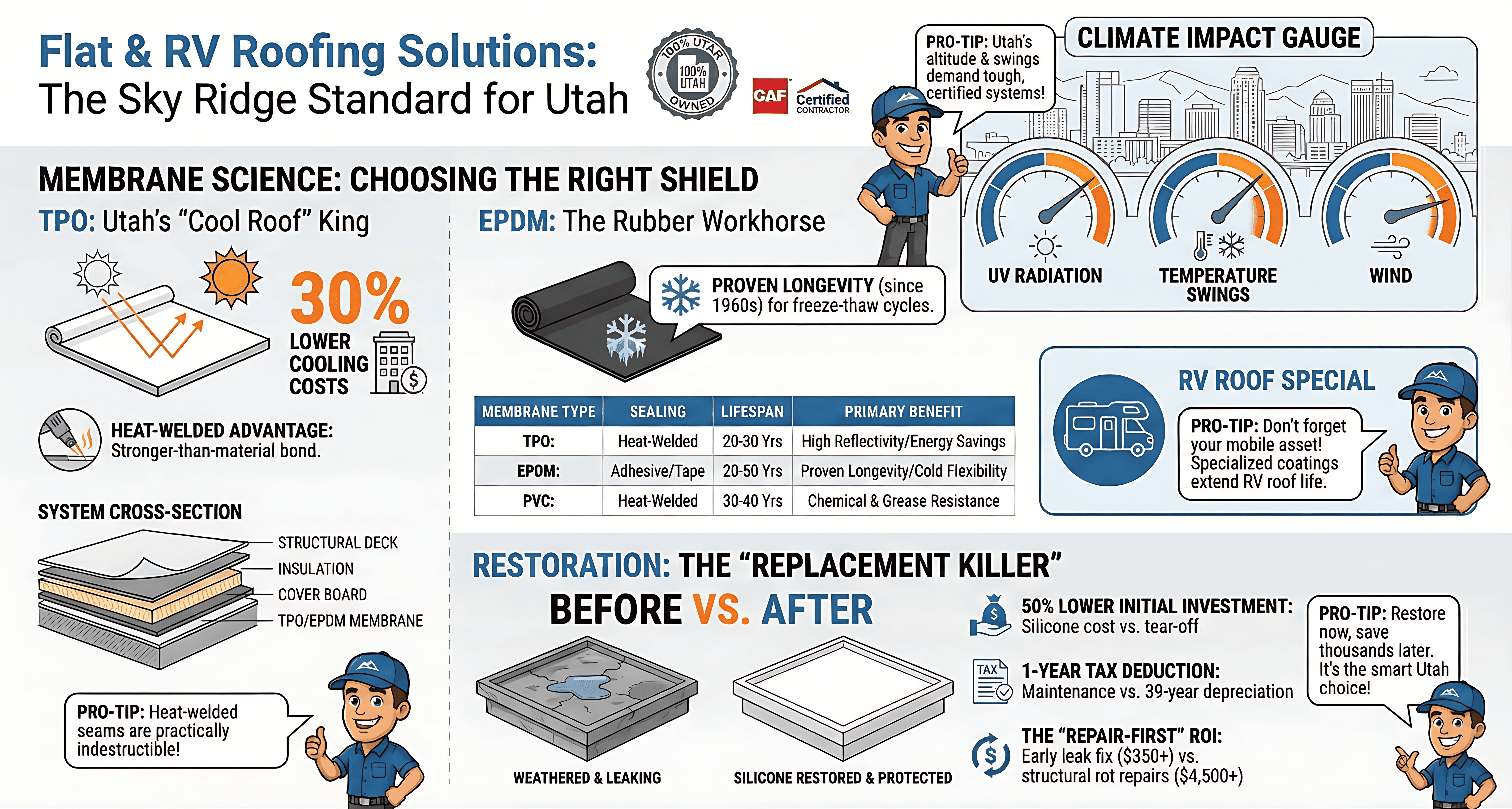
The first major factor in commercial flat roof replacement cost is the membrane or assembly you are replacing with. TPO is often the default for many warehouse, office, and light industrial buildings because it balances durability, energy performance, and cost. PVC typically prices higher, especially where chemical exposure or grease exhaust demands stronger resistance. EPDM can be competitive in some applications, but attachment method and seam strategy still affect total cost. Modified bitumen and BUR systems may be selected where heavier assemblies or multi-layer redundancy are priorities, but labor requirements usually differ from single-ply projects.
Each system also changes accessories and detailing. Welded seams, adhered seams, cover boards, walk pads, flashings, edge securement, and curb detailing are not universal. Even within TPO, a fully adhered build will not price the same as a mechanically attached system. Building use matters too. A restaurant, manufacturing site, or facility with rooftop contaminants may justify PVC even if the base price is higher because the long-term performance fit is better. Owners should budget the system that matches the building, not just the one with the lowest entry number.
Energy goals can influence the choice as well. Reflective membranes may reduce rooftop heat load, while thicker assemblies and cover boards can improve durability under traffic. If the building is expected to hold solar later, traffic patterns and attachment details may need to support that plan. All of those variables belong in the early cost conversation because they change both material and labor.
The main takeaway is that low-slope replacement is specification-driven. A credible budget has to identify the likely membrane family and attachment path first, then build cost assumptions around that system instead of forcing every flat roof into one generic average.
- TPO, PVC, EPDM, and modified bitumen do not share the same material or labor cost profile.
- Attachment method changes budget significantly even within the same membrane family.
- Building use can justify a higher-performing system if chemical or grease exposure is present.
- Future rooftop traffic and solar plans can affect membrane and accessory selection.
- Specification quality matters more than chasing the lowest generic price-per-foot average.

Insulation, Drainage, and Code Upgrades
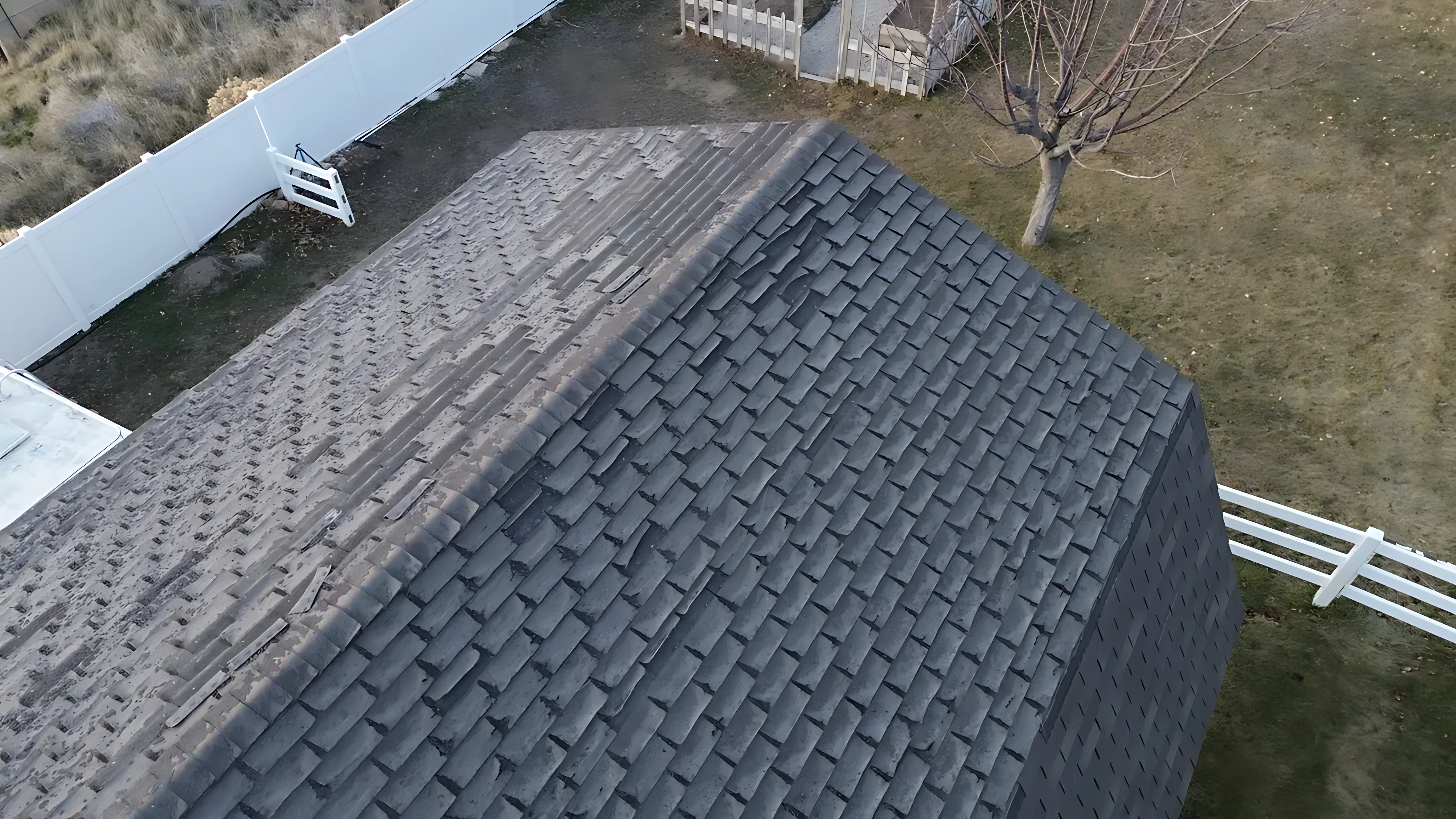
Many low-slope projects cost more than expected because the roof is not just being replaced. It is being corrected. Current code, energy targets, and real-world performance often push owners toward insulation upgrades, cover boards, or tapered packages that improve drainage and thermal performance. These are not cosmetic upgrades. They can be the difference between a roof that continues to hold water and a roof that finally sheds it properly. On commercial flat roofs, poor drainage is one of the biggest long-term cost multipliers because ponding shortens membrane life and amplifies leak risk at every weak detail.
If the existing building has chronic birdbaths, blocked drainage geometry, or insufficient slope to drains, replacement is often the best time to fix it. That may mean adding tapered insulation, modifying drain bowls, rebuilding crickets, or replacing edge details to fit the new assembly height. These changes add cost upfront but often improve performance more than almost any other scope item. Budgeting them early keeps the project from being forced into a “replace but do not improve” compromise.
Code-driven R-value upgrades also matter. Owners may assume they are buying membrane only when in reality the replacement must bring the roof closer to current thermal expectations. The exact requirements vary by project type and jurisdiction, but the budgeting lesson is consistent: flat roof replacement cost should include likely energy and drainage improvements, not just the membrane visible from above.
This is one of the clearest reasons low-slope replacement cannot be reduced to one simple online number. Flat roof projects are often building-envelope upgrades disguised as membrane replacements. The more honestly that is addressed at budget stage, the fewer surprises show up during procurement.
- Drainage correction is often one of the highest-value upgrades during flat roof replacement.
- Tapered insulation, cover boards, and edge modifications can materially change cost and performance.
- Code-related insulation upgrades should be expected, not treated as rare add-ons.
- Ponding water is both a leak risk and a lifecycle cost driver.
- Flat roof replacement often acts as a broader envelope improvement project.
Turning All of This Into a Real Budget Range
The most reliable way to budget a flat roof is to build three scenarios: conservative, probable, and high-complexity.
Start with the likely membrane family and approximate area.
Then ask whether the project is more likely to be a recover or a tear-off, how much hidden moisture risk exists, whether drainage upgrades are expected, and what warranty level the building needs.
If the building has tenant or operational sensitivity, include staging and scheduling allowances as well.
This produces a range that is far more useful than a single number pulled from a generic chart.
Owners should also decide whether the budget is meant for immediate procurement or capital planning. For immediate replacement, the range should lean toward current field conditions and include contingency. For multi-year planning, it can be paired with an inspection strategy that narrows moisture and drainage uncertainty before bids go out. The budget should not just answer “what could this cost.” It should answer “what do we need to know next to make this cost more certain.”
When proposals arrive, compare them against the scenario you built. Did one contractor ignore insulation? Did another include tapered recovery where others did not? Did the lowest number assume minimal detail rebuilds? A range-based budget makes those scope differences easier to interpret and reduces the temptation to reward a low number that may simply be incomplete.
That is the real purpose of flat roof budgeting in 2026. It is not just to estimate the job. It is to prepare the owner to recognize a sound scope when they see one and avoid surprises that should have been visible from the start.
- Build low, mid, and high-complexity scenarios instead of relying on one price-per-foot assumption.
- Include tear-off risk, drainage correction, insulation, and warranty level in the early budget.
- A budget should identify what the owner still needs to confirm before procurement.
- Range-based planning makes contractor proposal differences easier to evaluate.
- The goal is budgeting confidence, not artificial precision.
How Timing, Occupancy, and Access Add to Flat Roof Replacement Cost
Commercial flat roof budgets are often understated because owners focus on membrane and insulation while overlooking the logistics of replacing a roof over an active building. Occupancy matters. A retail center with customer traffic, a medical building with noise restrictions, a warehouse with shipping lanes, or a school with calendar constraints all affect production. Crews may need phased sequencing, tighter material staging, temporary protection over sensitive areas, or after-hours work windows that change labor efficiency. None of that means the project is being padded. It means the roof is being replaced on a real building, not an empty slab in a perfect schedule window.
Access can be just as important. Some low-slope roofs are easy to reach and stage. Others require cranes, long carry distances, limited loading zones, or protection of landscaping, pedestrian areas, and storefronts below. Taller parapets, internal drains, rooftop equipment density, and restricted ladder placement can slow the work dramatically. When owners compare bids, these differences may be hidden inside labor totals, so it helps to ask each contractor what site conditions they believe will affect production the most. Their answer will tell you whether the estimate reflects the building’s reality.
Timing within the year also has budget consequences. Planned replacement before the roof reaches active failure usually gives the owner the best pricing and the best scope control. Waiting until repeated leakage, insulation saturation, or emergency temporary repairs are already in play reduces options and can force faster, more expensive decisions. In other words, timing is not just a schedule issue. It is a cost variable. Flat roof projects become more expensive when the building waits until flexibility is gone.
This is why sophisticated flat roof budgeting includes a logistics allowance, not just a material allowance. Owners who understand staging, occupancy, and timing early are much less likely to be surprised when final pricing reflects the complexity of keeping the building operational during construction.
- Occupied-building logistics can meaningfully change low-slope replacement cost.
- Access constraints often show up inside labor totals unless owners ask about them directly.
- Phasing, after-hours work, and sensitive tenant conditions should be budgeted early.
- Waiting until active failure reduces flexibility and often increases replacement cost.
- Flat roof budgeting should include logistics and timing, not just membrane and insulation.
When Restoration Should Still Be Compared Before Full Replacement
Owners budgeting commercial flat roof replacement cost should not assume full replacement is the only path until the roof condition says so. On some low-slope buildings, restoration remains a serious alternative if the membrane is still attached, the substrate is stable, insulation is largely dry, and the primary issues are UV wear, aging seams, or isolated leak points rather than widespread assembly failure. Coating and restoration systems can extend service life meaningfully on the right roof and often do so with less disruption than a full tear-off project.
The important phrase is “on the right roof.” Restoration is not a shortcut around moisture damage, failed substrate, or fundamental drainage defects that a coating cannot solve. If wet insulation is widespread, seams are failing across the field, or the roof geometry itself is creating chronic ponding and detail stress, replacement usually remains the more honest budget path. That is why owners should treat restoration analysis as part of budgeting rather than as an after-the-fact sales alternative that appears only when the replacement number feels uncomfortable.
Comparing both paths can improve capital planning even when replacement still wins. It clarifies what conditions make the roof restorable, what service life each option is expected to deliver, and whether the owner is paying more for certainty, warranty strength, and substrate renewal or less for a shorter extension on a still-serviceable asset. This helps building owners align the roof decision with hold period, financing, and operational risk rather than reacting only to first cost.
In many cases, the best budgeting process includes one replacement range and one restoration range, then uses inspection evidence to determine which branch is technically realistic. That keeps the decision grounded in building condition instead of wishful thinking and produces a much stronger capital plan either way.
- Restoration deserves comparison when the roof assembly is still structurally worth preserving.
- Coatings do not solve widespread wet insulation, failed substrate, or major drainage defects.
- Comparing restoration and replacement improves lifecycle planning even when replacement is likely.
- The owner should understand what service life and risk profile each option is expected to deliver.
- A dual-path budget is often the smartest approach when roof condition is not fully confirmed yet.
Wrapping it up
Commercial flat roof replacement cost is shaped by specification, moisture risk, insulation, and drainage far more than by area alone. When owners budget for membrane type, tear-off reality, code upgrades, and corrective work instead of just membrane coverage, the project becomes much easier to plan and much less likely to surprise them.
Low-slope roofs reward owners who think in systems and punish owners who budget only the visible membrane. Once you account for logistics, drainage, hidden moisture, and lifecycle options like restoration, the number becomes more grounded and the eventual contractor proposals become easier to read. That is the difference between a generic estimate and a useful capital budget that can actually support a sound replacement decision with fewer surprises during procurement.
For many buildings, that extra planning work is what protects the project from becoming an emergency expenditure instead of a controlled capital improvement.
It also gives owners more leverage when bids arrive. When you already understand why tear-off scope, tapered insulation, occupancy logistics, and restoration alternatives affect price, it becomes easier to identify which proposal is genuinely complete and which proposal is simply optimistic. That knowledge usually leads to better procurement decisions and a flatter risk curve during construction.
For capital planners, that extra understanding often becomes the difference between a roof project that stays controlled and one that starts controlled but drifts expensive once field conditions are exposed.
That is why the most useful budget is the one that anticipates complexity instead of pretending complexity will not show up later.
Questions this guide answers
Quick answers tied to commercial flat roof replacement cost.
Utah Roof Replacement Hub
Explore our comprehensive guides, local pricing, and service area details to help you plan your next roofing project with confidence.
Pricing & Vetting Guides
Priority Local Pages
Utah Roof Repair Hub
Compare repair costs, local pros, and professional guidance to ensure your Utah roof is restored correctly and efficiently.
Core Repair Pages
Priority Local Pages
Commercial Roofing Hub
Access specialized asset protection for Utah commercial properties, flat roofing systems, and multi-family developments.
Commercial Services
Utah Flat Roofing Hub
Specialized installation and repair of TPO, EPDM, and PVC membrane systems for Utah residential and commercial properties.