
Did you know that in 2025, Utah homeowners left an estimated $42 million on the table in underpaid roof insurance claims? It’s a heartbreaking stat, and honestly, standing here in 2026 looking at the aftermath of another brutal Wasatch winter, it makes my blood boil! I was talking to a neighbor in Sandy last week who got a check for $800 after a massive hail storm hit his 15-year-old roof. Eight hundred bucks! That barely covers the dumpster fee and a couple of lattes these days. I had to pull him aside and explain that his adjuster wasn’t 'being fair'—he was being a corporate accountant for a company that views his home as a liability, not a sanctuary.
Skyridge Ricky here, and I’m about to spill the beans on the high-stakes chess match that is the Utah insurance game. If you think your insurance company is your 'good neighbor' or that you’re 'in good hands' when the shingles start flying, you’re in for a rude awakening. In our 2026 reality, where the cost of materials has skyrocketed and the labor market is tighter than a new pair of leather boots, you can’t afford to be polite. You have to be informed, you have to be aggressive, and most importantly, you have to be 'Wasatch-Proof.' Grab a coffee, pull up a chair, and let’s dive into the secrets your adjuster is hoping you never find out. We’re going to talk about 'invisible' damage, the Xactimate shell game, and how to use the law to your advantage!
The 'Invisible' Damage: What Your Adjuster Is Paid to Miss
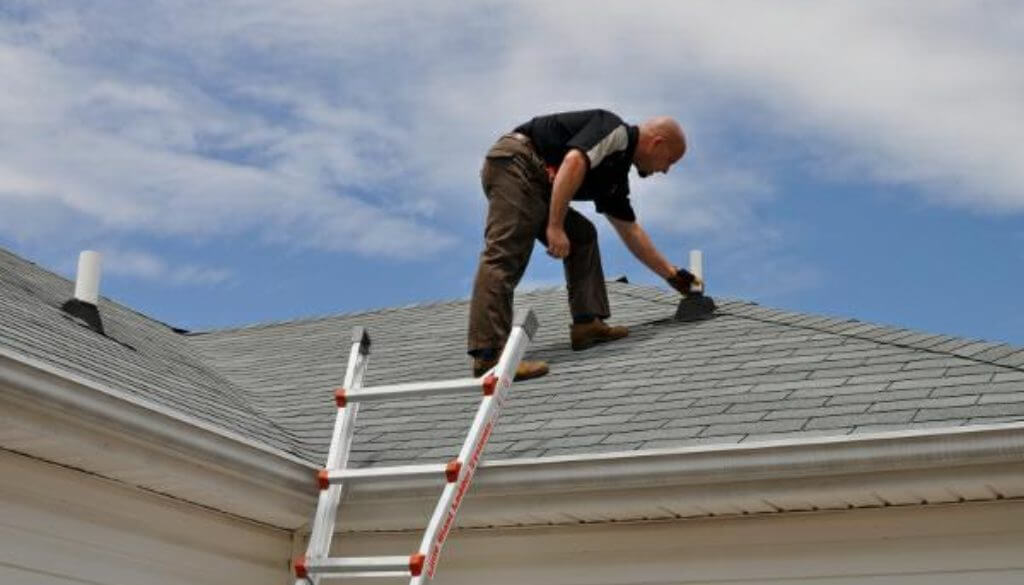
Alright, let's start with the big one. An adjuster pulls up to your house in Draper, spends ten minutes on a ladder, and tells you, 'I only see a few missing shingles, Ricky. Here's a patch-job check.' It makes me want to scream! In 2026, we’re dealing with functional hail damage that is often invisible to the naked eye from the ground. I remember a job in West Valley where the adjuster claimed there was 'zero damage.' I took him back up there with a high-definition macro lens and a moisture meter. We showed him the 'bruises' on the shingle mat—tiny fractures where the hail had driven the granules into the asphalt. Once that mat is bruised, the UV rays at 4,500 feet will bake that shingle to a crisp in twelve months. It was a total triumph when he finally admitted the whole slope was compromised!
You see, adjusters are often trained to look for 'catastrophic' damage—big holes, missing tabs, or trees through the roof. But in Utah, our damage is often subtle. We get that fast, hard hail that hits like a ball-peen hammer. It doesn't always rip the shingle, but it breaks the internal fiberglass bond. I call it the 'hidden clock.' The moment that hail hits, the clock starts ticking on your roof's life. If you don't document it with forensic precision right now, you’re going to be paying for a leak three years from now when the insurance window has closed. It's a classic shingle-hack trap! They want you to wait until it leaks, because by then, they'll blame it on 'wear and tear' or 'lack of maintenance' instead of the storm.
I’ve made my own mistakes in the past, thinking a quick visual check was enough. Now, I never go on a roof without my 'forensic kit.' We look at the soft metals first—the downspouts, the HVAC caps, and the valley flashing. If there are dents in the metal, there are bruises on the shingles. It’s physics! I’ve had adjusters tell me those dents are 'cosmetic.' I tell 'em, 'If I dented your truck with a hammer, would you call it cosmetic?' They usually shut up after that. You have to be specific and you have to be stubborn. Don't let them rush you. We mark out 'test squares'—a 10x10 area—and count every single hit. If we find eight hits in a square, that’s an automatic replacement according to most industry standards. But if you don't know to look for them, the adjuster definitely won't point them out for you.
And don't even get me started on 'granule loss.' I’ve seen gutters in Bountiful that were literally half-full of shingle grit after a spring storm. The adjuster told the homeowner it was 'normal shedding.' Normal shedding? That’s like saying losing half your teeth is 'normal aging!' Those granules are the sunscreen for your roof. Without them, the asphalt dies. In 2026, we use specialized lighting to show the 'pitting' where those granules were knocked loose. It’s about building a case that is so technically solid the insurance company has no choice but to say yes. It’s a grind, and it’s frustrating as all get-out, but it’s the only way to protect your equity. Stay vigilant, Utah!
Professional Takeaways
- Functional Hail Damage: Hidden fractures in the shingle mat that lead to premature failure.
- Soft Metal Audits: Using dents in downspouts and vents as forensic proof of hail velocity.
- Test Squares: Marking 100 sq. ft. areas to document hit density for insurance compliance.
- Granule Displacement: Proving that excessive 'shedding' is actually storm-related damage.
- Forensic Kits: Using macro photography and moisture meters to document 'invisible' entry points.

The Xactimate Shell Game: How Estimates Are Manipulated
If you've ever looked at an insurance estimate, you've probably seen the name 'Xactimate.' It's the software that almost every insurance company in the country uses to set prices. On the surface, it looks official and 'fair.' But here’s the secret: Xactimate is only as good as the data the adjuster puts into it. In 2026, I see adjusters 'forgetting' to click the buttons for overhead and profit (O&P), or 'skipping' the line items for high-wind starter strips and ridge vents. They’ll give you a 'market rate' that is based on national averages, not the actual cost of doing business on the Wasatch Front. It’s a total shell game, and if you don't speak the language, you’re going to get hosed!
I remember a job in Sandy where the insurance estimate was $12,000, but the actual cost to build a 'Wasatch-Proof' roof was $18,000. Why the gap? The adjuster had used 'standard' labor rates and 'standard' disposal fees. Well, in 2026, dump fees in Salt Lake County have tripled, and finding a crew that knows how to do a 6-nail pattern correctly costs more than a 'shingle-hack' crew. I had to go line-by-line through their estimate and show them that they’d missed the ice and water shield required by Utah building code. They tried to tell me it was 'included in the waste factor.' I almost fell off my ladder! You can't include a critical safety component in 'waste.' That’s just creative accounting designed to save the company six hundred bucks at the expense of your attic's dryness.
You have to be a bit of a nerd about this, and I've spent plenty of late nights staring at spreadsheets to get this right. We use the same software they do, but we use it honestly. We include the 'drip edge,' the 'step flashing,' and the 'pipe boots.' These are the little things that an adjuster will 'lump together' to hide the fact that they aren't paying for new materials. I’ve had moments of triumph where I’ve added $4,000 to a claim just by pointing out that the chimney flashing was copper and couldn't be replaced with cheap galvanized steel. Specificity is your weapon! If your roofer just gives you a one-page bid, he’s not helping you. You need a full, multi-page Xactimate breakdown that matches the insurance company’s format so they have no excuses.
And here’s a tip most folks miss: 'Depreciation Recapture.' A lot of people see that first check and think that's all they get. But if you have an RCV policy, there's a second check coming once the work is done. The adjuster will 'withhold' a big chunk of money as 'depreciation.' If your roofer doesn't know how to file the certificate of completion and the final invoice correctly, that money stays in the insurance company's bank account forever. I’ve seen families in Provo lose out on $5,000 because their contractor didn't follow the 'recapture' process. It's not a scam, but it's definitely designed to be confusing so that lazy people don't claim it. At Sky Ridge, we handle all that paperwork for you, because I hate seeing a Utah family get cheated out of their own money. It’s your policy—make 'em pay every cent of it!
Professional Takeaways
- Overhead and Profit (O&P): Ensuring the 20% markup for project management is included.
- Line-Item Precision: Checking for 'forgotten' items like drip edge, ice and water shield, and vents.
- Local Market Rates: Challenging national averages with real-world 2026 Utah labor and material costs.
- Code Upgrades: Forcing the insurance company to pay for modern safety requirements like 6-nail patterns.
- Depreciation Recapture: Managing the two-check process to ensure you get the full replacement value.

ACV vs. RCV: The Financial Trap That Could Cost You $10,000
Alright, let’s talk about the two most important letters in the insurance world: ACV and RCV. This is the difference between getting a new roof and getting a massive bill. Actual Cash Value (ACV) is the 'pawn shop' version of insurance. If your roof is 15 years old and it gets hit by hail, the insurance company says, 'Well, that roof was almost dead anyway, so we’re only going to pay you for the 25% of life it had left.' They subtract 'depreciation' from your payout and you’re stuck paying the other 75% out of pocket. In 2026, with the way home prices are in Utah, an ACV policy is a financial suicide mission. I once saw a family in Murray get a check for $2,000 for a roof that cost $16,000 to replace. They were devastated!
Replacement Cost Value (RCV) is what you actually want. This policy says that as long as you actually do the work, the insurance company will cover the full cost of a new roof, regardless of how old the old one was. It’s the only 'Wasatch-Proof' way to insure a home. But here’s the secret your adjuster won't tell you: they will often try to treat an RCV policy like an ACV policy during the first meeting. They’ll hand you a check for the 'depreciated value' and hope you just take it and walk away. If you don't realize that the rest of the money is 'recoverable,' you’re leaving thousands of dollars on the table. It’s a classic corporate move, and it makes my blood boil!
I’ve made the mistake of not checking a client’s policy before we started. I assumed everyone had RCV because, honestly, why wouldn’t you? But some 'budget' insurance companies have been switching people to ACV policies without them even realizing it. They bury it in the renewal paperwork as a 'simplification' of the policy. If you’re reading this right now, go find your 'Declarations Page' and look for those letters. If you see 'ACV' next to your roof coverage, call your agent tomorrow and change it. It might cost you an extra fifty bucks a year in premiums, but it’ll save you $15,000 when the next big one hits. I tell my friends: an ACV policy isn't insurance; it's just a 'hope-it-doesn't-storm' plan.
Sometimes, I’ve had triumphs where we’ve found 'hidden' RCV clauses in a policy that the adjuster claimed was ACV. You have to read the fine print like a lawyer! There are often 'endorsements' that add replacement cost back in for specific types of damage. This is why having a 'Wasatch-Proof' pro in your corner is so important. We don't just look at the shingles; we look at the contract you have with the insurance company. We’ve helped homeowners in Salt Lake City turn a 'denied' or 'low-pay' claim into a full replacement just by pointing out a single sentence in their policy. It’s a chess match, Utah, and you need to know which pieces you’re playing with before you make your first move!
Professional Takeaways
- RCV vs ACV: Understanding if your policy covers the full replacement or just a depreciated 'cash' value.
- Recoverable Depreciation: Knowing how to claim the second check once the roof is finished.
- Policy Endorsements: Finding hidden clauses that can upgrade your coverage for storm damage.
- Declarations Page Audit: Why you must verify your coverage type before a storm hits in 2026.
- The 'Financial Trap': Avoiding out-of-pocket disasters by switching to RCV coverage today.

The Appraisal Clause: Your Secret Weapon Against Low-Ball Offers
What happens if you and the insurance company just flat-out disagree? Maybe you have a 'Wasatch-Proof' pro like me saying the whole roof is shot, and the adjuster is saying, 'I only see three shingles with hail hits, so I’m only paying for a patch.' It’s a frustrating standoff, and most homeowners think their only option is to give up or hire a lawyer. But lawyers are expensive and they take forever! In 2026, your real secret weapon is the Appraisal Clause. Almost every homeowner's policy in Utah has one, and it’s basically a 'binding arbitration' for roof damage. It’s the fastest way to get a fair result without going to court, and the adjusters absolutely hate it when you use it!
Here’s how it works: you 'invoke' appraisal. You hire an independent appraiser, the insurance company hires their own, and those two appraisers pick a third person called an 'Umpire.' They look at the evidence—the forensic photos, the test squares, the code requirements—and they come to a decision. If two of those three people agree on the price and scope, that number is legally binding on the insurance company. I’ve seen this work miracles! I remember a job in Sugar House where the insurance company offered $1,200 for a 'partial repair.' We went to appraisal, and the umpire looked at the fact that the shingles were discontinued and couldn't be matched. He awarded the homeowner $18,000 for a full replacement. It was a massive triumph for the 'little guy!'
Now, appraisal isn't free. You have to pay your appraiser, and usually, you split the cost of the umpire. But if you’re fighting over a $15,000 difference, spending $500 on an appraiser is the smartest money you’ll ever spend. I’ve had moments of frustration where homeowners were too scared to use this clause because they thought the insurance company would 'cancel' them. Listen to Ricky: in Utah, they can't cancel your policy just because you used a clause that’s written into the contract! That’s illegal retaliation. The appraisal clause is there for a reason—to keep things fair when one side is being unreasonable. It’s your 'nuclear option,' and sometimes just mentioning it is enough to make an adjuster suddenly 'find' more damage on your roof.
Occasional tangent here: the 'matching law' in Utah is a bit of a grey area, but appraisal is where we fight that battle. If your shingles are a specific shade of 'Desert Tan' from 2008 and they don't make 'em anymore, a patch job is going to look like a giant brown band-aid on your house. That’s called a 'diminution of value.' In appraisal, we argue that the insurance company is required to 'make you whole,' which means your house should look just as good as it did before the storm. If they can't match the shingles, they have to replace the whole slope or the whole roof. This is the kind of 'inside baseball' that an adjuster will never tell you, but an independent umpire understands perfectly. Don't settle for a patchwork quilt of a roof—use your rights!
Professional Takeaways
- Invoking Appraisal: Using your policy's built-in dispute resolution to bypass a stubborn adjuster.
- The Umpire: An independent third party who makes the final, binding decision on the claim value.
- Discontinued Materials: Using appraisal to force a full replacement when shingles can't be matched.
- Legally Binding: Why the insurance company must pay the appraisal award within 30-60 days.
- No Retaliation: Understanding that using your policy rights won't get your coverage cancelled.

Navigating the Adjuster Meeting: Why You Never Go It Alone
Imagine you’re going to court. Would you show up without a lawyer and just 'hope' the judge is nice to you? Of course not! So why would you meet an insurance adjuster—who is a trained professional whose job is to minimize the company's loss—without your own professional on your side? This is the biggest mistake I see in the Salt Lake Valley. Homeowners think they’re being 'helpful' by meeting the adjuster themselves. But the adjuster is looking for you to say things like, 'Oh, I think that leak has been there for years,' or 'I’m not sure when that hail storm happened.' Boom! Claim denied for 'pre-existing damage.' You need a 'Wasatch-Proof' contractor there to do the talking for you.
I remember a meeting in Farmington where the adjuster was being real 'chummy' with the homeowner. He was laughing and joking, but the whole time he was looking for reasons to deny the claim. He tried to tell the homeowner that the 'hail hits' were just 'mechanical damage' from a previous repair. I had to step in and show him the weather data reports from the day of the storm, proving that 1.5-inch hail had hit that exact GPS coordinate. I also showed him the matching damage on the neighbor's roof that had already been approved by a different company. Once he realized I wasn't just some 'shingle-hack' and that I had the data to back it up, his whole attitude changed. We got the claim approved in twenty minutes. That’s the triumph of professional representation!
When I’m at an adjuster meeting, I’m not there to be a jerk. I’m there to be a 'forensic witness.' I have my iPad with high-res photos already taken, my drone footage of the roof peaks, and a list of the local building codes that require a full tear-off. Adjusters are busy people—sometimes they have six inspections in a day. If I make their job easy by providing all the documentation they need to 'justify' the claim to their boss, they’re much more likely to approve it. But if you’re up there pointing at things you don't understand, they’ll just brush you off and move to the next house. It’s about professional etiquette and knowing how to speak 'insurance-ese.'
And here’s another secret: the 'ladder assist.' Sometimes, insurance companies hire a third-party company just to set up the ladder and 'identify' damage for the adjuster. These guys are often paid more if they 'find' less damage. It’s a dirty little secret in the industry! If I see one of these 'ladder assists' acting shady, I’ll follow them around the roof and make sure they’re actually looking at the hits. I’ve caught guys literally trying to rub out hail marks with their thumbs! Having a contractor there who isn't afraid to call out that kind of nonsense is the only way to ensure a fair inspection. You’ve been paying your premiums for years, Utah. You deserve a pro who’s going to fight for you, not someone who’s just going to roll over and take whatever crumbs the insurance company throws your way.
Professional Takeaways
- Contractor Representation: Why you need a pro to advocate for you during the physical inspection.
- Forensic Evidence: Providing high-res photos, drone footage, and weather data on-site.
- Building Code Knowledge: Reminding the adjuster of Utah-specific laws regarding roof replacement.
- Adjuster Etiquette: How to build a professional case that makes it easy for the adjuster to say 'yes'.
- Identifying Bias: Watching out for 'ladder assist' companies that may try to minimize damage.
Supplementary Claims: Getting Every Penny for Code Upgrades
A lot of homeowners think the first estimate from the insurance company is the 'final' number. But in 2026, that first check is almost never enough to build a real 'Wasatch-Proof' roof. Why? Because once we start the tear-off process, we always find things that the adjuster couldn't see from the surface. Maybe the plywood is rotted, or the chimney flashing is rusted through, or the previous roofer skipped the drip edge. This is where the supplementary claim comes in. It’s a second (or third) request for funds based on the 'actual conditions' found during construction. If your roofer doesn't know how to file supplements, you’re either getting a half-baked roof or a surprise bill at the end. I hate both of those options!
I worked on a house in West Jordan last year where the original insurance check didn't include ice and water shield. The adjuster said it wasn't 'standard' for that neighborhood. Well, I pulled the Utah State Building Code and showed them that for any roof with a pitch over 4/12, it’s mandatory in our climate zone. I took photos of the bare wood once we tore the shingles off and sent them to the insurance company with a 'Supplement Request' for $1,200. Within 48 hours, they approved it. That’s a triumph! But most shingle-hacks will just skip the shield and hope you don't notice, because they don't want to deal with the paperwork. You have to demand a contractor who is willing to do the 'extra credit' work to get your home up to code.
Another big supplement item in 2026 is 'High-Wind Fastening.' In many parts of the Wasatch Front—especially near the canyon mouths—code now requires a 6-nail pattern instead of the old 4-nail standard. That uses 50% more nails and takes more labor. Insurance companies often 'forget' to add that extra labor to the initial estimate. We file a supplement for 'high-wind installation' every single time we’re in a wind-prone zone. It’s not about being greedy; it’s about making sure the roof is built to survive a 90 MPH canyon gust. If the insurance company is legally required to 'restore your home to pre-loss condition,' that means it has to meet current codes, not the codes from 1995. This is a huge 'secret' that can add thousands to your claim if you know how to ask for it.
Occasional aside: keep a 'Storm Folder.' Every time you talk to the insurance company, write down the date, the name of the person you spoke to, and their 'Claim ID' number. When we file a supplement, we include photos of the 'unforeseen' damage right next to a copy of the building code. This makes it impossible for them to say no. It’s all about the paper trail! I’ve seen claims in Layton get bogged down for months because the contractor didn't provide 'proof of cost.' At Sky Ridge, we document everything—from the receipts for the extra plywood to the photos of the new flashing. We make it a 'slam dunk' for the insurance company to pay up. Don't let a 'shingle-hack' leave you with an out-of-date roof. Fight for the supplements and build something that’s actually 'Wasatch-Proof!'
Professional Takeaways
- The Supplement Process: How to request extra funds for damage found during the tear-off.
- Mandatory Code Upgrades: Forcing insurance to pay for modern safety items like ice and water shield.
- High-Wind Fastening: Getting paid for the extra labor and materials required for 6-nail patterns.
- Documentation of Unforeseen Damage: Using photos and code excerpts to justify price increases.
- Building to 2026 Standards: Ensuring your 'restored' roof meets current Utah safety regulations.

Wrapping it up
At the end of the day, a roof insurance claim in Utah isn't just a transaction—it's a battle for your home's future. In 2026, the insurance companies are more focused on their 'bottom line' than ever before, but that doesn't mean you have to be their victim. By understanding the secrets of forensic documentation, the power of the appraisal clause, and the importance of professional representation, you can level the playing field. You’ve been paying your premiums for years so that you could have peace of mind during a storm. Don't let a 'shingle-hack' or a 'low-ball' adjuster take that away from you!
If you’re sitting there looking at a 'denied' letter or a check that feels way too small, don't give up! Give us a shout at Sky Ridge Roofs. We’ll come out, give you a straight-talk forensic audit, and help you navigate the 'Xactimate shell game' with total confidence. We’ve helped hundreds of Utah families turn a stressful storm into a 'Wasatch-Proof' victory, and we’re ready to do the same for you. Your home is your biggest investment—let's make sure it’s protected by the best. Keep your head up, your gutters clear, and your standards higher than the Wasatch peaks. We’ve got your back, Utah!
Information Center
Questions this guide answers
Quick answers tied to roof insurance claims.
