
If you are asking what is the minimum roof slope, the first thing to know is that there is not one universal number that works for every roof. The minimum slope depends on the roofing material, how the roof sheds water, how exposed it is to weather, and what the product manufacturer allows. Shingles, standing seam metal, exposed-fastener metal panels, tile, and low-slope membrane systems all behave differently. That means they do not all tolerate the same pitch.
This is where homeowners and property owners often get tripped up. They hear one number from a contractor, another from a neighbor, and a third from the internet, and assume somebody must be wrong. Usually the problem is that different people are talking about different roof systems. A slope that works for a membrane roof may be too low for shingles. A slope that works for one metal panel profile may not work for another. A roof can look like it should take almost any covering, but the wrong material at the wrong pitch will eventually show why the minimum mattered.
This guide explains how minimum roof slope works in 2026, why the answer changes by material, what “low slope” usually means in real roofing conversations, and how to think about pitch when you are deciding between repair, replacement, or a new roof design. If you want the useful answer instead of one oversimplified number, start here.
Why Minimum Roof Slope Exists at All
Minimum roof slope exists because water does not behave the same way on every roof. The lower the pitch, the slower water leaves. Slow-moving water gives wind, capillary action, debris, ice, and installation imperfections more opportunity to push moisture where it should not go. Some roofing materials are designed to handle that. Others depend on gravity moving water away quickly enough that overlapping layers can stay weather-tight.
This is why roof pitch is not just an aesthetic choice. It is part of the waterproofing logic of the system. Asphalt shingles, for example, rely on overlapping courses and gravity working together. Low-slope membranes are built more like continuous waterproof surfaces with sealed seams. Metal roof performance depends heavily on panel design, seam type, and fastening method. The steeper the roof, the easier it usually is for many materials to shed water. The lower the roof, the more important the material choice becomes.
Minimum slope requirements also help define what counts as a proper installation. If a product is installed below the pitch it was designed for, the roof may still look acceptable on day one. The problem usually appears later through persistent leakage, trapped debris, or moisture that enters during wind-driven rain. That is why slope requirements matter before the first panel or shingle is ever installed.
In practical terms, minimum slope is the line where a roofing material stops being used the way it was intended and starts being asked to do a job it may not reliably do.
Professional Takeaways
- Lower roof pitches move water more slowly and increase the chance of moisture intrusion.
- Different roofing materials rely on different waterproofing strategies, so their slope limits differ.
- Minimum slope is part of the system design, not just a manufacturer technicality.
- A roof can look fine initially even when the material is installed below its intended pitch.
- The lower the roof slope, the more important material selection and detailing become.

What Roof Slope Numbers Actually Mean
Roof slope is usually expressed as rise over run, such as 2:12, 4:12, or 8:12. The first number is how many inches the roof rises vertically over 12 inches of horizontal run. A 4:12 roof rises 4 inches for every 12 inches of horizontal distance. This format matters because the roofing industry uses it to describe both how steep a roof feels and what materials can reasonably be installed on it.
Once homeowners understand this, other roofing conversations start making more sense. A 2:12 roof is not flat, but it is considered very low for many steep-slope coverings. A 6:12 roof is a common residential pitch that sheds water more aggressively and accommodates many shingle systems comfortably. Extremely steep roofs create their own installation challenges, but they rarely create the same water-shedding concerns that very low slopes do.
It is also important to distinguish between “flat roof,” “low-slope roof,” and “steep-slope roof.” In everyday language, people call a roof flat if it looks almost flat from the ground. In roofing language, those low-pitch roofs are usually in the low-slope category and are expected to use systems built for slower drainage and tighter waterproofing control. That is why pitch measurement is more than a geometry exercise. It is what tells you which roofing family even belongs on the building.
If the slope is not measured correctly, the whole material conversation can start from the wrong assumption.
Professional Takeaways
- Roof slope is expressed as inches of rise over 12 inches of horizontal run.
- A roof that looks almost flat may still have measurable pitch, but it may belong in low-slope roofing.
- Slope determines which roofing families are appropriate before style and price are even considered.
- Pitch measurement errors can lead to the wrong material recommendation.
- Understanding slope notation helps homeowners compare roofing advice more clearly.
Common Minimum Slope Guidance by Material
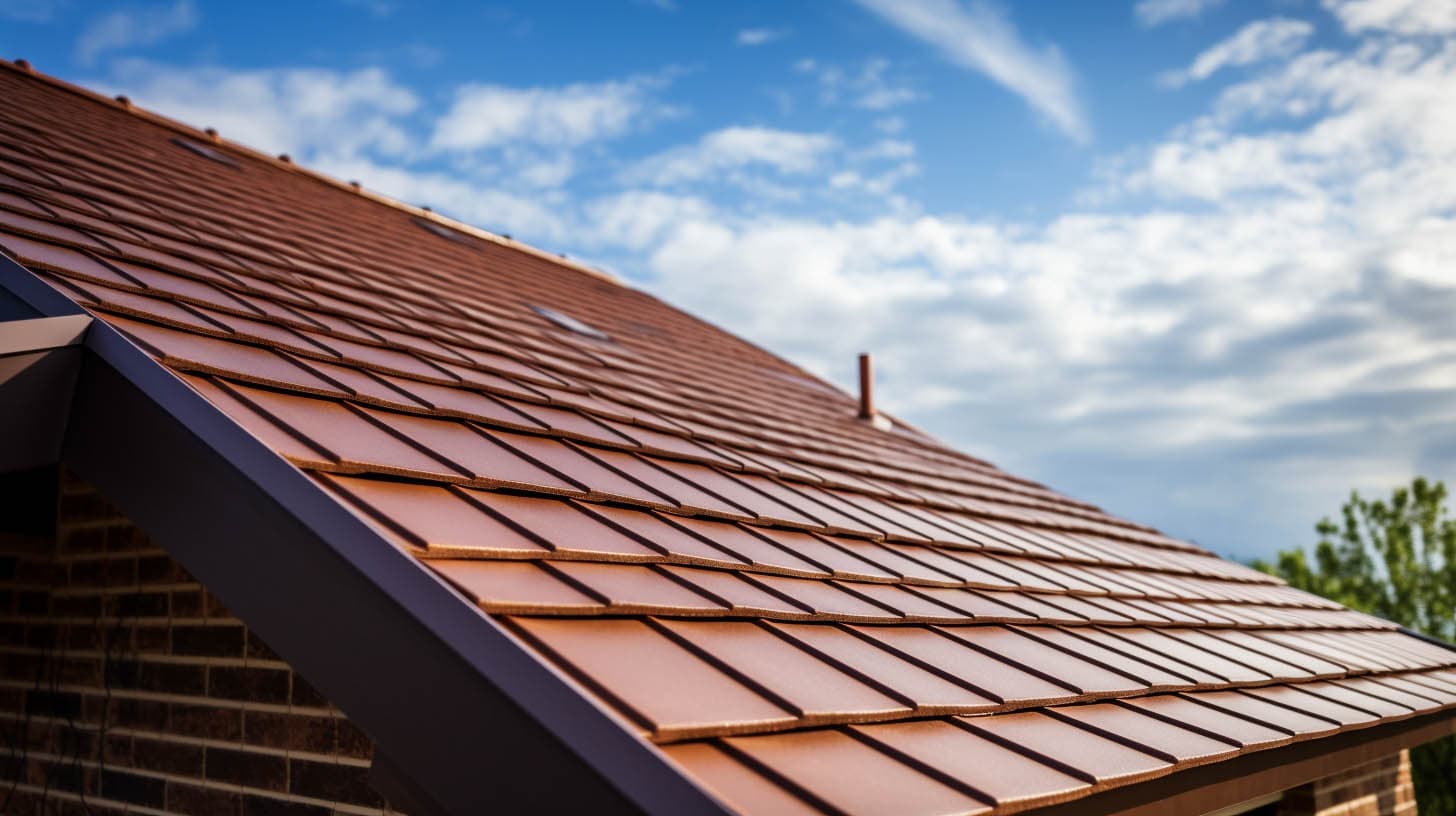
There is no single minimum slope for all roof coverings, but there are some broad patterns homeowners should understand. Asphalt shingles are commonly treated as requiring at least a very low but defined minimum slope, and they usually need special underlayment treatment when installed in the low-slope range. As the roof gets steeper, standard shingle installation becomes more straightforward. That is one reason most residential shingle roofs live comfortably above the minimum rather than right on it.
Metal roofing is more complicated because the minimum depends heavily on the system. A mechanically seamed standing seam roof can often be used at much lower slopes than an exposed-fastener metal panel. Homeowners sometimes hear “metal works on anything” and assume all metal is interchangeable. It is not. The panel profile, seam design, underlayment strategy, and fastening approach all affect what slope the system can handle reliably.
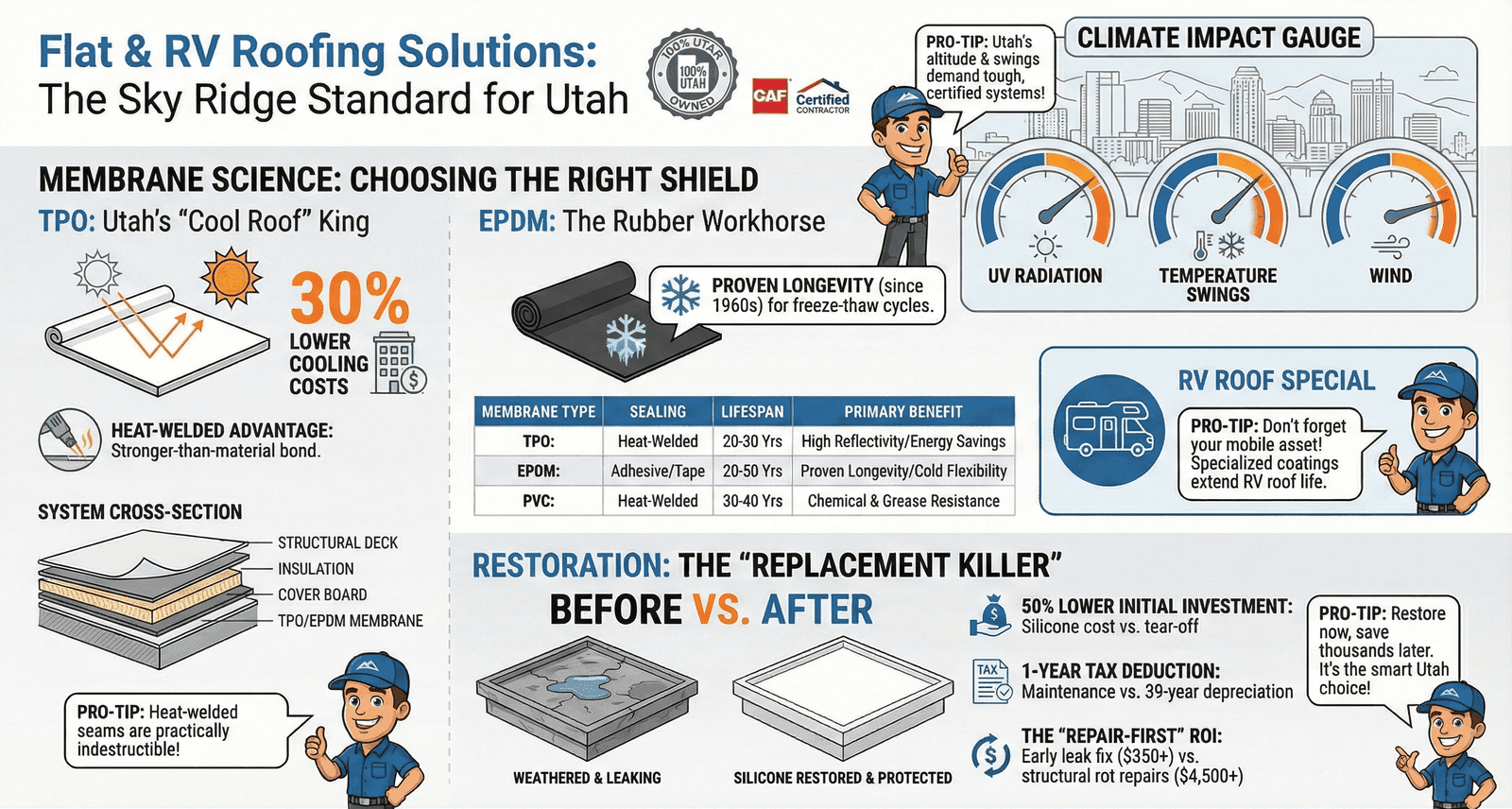
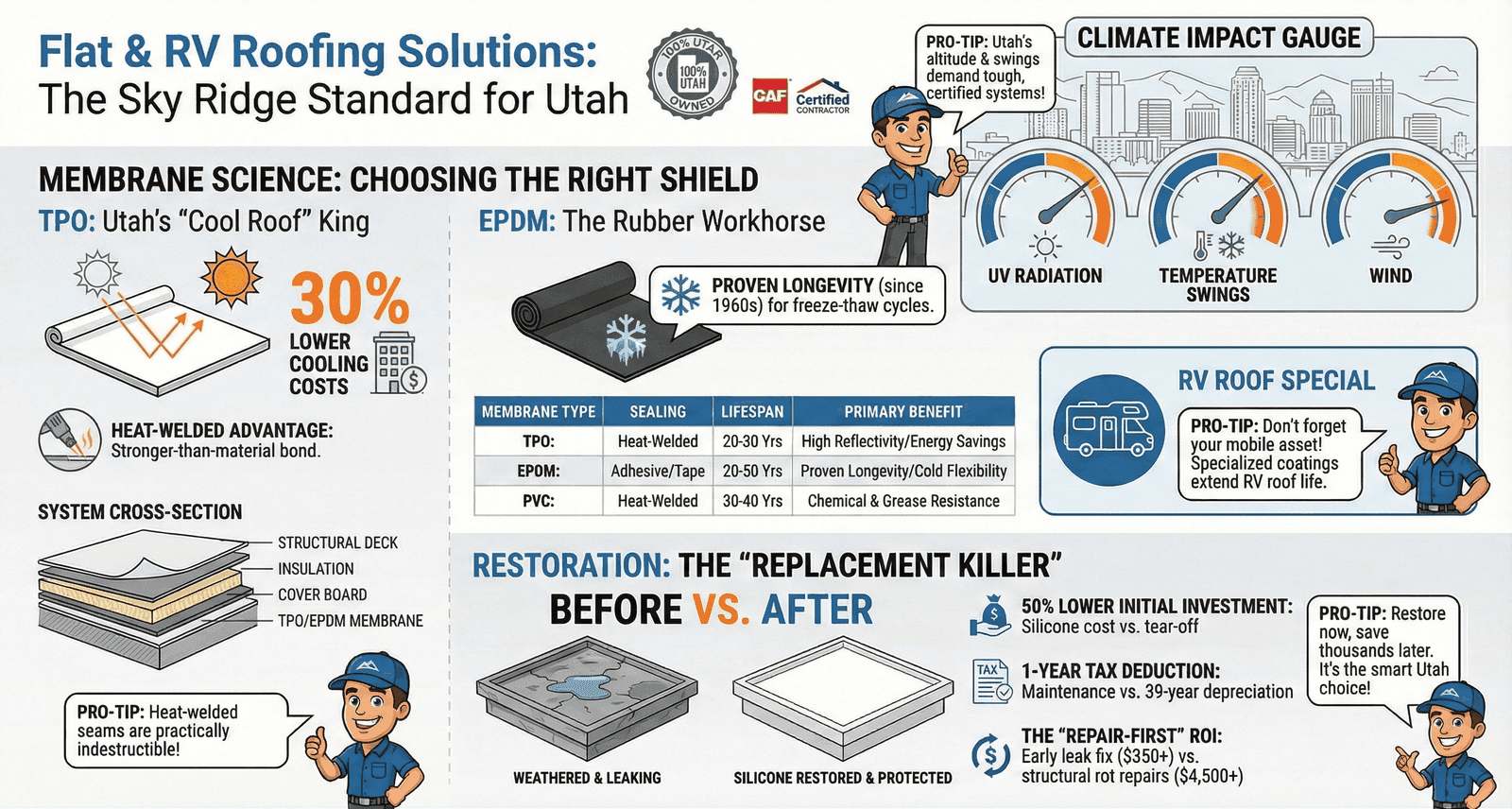
Tile, slate, and many shake-style systems usually prefer steeper slopes because they are layered water-shedding coverings rather than continuous waterproof surfaces. At the other end of the spectrum, low-slope membranes such as TPO, PVC, EPDM, and modified bitumen are designed specifically for roofs where shingles and other steep-slope materials no longer make sense. Those systems can work on very low pitches because the waterproofing strategy is fundamentally different.
The key lesson is that the right question is not “what is the minimum slope for a roof.” It is “what is the minimum slope for this specific roofing system, installed according to its instructions, on this building.” That is the question that actually prevents mistakes.
Professional Takeaways
- Asphalt shingles can work on lower slopes than many homeowners expect, but low-slope details matter.
- Standing seam and exposed-fastener metal roofs often have very different slope requirements.
- Tile, slate, and shake-style systems usually want more pitch than low-slope roofing materials.
- Membrane systems are designed for very low-slope roofs where shingles are not appropriate.
- The exact minimum always depends on the specific product, not just the material family.

Why Low-Slope Shingle Roofs Need Extra Caution
Low-slope shingle roofs sit in a tricky middle ground. They are not flat enough to automatically be treated as membrane roofs, but they do not shed water as quickly as the average residential shingle roof either. That means details that might be forgiving on a steeper roof become much more important. Underlayment strategy, flashing quality, and shingle exposure all matter more when water leaves slowly.
This is one reason contractors should be careful when a roof is near the lower threshold for shingles. Even if the installation is technically allowed, the margin for sloppy workmanship gets smaller. Wind-driven rain, backed-up debris, and snow or ice conditions become more likely to test the assembly. A low-slope shingle roof can perform well, but it needs the right system design and a contractor who understands that the roof is not in a typical pitch range.
Homeowners often get in trouble when they insist on shingles for appearance reasons even though the roof geometry would be better served by a different system. The short-term curb-appeal win can become a long-term leak problem if the pitch is wrong or the installer cuts corners on low-slope details. In some cases the better answer is to use a different roofing product on the low section and accept that the roof needs a mixed-system approach.
That is why minimum slope is not just a yes-or-no threshold. It is also a warning about how little installation error the roof can tolerate once you get close to it.
Professional Takeaways
- Low-slope shingle roofs leave less room for poor workmanship than steeper roofs do.
- Underlayment and flashing become more critical as pitch drops.
- A roof can be technically allowable for shingles while still being unforgiving in practice.
- Mixed roof systems are sometimes smarter than forcing shingles onto every roof section.
- Near-minimum slopes demand better detailing, not just a cheaper estimate.
How to Figure Out Whether Your Roof Is Too Low for the Material
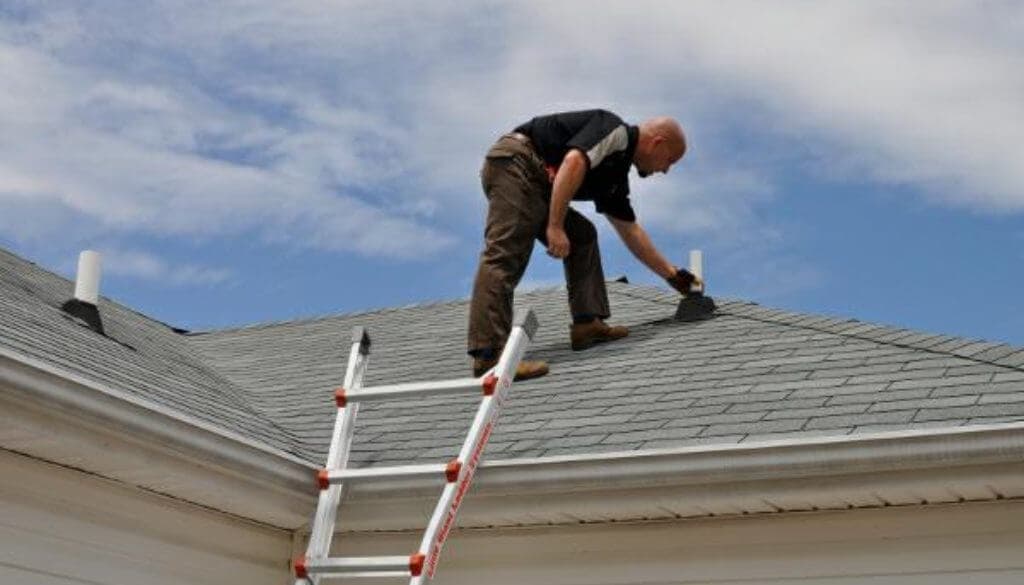
The first step is measuring the slope accurately. That can be done from plans, from the attic side of the roof deck in some homes, or through professional measurement tools that estimate pitch from photos and roof geometry. Guessing from the ground is not enough. A roof that looks like a 4:12 can end up much lower on certain sections, and those few degrees can change the material conversation entirely.
Once the slope is known, compare it against the actual roofing product being considered, not just a generic material label. “Metal roof” and “shingle roof” are too broad to answer the question by themselves. The contractor should be able to explain the system choice, the manufacturer installation limits, and what additional detailing is required if the roof is in a low-slope range. If they cannot do that, the estimate may not be reliable.
It is also smart to look at the roof in sections rather than as one average number. A roof may have one steep main section and one porch or addition roof with much lower pitch. That often changes the right product mix. Homeowners who understand this are much less likely to approve a one-size-fits-all roofing plan that ignores how different sections of the house actually drain.
The real goal is not memorizing slope thresholds. It is making sure the roof covering matches the geometry that is already there or the geometry being built.
Professional Takeaways
- Measure the roof accurately instead of estimating the pitch from the street.
- Compare the measured slope against the exact product being proposed, not only the general material type.
- Low-slope porch or addition roofs may need a different system than the main house roof.
- A good contractor should explain both the slope and the installation implications clearly.
- The correct material choice starts with geometry, not aesthetics alone.
The Better Question to Ask Your Roofer
Instead of asking only for the minimum roof slope, ask your roofer a slightly better question: “What roofing system is appropriate for this pitch, and why?” That forces the conversation out of shortcut territory and into real system design. A qualified roofer should be able to tell you what the roof measures, what products are appropriate for it, what accessories or underlayment details are required, and whether any sections deserve a different treatment than the rest.
This matters because some estimates are built around homeowner preference first and slope compatibility second. If you say you want architectural shingles, some contractors will simply assume shingles are the answer unless the roof is obviously flat. The stronger contractors start with geometry and water behavior. They may still recommend shingles, but they will explain the risk and detailing requirements if the roof is close to the lower limit. If the roof is better suited to low-slope roofing, they will say so even if it is not the answer the homeowner expected.
That level of clarity usually saves money over time. Roofs fail when materials are asked to perform outside their best use or when the scope hides the pitch problem instead of solving it. A roof built around the correct slope logic is usually more durable, easier to maintain, and less likely to surprise you with chronic leak problems later.
So yes, knowing the minimum roof slope matters. But knowing how to turn that number into the right roofing decision matters more.
Professional Takeaways
- Ask what system fits the roof pitch, not just what the minimum number is.
- The best roof recommendations start with water behavior and geometry, not style preference alone.
- Contractors should explain low-slope detailing requirements when the roof is near a material threshold.
- The wrong material on the right-looking roof is still the wrong roof.
- Pitch-based system design usually prevents expensive leak problems later.
Wrapping it up
What is the minimum roof slope? The honest answer is that it depends on the roof covering. There is no single universal minimum because shingles, metal panels, tile, and low-slope membranes all manage water differently. The lower the pitch, the more important it becomes to match the roof geometry to the right system and the right installation details.
That is why homeowners should treat slope as a system-design question, not just a trivia number. Measure the pitch, match it to the actual product, and make sure the roofer can explain why that combination belongs on your building. That is the path to a roof that works instead of one that simply looks acceptable until the first hard season tests it.
Information Center
Questions this guide answers
Quick answers tied to what is the minimum roof slope.
