
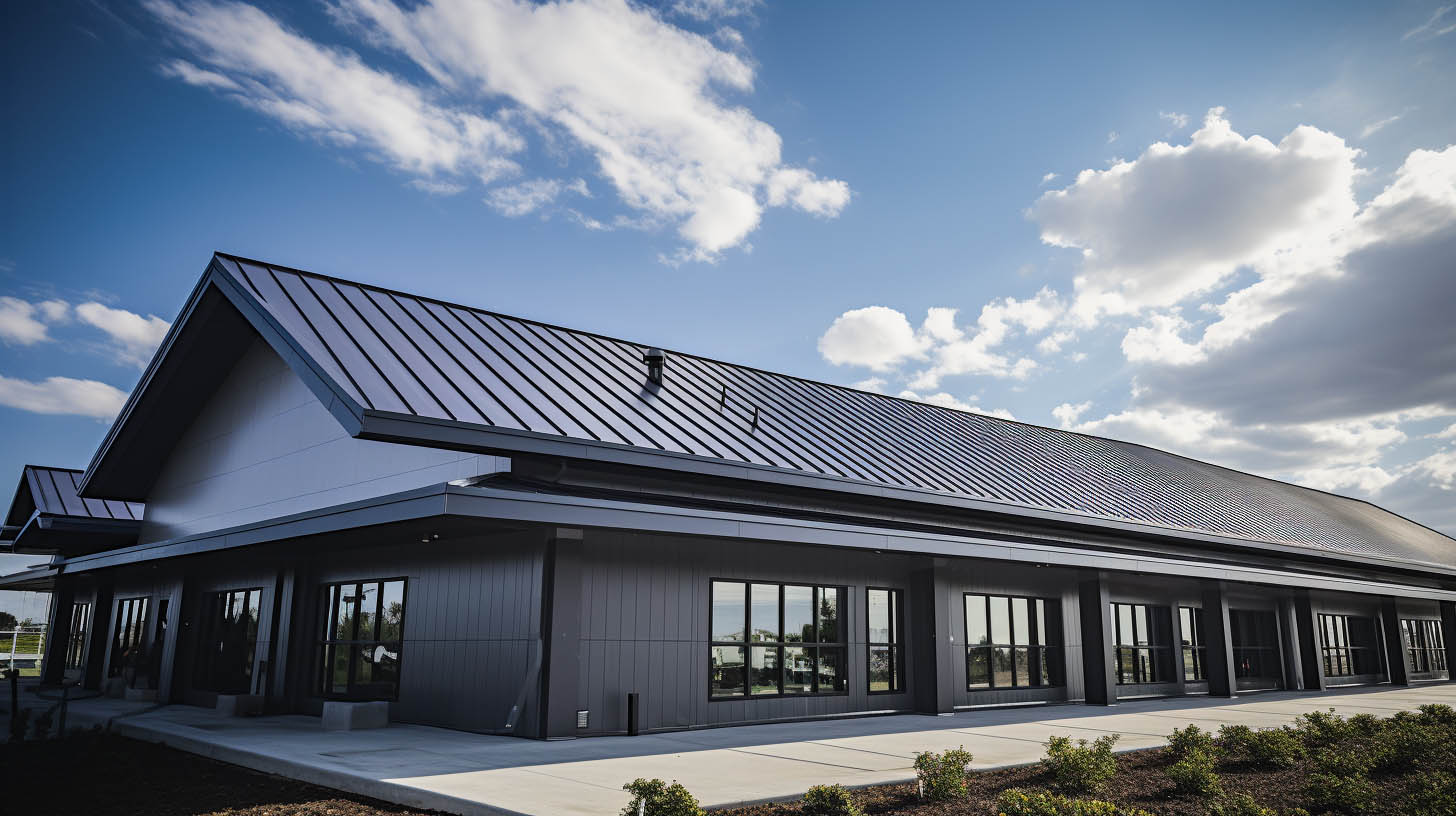
If you are researching solar roofing Utah, there is a good chance you are already thinking beyond whether panels will produce power. You are trying to figure out whether your roof is the right roof for solar in the first place. That is exactly the right place to start. Utah homes often have strong solar potential because of sun exposure, but solar performance is only half the story. The roof under the array still has to last, stay watertight, handle penetrations correctly, and support the system through wind, snow, maintenance traffic, and years of weather.
This is where homeowners lose money when the process is rushed. They sign a solar contract on an aging roof, ignore weak ventilation or flashing conditions, or assume the solar installer will solve roofing problems by default. Then the roof needs replacement a few years later and the array has to come off again. The solar system may be fine, but the sequencing was wrong. Good solar roofing decisions start with the roof itself, not just with the panels.
This guide explains how Utah homeowners should think about roof age, roofing material, structural readiness, penetrations, snow and wind exposure, reroof timing, and contractor coordination before solar goes on in 2026. If the goal is a roof-and-solar system that works together instead of fighting each other, start here.
Why Roof Condition Comes Before Solar Equipment
The first question in a solar roofing conversation should be whether the roof has enough life left to justify the installation. If the roof is already nearing replacement age, adding panels now can turn into an expensive sequencing mistake. Solar arrays can stay in place for decades. If the roof underneath them only has a few years of reliable life left, the homeowner may end up paying to detach and reset the system long before they expected. That cost is often more frustrating than the roof replacement itself because it feels avoidable.
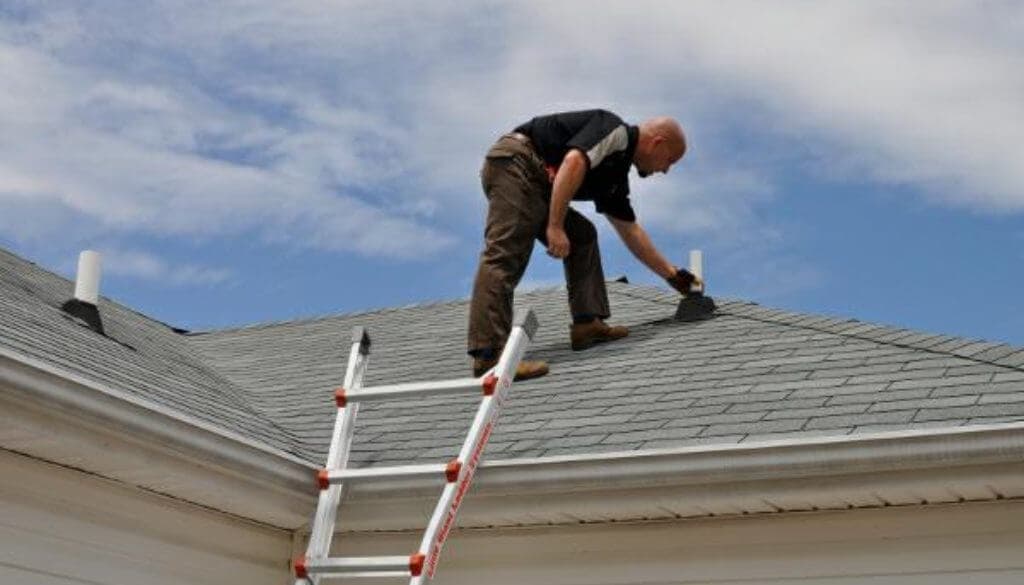
Condition matters just as much as age. A roof can be relatively young and still be a poor solar candidate if it has flashing defects, weak decking, ventilation issues, storm damage, or ongoing leaks. Solar does not fix those problems. It can actually make them harder to access later if the issues are left unresolved. That is why a roofing evaluation before solar is usually more valuable than many homeowners realize. It helps answer whether the roof is ready, whether repairs are enough, or whether reroofing should happen first.
Homeowners sometimes hear “your roof is fine for solar” from someone whose main expertise is panel installation rather than roofing systems. That may or may not be true. A roof-specific opinion matters because the standard for “fine” is different when an array is about to sit on top of the house for many years. You want a roof that is not just currently serviceable, but appropriately prepared for a long attachment cycle.
That is why roof condition is not a secondary checklist item. It is the foundation of the whole solar decision.
Professional Takeaways
- A roof should have adequate remaining life before panels are installed on it.
- Roof condition matters as much as roof age when planning for solar.
- Existing leaks, flashing issues, or weak decking should be addressed before panel installation.
- Solar can make future roof work more complicated if the roof was not prepared first.
- A roof-specific evaluation is often more useful than a generic “looks fine” solar opinion.
Which Roofing Materials Work Best with Solar
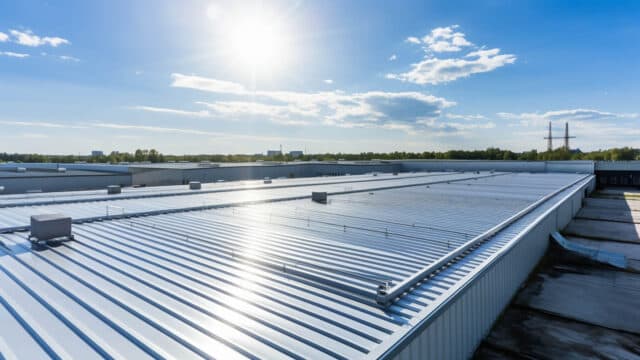
Solar can be installed on a variety of roof types, but some materials integrate more cleanly than others. Standard asphalt shingle roofs are common solar platforms because attachment methods are familiar and the material is widespread. Metal roofs can also work very well, especially when the attachment method minimizes penetrations or uses clamp-based hardware on the right standing seam systems. Low-slope commercial roofs often pair well with ballasted or mechanically attached solar designs when the roof structure and membrane are suitable.
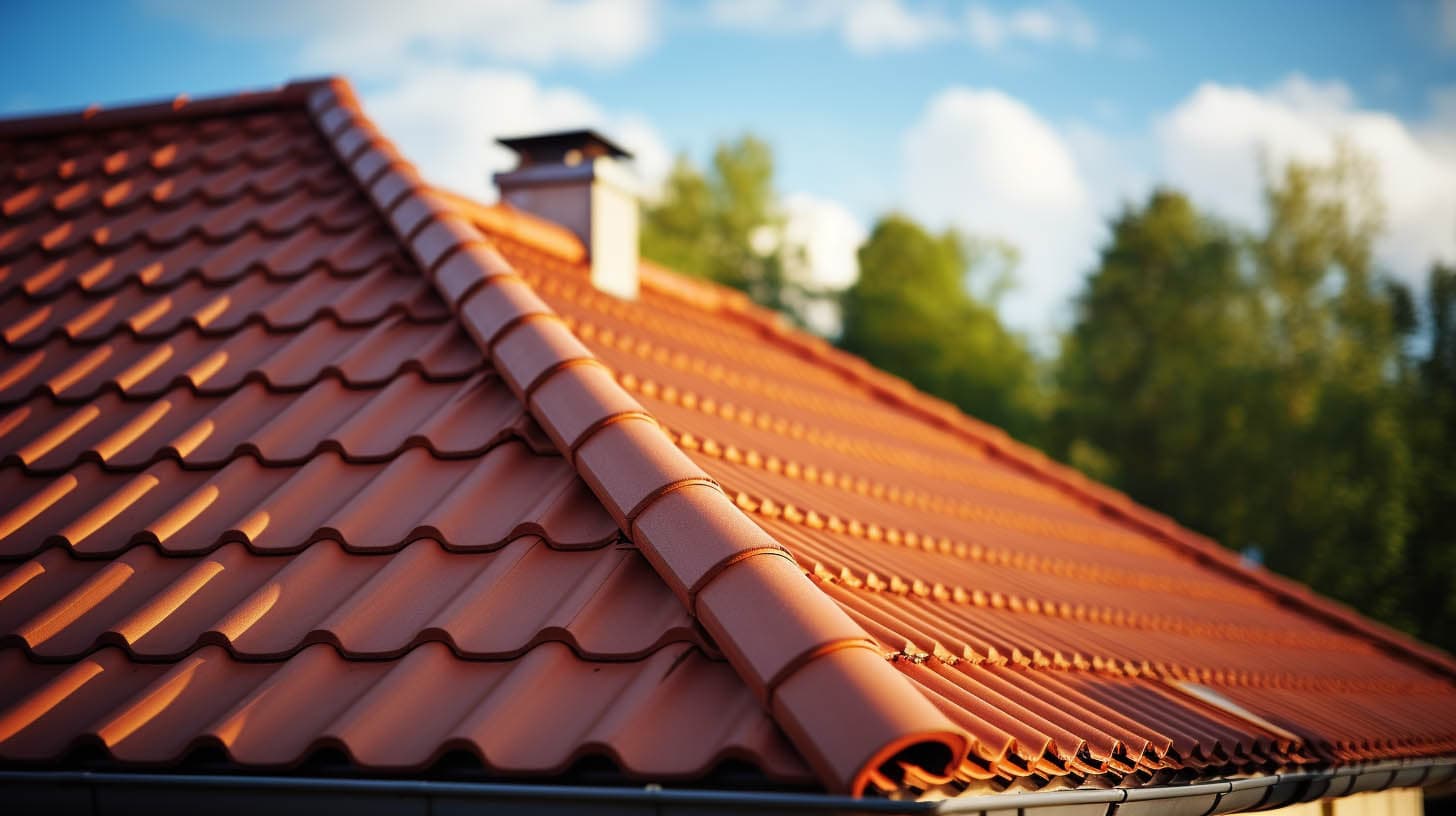
What matters is not just whether solar can technically be installed, but how cleanly the roof and mounting system work together. Brittle or aging shingles can be a problem because the installation process itself introduces foot traffic and penetrations. Some tile systems require specialized attachment strategies and more careful handling because broken tile and underlayment exposure create their own leak risks. Roofs with complicated geometry, multiple dormers, and crowded penetrations may still be solar candidates, but the installation becomes more detail-sensitive and less forgiving.
Homeowners should also think about future serviceability. A roof material that looks attractive for solar should still be practical for future inspections, repairs, and weather performance beneath the array. The best solar roof is not simply the one that can hold panels. It is the one that can hold panels while still behaving like a durable, maintainable roof system.
That is why material compatibility is really a conversation about penetrations, details, maintenance access, and long-term roof performance, not just about what the racks can physically attach to.
Professional Takeaways
- Asphalt shingles, many metal roofs, and low-slope commercial systems can all work with solar when detailed correctly.
- Material compatibility depends on mounting method, penetrations, and long-term serviceability.
- Aging or brittle roofing materials make solar installation riskier even when the roof still looks serviceable.
- Complex roof geometry increases the detailing challenge around solar arrays.
- The best solar roof is one that remains maintainable after the array is installed.

Utah Weather Makes Roof-and-Solar Coordination More Important
Utah roofs live in a climate that can be very productive for solar and very demanding on roof details. High sun exposure can make solar attractive, but it also means shingles, flashings, and underlayments see serious UV stress over time. Snow load, freeze-thaw cycles, and canyon or storm winds add another layer of demand. Once panels are installed, the roof still has to handle all of that while supporting attachment points and maintaining watertight penetrations.
Snow behavior deserves special attention. Panels can change how snow loads and sheds on a roof, and that can affect roof edges, valleys, walk paths, and areas beneath lower panel edges. Wind matters too, especially on exposed sites and steeper roofs. The mounting strategy and the roofing details around it have to work as a system. A solar array should not become the reason a previously solid roof starts seeing new edge stress or leak pathways around attachments.
Heat and ventilation also matter. Solar panels can change roof-surface shading patterns and maintenance access, but they do not remove the need for a healthy roofing system underneath. Intake and exhaust ventilation still matter. Flashing integrity still matters. A roof that already struggles with heat or moisture management should not be expected to solve those problems after solar is added on top.
That is why Utah homeowners benefit from treating solar as a roof-integration project, not just an energy project. The weather here rewards good coordination and punishes shortcut thinking.
Professional Takeaways
- Utah sun is great for solar production but still demanding on roof materials and flashings.
- Snow, freeze-thaw cycles, and wind exposure affect both the array and the roof beneath it.
- Solar changes how parts of the roof are loaded, shaded, and accessed for maintenance.
- Roof ventilation and waterproofing still matter after the panels are installed.
- In Utah, solar readiness is partly an energy question and partly a weather-resilience question.
When to Reroof Before Going Solar
As a rule, if the roof is close enough to replacement that you are already thinking about it, that is usually the moment to ask whether reroofing should happen before solar. Homeowners often want to avoid the bigger upfront spend, but detach-and-reset costs later can make that decision more expensive overall. A new roof installed before solar also gives the homeowner more control over flashing details, penetrations, and product choices that support the solar plan from the beginning.
This is especially valuable on asphalt shingle roofs because the sequencing becomes cleaner. The roof can be rebuilt, ventilation can be corrected, bad decking can be replaced, and the roof can start its new life with the solar plan already in mind. That tends to produce better long-term coordination than trying to preserve an aging roof simply to avoid a larger immediate project. If the house is intended as a long-term hold, aligning the roof lifecycle with the solar lifecycle is usually the smarter play.
Homeowners should also think about warranties and responsibility lines. When a new roof and solar installation are coordinated properly, there is usually much less confusion later about who handled what and how the penetrations were meant to be flashed. The more fragmented the sequence is, the easier it becomes for everyone to point at someone else when a problem shows up years later.
That is why reroofing before solar is not a sign that the project is getting more complicated. In many cases it is the move that makes the entire project simpler over the long haul.
Professional Takeaways
- If a roof is nearing replacement age, reroofing before solar is often the smarter long-term sequence.
- Detach-and-reset costs later can erase the short-term savings of delaying the reroof.
- Coordinating reroofing and solar makes flashing, penetrations, and ventilation planning cleaner.
- Aligned roof and solar lifecycles usually create fewer warranty and responsibility disputes later.
- A long-term home benefits from having the roof and solar plan built together rather than in conflict.

Penetrations, Flashing, and Maintenance Access
Solar-ready roofing is really a detail-management question. Attachment points must be flashed correctly. Water must continue to move as intended around penetrations. Service paths should remain accessible. Valleys, vents, chimneys, and edges cannot be treated like leftover roof space once array layout begins. A poor layout can create maintenance headaches, blocked access, and leak-prone transitions that had nothing to do with the solar panels themselves and everything to do with how the system was integrated.
This is why homeowners should want both the roofer and solar installer thinking about the same roof map. Where are the existing penetrations? Which sections are strongest structurally? Where should walk paths remain? Will the panel layout crowd important flashing zones or make future roof service awkward? These are not minor questions. They shape how maintainable the roof remains after the install is complete.
Good solar roofing work preserves the roof’s serviceability instead of sacrificing it for panel count. That can mean leaving room around critical details, choosing a different mounting approach, or deciding that one roof plane is not worth using if it creates too much complexity. The best layouts usually look disciplined rather than maximized at all costs.
That discipline pays off later. When roof maintenance, inspection, or repairs are needed, a well-integrated array creates far fewer surprises than one that was squeezed onto the house without enough roofing input.
Professional Takeaways
- Solar-ready roofs need clean flashing and attachment detailing at every penetration.
- Array layout should preserve access to roof details, valleys, vents, and service paths.
- The roof map should be reviewed by both the solar installer and the roofer.
- Maximizing panel count is not always the same thing as maximizing long-term roof performance.
- A disciplined layout reduces future maintenance and leak risk.
What Homeowners Should Ask Before Signing a Solar Contract
Before signing, ask whether the roof has been evaluated by someone who understands roofing, not just solar production. Ask how old the roof is, how much life remains, how attachments will be flashed, who handles detach-and-reset if reroofing is needed later, and whether the layout preserves access for future roof service. If the answers stay vague, the project is not ready. Solar on a house is too expensive to start with fuzzy assumptions about the roof underneath it.
It is also worth asking whether the roof sections being used are the right ones structurally and practically, not just electrically. Sometimes the best solar plane is not the best roofing plane because of valleys, penetrations, snow behavior, or maintenance access. A strong contractor team explains those tradeoffs honestly instead of pretending every open square foot should be filled.
Finally, ask about sequencing. If repairs or reroofing are recommended, do them first. If the roof is in strong condition, document that condition clearly before installation. If the house may need a new roof within the same ownership horizon as the solar system, build that into the decision now rather than discovering it later in a much more expensive way.
The best solar roofing projects in Utah start with a simple principle: energy production is important, but the roof still has to be a roof first.
Professional Takeaways
- Ask whether a real roofing evaluation happened before the solar proposal was built.
- Get clear answers on roof age, remaining life, flashing, and future detach-and-reset responsibility.
- Make sure the chosen roof planes make sense from both a solar and roofing perspective.
- Handle reroofing or major roof repairs before solar when they are already on the horizon.
- A solar contract should reflect the roof reality, not ignore it.
Wrapping it up
Solar roofing Utah is not just about putting panels on a sunny house. It is about making sure the roof underneath those panels is ready for the job. Roof age, material compatibility, penetrations, snow and wind exposure, ventilation, and installation sequencing all matter if you want the system to perform well without creating future roofing headaches.
The strongest solar projects are the ones where the roof and the array are planned together. When the roof is evaluated honestly and prepared first, solar becomes an upgrade that works with the home instead of a shortcut that makes the next roof problem harder and more expensive to solve.
Information Center
Questions this guide answers
Quick answers tied to solar roofing utah.
