Roofing Contractor South Jordan (2026)
By Skyridge Ricky • March 28, 2026 • 13 min read
If you are searching for a roofing contractor South Jordan homeowners can trust, you are probably trying to solve a specific problem, not just browse. Maybe you have a leak after winter cycling, missing shingles after wind, aging materials that are nearing replacement, or a roof inspection that gave you more questions than answers. South Jordan is not the harshest weather pocket in Utah, but it still puts real stress on roofing systems through hot summer exposure, winter moisture, spring storms, and everyday thermal movement.
That means the best local roofing contractor is not simply the first company that can put a sign in the yard. You want someone who can diagnose repair versus replacement honestly, explain flashing and ventilation issues clearly, and scope work based on the actual roof instead of a generic sales script. For homeowners in Daybreak, The District, Sunrise, and surrounding neighborhoods, that distinction matters because many roofs look fine from the curb while hiding localized leak details or aging shingle fields that need a smarter plan.
This guide is built for high-intent searchers comparing South Jordan roofing companies in 2026. We will cover what local conditions do to roofs, how to evaluate a contractor, which services are most commonly needed in the area, and how to avoid weak bids that create repeat problems later. If the goal is choosing the right roofing once and not re-learning the lesson after the next storm, this is the framework.
Replacement And Buying Paths
Buying guides and replacement articles should route readers into the service pages, pricing tools, and quote path that convert research into projects.
Next steps from this article should include roof replacement services, roof inspection services, shingle roofing services, metal roofing systems.
Request a roofing estimate
Turn buying research into a real estimate.
Request a roofing estimateWhat South Jordan Roofs Commonly Deal With
South Jordan roofs face a mix of valley heat, seasonal storm exposure, winter moisture cycles, and the long-term wear that comes from sun and temperature swing more than extreme mountain conditions. On many homes, that means aging architectural shingles slowly losing seal strength, granules, and flexibility over time. Thermal cycling can stress flashing details and penetrations even when the roof is not dealing with obvious storm damage. Homeowners often notice the problem only after a leak appears around a vent, sidewall, or valley.
Wind is another recurring issue. While South Jordan is not the same as a high-exposure canyon corridor, gust events still break weak seal strips and lift aging tabs. Roofs that were installed cheaply or have already seen patchwork repairs are especially vulnerable. In newer neighborhoods, the issue is not always age. Sometimes it is original installation quality. Misnailed shingles, rushed flashing details, and poor attic airflow can create avoidable problems years earlier than homeowners expect.
Winter conditions matter too. Ice-dam patterns may be lighter than at higher elevations, but South Jordan homes still see melt and refreeze cycles, gutter overflow, and attic-driven moisture problems. If insulation and ventilation are out of balance, a roof can leak seasonally even when the shingle field looks broadly acceptable. That is why contractor diagnosis matters more than broad assumptions based on neighborhood age alone.
The practical point is that local roofing work is rarely just about replacing visible damage. South Jordan homeowners benefit most from contractors who understand heat aging, flashing behavior, and the difference between a localized problem and a roof that is drifting toward full replacement.
- South Jordan roofs commonly age from sun, thermal movement, and seasonal storm wear.
- Wind-lifted tabs and flashing failures are frequent repair triggers on older shingle systems.
- Some local roofing problems come from original installation shortcuts, not just roof age.
- Winter moisture and attic imbalance can still create leak issues even without heavy mountain snow loads.
- Local diagnosis should separate isolated repairs from broader aging patterns.
How to Evaluate a Roofing Contractor in South Jordan
The most important thing to compare is not just price. It is whether the contractor can explain the roof condition clearly. Ask what they think the main problem is, why it happened, and whether they recommend repair, replacement, or inspection-first investigation. A strong roofing contractor should be able to show photos, talk through flashing details, and identify whether the issue is isolated to one slope or indicative of a larger lifecycle problem. If the answer is vague, rushed, or overly certain without inspection evidence, the proposal is probably weak.
Licensing, insurance, and local presence still matter, but homeowners should also look for scope quality. Does the estimate identify decking assumptions, flashing replacement, ventilation concerns, and material type? Does it explain what happens if hidden damage is found? South Jordan roofs are often straightforward enough that contractors may be tempted to speed through the inspection. That is exactly how important details get missed. The best companies are efficient without being careless.
Review project photos and ask about similar homes. Neighborhood-style roofs with dormers, valleys, and wall transitions need cleaner workmanship than broad, simple slopes. The contractor should be able to point to comparable projects and explain why those roofs needed repair or replacement. It is also worth asking how they handle storm documentation if recent weather is part of the problem. Good contractors document well because they know homeowners may need those records for insurance or resale conversations later.
Finally, pay attention to how the contractor talks about limits. Not every older roof should be “saved,” and not every leak needs a full replacement. Contractors who can define that middle ground usually give better guidance than companies that sell only one type of solution.
- Choose a contractor who can explain cause, scope, and repairability clearly.
- Detailed estimates should address flashing, decking assumptions, and ventilation where relevant.
- Comparable local project photos are stronger evidence than generic marketing material.
- Storm documentation matters when recent weather may be part of the claim or decision path.
- Balanced advice on repair versus replacement is often a sign of stronger contractor judgment.
The Most Common Services South Jordan Homeowners Actually Need
Most South Jordan homeowners do not need a custom roofing dissertation. They need the next right service. In practice, that usually falls into one of four categories: targeted repair, inspection and condition reporting, storm-related work, or full replacement. Targeted repair is common for vent flashings, wind-damaged shingles, valley leaks, and isolated transition failures. Inspection-first work is valuable when the owner sees symptoms but the right remedy is not yet clear. That is especially true when deciding whether a leak is isolated or part of broader roof aging.
Storm response matters because wind and hail do not always create dramatic visible damage. A South Jordan contractor should know how to document subtle uplift, creasing, granule loss, and accessory damage in a way that helps the homeowner make an informed decision. Full replacement becomes the right move when multiple areas are failing, shingles have lost repairability, or previous patch history has already narrowed the roof’s remaining service life.
Homeowners also benefit from contractors who look at the whole assembly, not just the shingles. Ventilation, underlayment condition, gutter overflow patterns, and flashing behavior often determine whether a roof continues performing after the visible issue is fixed. That is why the best service list is not the longest one. It is the one most closely matched to what the house actually needs.
For most households, the smartest path is inspection first, then a scoped repair or replacement decision based on evidence. That protects the homeowner from paying for too much roof or too little roof at the wrong time.
- Targeted repairs, inspection-first scopes, storm assessments, and full replacements are the most common local needs.
- Subtle storm damage often needs photo documentation to support smart decision-making.
- Repair and replacement decisions should account for flashing, ventilation, and previous patch history.
- The right contractor helps homeowners buy the next correct service, not the biggest package.
- Inspection-first planning is often the safest starting point when the cause is not obvious.

How to Compare South Jordan Roofing Bids Without Guessing
When bids come in, compare scope before price. One estimate may include flashing replacement, deck allowance, and upgraded underlayment while another may only replace the visible shingles.
One contractor may be planning a repair while another believes the roof has reached replacement stage.
Without reading the assumptions, the lower number can look attractive even if it is solving a smaller problem.
Homeowners should ask each bidder to identify what they believe is causing the issue and what they expect the recommended work to accomplish.
Warranties should also be compared carefully.
Material coverage, workmanship coverage, and repair warranties are not interchangeable. On repair work, ask whether the warranty applies to the repaired area or the whole slope. On replacement work, ask whether manufacturer-backed coverage is available and whether ventilation or accessory upgrades are part of the scope needed to protect the warranty. Strong bids explain this in writing.
Timeline and communication matter more than people think. South Jordan homeowners often juggle insurance deadlines, listing timelines, or active leak concerns. A contractor who communicates clearly about lead times, hidden conditions, and project sequencing is usually easier to work with from start to finish. Low-friction communication is not just convenience. It reduces surprises when the roof is opened or weather interrupts the schedule.
The best bid is usually the one that makes the roof easier to understand. If you can see the problem, the solution, the assumptions, and the likely outcome clearly on the page, you are probably looking at a stronger contractor than one who simply produced the lowest number.
- Compare what each bid assumes about the cause of failure and the amount of corrective work needed.
- Warranty language should be read closely on both repair and replacement proposals.
- Ask whether flashing, underlayment, and hidden conditions are included or excluded.
- Communication quality affects project outcome more than many homeowners expect.
- The clearest bid is often stronger than the cheapest bid.
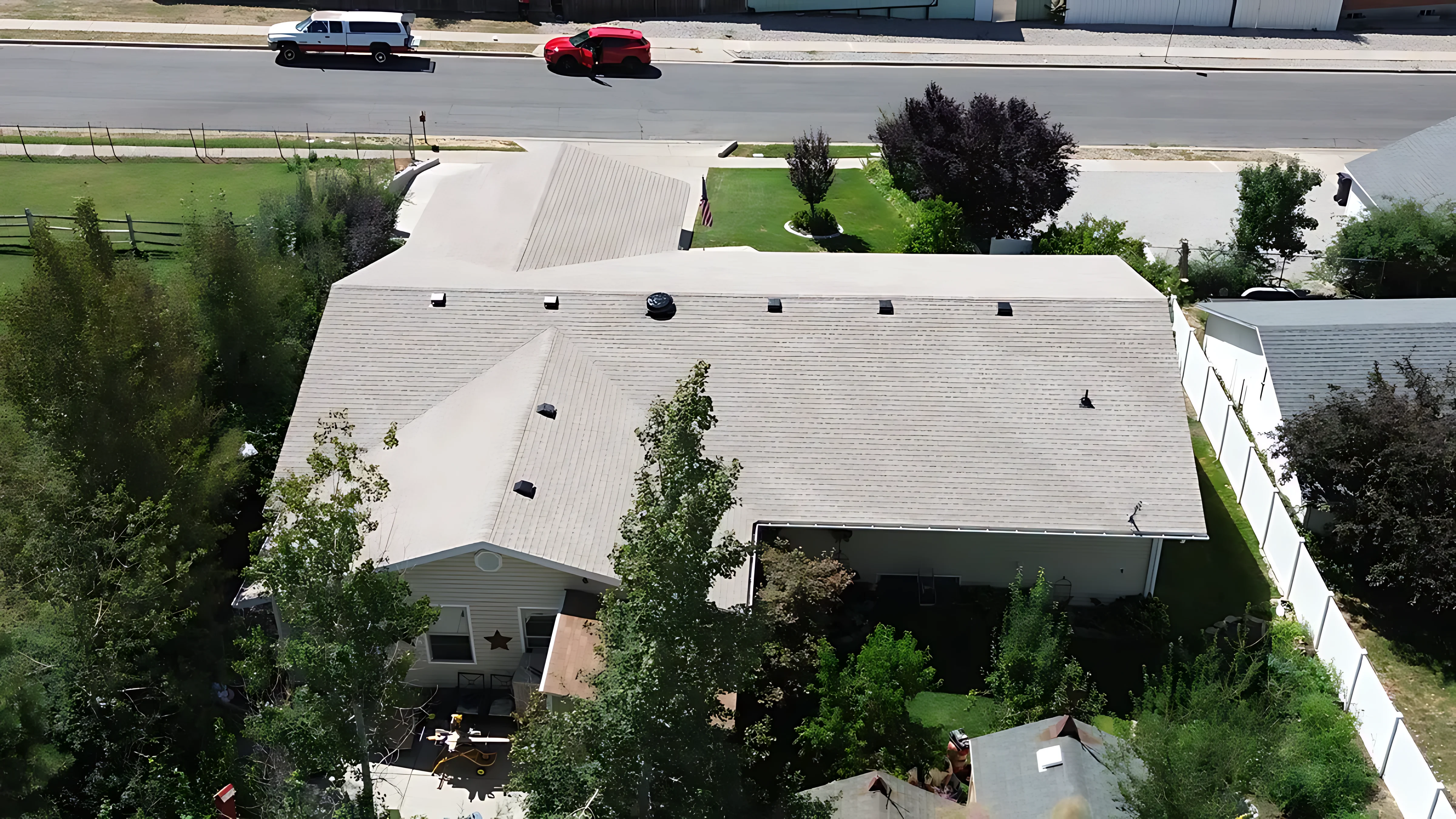
Why Communication and Photo Documentation Matter on Local Roofing Jobs
One of the easiest ways to tell whether a contractor is organized enough to handle your roof well is to look at how they communicate before the job starts. Homeowners in South Jordan are often coordinating roof work alongside insurance conversations, work schedules, travel, home sales, or other contractors. A roofing who communicates clearly about inspection findings, scheduling, hidden conditions, and project sequencing removes a huge amount of avoidable friction. That matters just as much on a “small repair” as it does on a full replacement because confusion is where distrust and change-order frustration usually begin.
Photo documentation is part of that communication. Before-and-after images, marked problem areas, decking photos if the roof is opened, and clear explanations of flashing or ventilation details all help homeowners understand what they are actually buying. This is especially useful in neighborhoods where many homes share similar roof shapes and owners may assume the same fix applies across the board. Two roofs in the same subdivision can need very different scopes depending on orientation, prior repairs, attic conditions, and weather exposure. Photos make those differences visible.
Documentation also helps after the work is complete. If you sell the house, track maintenance history, or need to revisit a warranty issue later, a well-documented job becomes much easier to explain. That is not just administrative neatness. It is part of protecting the value of the work you paid for. A contractor who treats documentation as optional may still finish the roof, but they are leaving you with less clarity than you should expect from a professional job.
For South Jordan homeowners comparing contractors, communication quality is often one of the fastest practical filters. A company that explains the roof well before the project usually manages the roof better during the project too.
- Clear communication reduces friction on both repair and replacement jobs.
- Photo documentation helps homeowners see exactly what problem is being solved.
- Well-documented work is easier to reference during resale, warranty, or maintenance conversations.
- Neighborhood similarity does not mean every roof needs the same scope.
- Strong communication before the job often predicts stronger management during the job.
When South Jordan Homeowners Should Repair First and When They Should Replace
One of the most important things a roofing contractor South Jordan should help with is the repair-versus-replacement decision. Many local roofs sit in the gray zone where damage is real but not catastrophic. A single leak at a vent, a wind-damaged slope, or one failing valley on a roof with remaining service life is often a good repair candidate. In those cases, replacement can be premature if the contractor can restore the weak detail without compromising the surrounding field. That is where inspection quality and material condition really matter.
Replacement becomes the better path when the same roof keeps demanding attention. If shingles have lost flexibility, granule loss is widespread, previous repairs are scattered across multiple elevations, or storm damage is layered on top of age-related wear, the next repair may not deliver meaningful confidence. Homeowners sometimes spend several years paying for urgent fixes when the roof has already crossed out of efficient repair territory. A good contractor should be willing to say that clearly and explain why.
South Jordan homes also vary in attic performance, ventilation quality, and prior construction detail. Some leaks are not purely roof-cover issues. They are assembly issues where poor airflow, old flashing, or weak transitions keep creating localized failures. In those situations, repair may still be the right first move, but only if the contractor is solving the root condition and not just replacing visible shingles. Replacement may be smarter when the corrective work needed starts to resemble a partial reroof on an already aging system.
The best local guidance is not “always repair first” or “always replace if there is a leak.” It is a condition-based explanation of what the next dollar is likely to accomplish. Homeowners should expect that level of reasoning when they ask a South Jordan roofing for advice.
- Localized failures on a healthy roof usually support repair-first planning.
- Repeated repairs across multiple slopes often signal weakening replacement economics.
- Assembly issues like ventilation or flashing can make a repair succeed or fail.
- Replacement becomes the better investment when patching no longer restores confidence.
- South Jordan homeowners should expect condition-based guidance, not one-size-fits-all sales advice.
Wrapping it up
Choosing a roofing contractor South Jordan is really about choosing the quality of your next decision. The right company helps you understand whether the roof needs repair, inspection, storm documentation, or replacement and then scopes that work clearly enough that you know what you are paying for. In a market where many roofs look similar from the street but fail for different reasons, that level of clarity is what separates a strong contractor from a fast quote.
Homeowners usually benefit most from the roofing who makes the roof easier to understand, not the roofing who talks the fastest. When local conditions, photo documentation, warranty language, and repairability are all explained in plain terms, it becomes much easier to spend the next dollar in the right place. That is the kind of contractor relationship that tends to hold up long after the truck leaves the driveway.
In practical terms, better explanation usually leads to better scope, better scope leads to fewer surprises, and fewer surprises lead to a much stronger roofing experience overall.
That matters in South Jordan because many homes share similar ages and neighborhood profiles while hiding very different roofing conditions. A contractor who can explain those differences clearly gives the homeowner a major advantage before any repair or replacement contract is signed.
That advantage usually shows up later as better scope accuracy, better expectations, and fewer unpleasant surprises once the work begins.
For homeowners comparing multiple companies, that kind of clarity often ends up being the most practical differentiator of all during the selection process.
It also makes the final decision easier to defend because the homeowner can point to evidence, scope logic, and expected outcome instead of relying on guesswork or marketing language alone during a stressful roofing decision.
When the contractor selection process is handled that way, the homeowner usually ends up with a scope that fits the roof better, a clearer timeline, and a much stronger sense of why that specific repair or replacement plan was the right one for the property.
Questions this guide answers
Quick answers tied to roofing contractor south jordan.
Utah Roof Replacement Hub
Explore our comprehensive guides, local pricing, and service area details to help you plan your next roofing project with confidence.
Pricing & Vetting Guides
Priority Local Pages
Utah Roofing Services Directory
Access our full suite of residential and commercial roofing services, local service area pages, and specialized material guides.