
Square Footage
Calculate total surface area in real-time based on house footprint and pitch.
Use 0 for flat. Most residential roofs are 4-8.
Slope Multiplier
The steeper your roof, the more surface area it has compared to your house footprint. A 12/12 pitch has ~41% more surface area!
Footprint Area
1,200 sq ft
Total Roof Area
1,342 sq ft
Total Squares
13.4
Pitch Multiplier: 1.12x
* Excludes waste factor
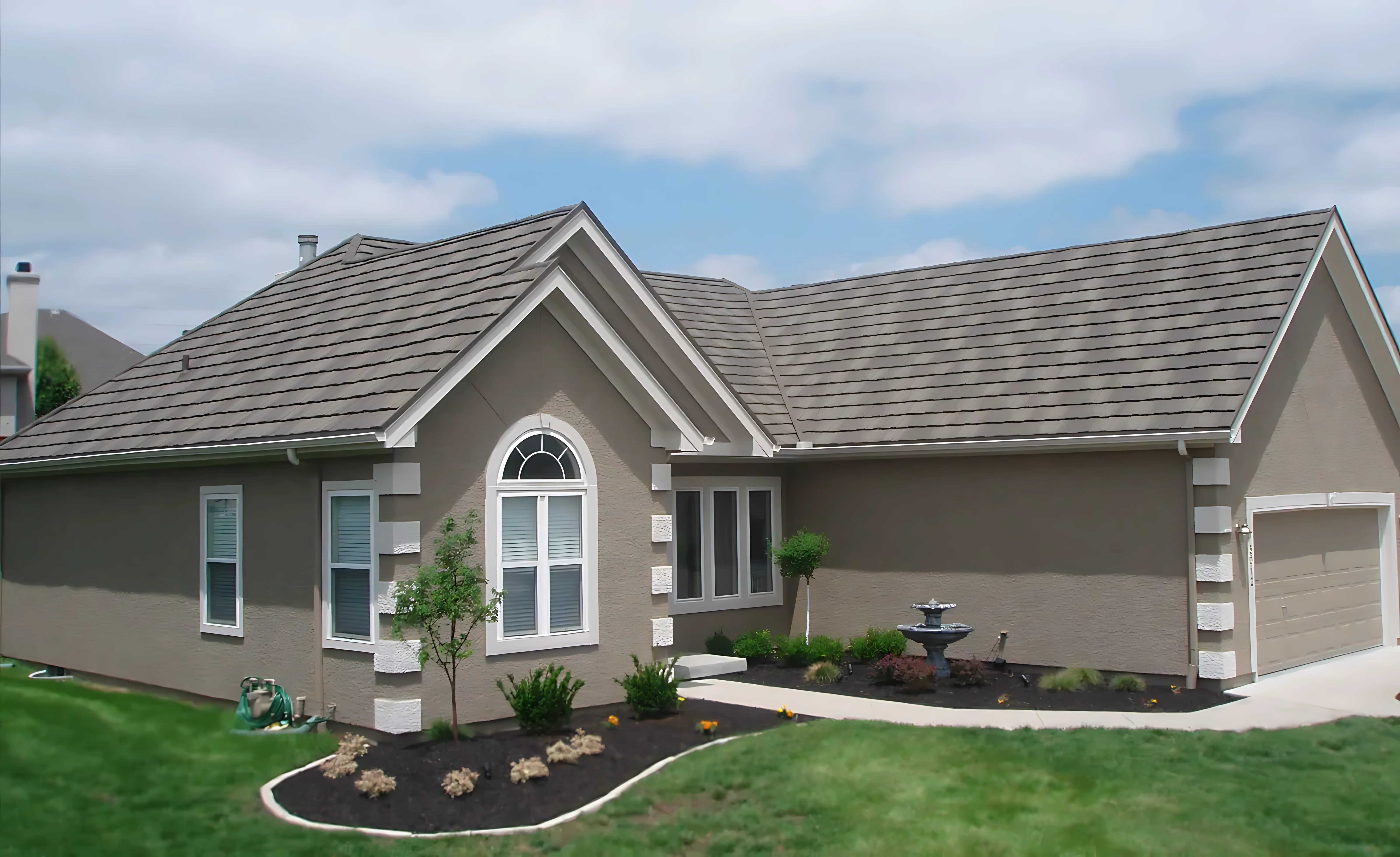
Calculating Your Total Roof Square Footage
Calculating roof square footage is different from calculating the floor area of your home. Because your roof is angled, its surface area is always larger than the footprint of the house.
This calculator uses the base dimensions of your home and applies a "pitch multiplier" to determine the actual surface area. This is the most accurate way to estimate material needs without climbing a ladder to measure every facet.
The Square Footage Formula:
(Base Length × Base Width) × Pitch Multiplier = Roof Area
Note: Don't forget to add the area of your garage, porches, and overhangs!
Why Accuracy Matters
An error in square footage can lead to significant cost overruns or, worse, a project that stops halfway through because you ran out of shingles. We recommend measuring the "drip line" (the outer edge of the roof) rather than the walls of the house to account for eaves.
Roof Area FAQ
What is a pitch multiplier?
It's a mathematical constant that accounts for the "stretch" of the roof as it gets steeper. A flat roof has a multiplier of 1.0, while a steep 12:12 roof has a multiplier of roughly 1.414.
Is square footage the same as "Squares"?
Almost. "Squares" is just square footage divided by 100. A 2,500 sq. ft. roof is 25 squares.
How to use calculator results the right way
Every roofing calculator on this site is meant to give you a planning number, not a final contract price. Real roofing scopes change when a contractor verifies the roof geometry, checks how many layers need tear-off, looks at ventilation, and confirms whether flashing, skylights, gutters, or decking repairs are part of the work.
The best use of these tools is to narrow your range before you request an estimate. Once you know whether you are closer to a repair, a replacement, or a ventilation problem, you can compare bids with a much stronger understanding of the variables that actually move price and scope.
What usually changes the final number
- Actual roof complexity, especially valleys, dormers, transitions, and steep sections.
- Existing roof condition, including soft decking, old flashing, ventilation defects, or previous patchwork.
- Material availability, manufacturer requirements, permit needs, and cleanup/disposal costs.
- Whether the project includes related work like gutters, skylights, insulation, or storm documentation.