
Industrial Roofing
Warehouse, plant, and distribution-facility roofing built around operations, access, and long-term asset protection
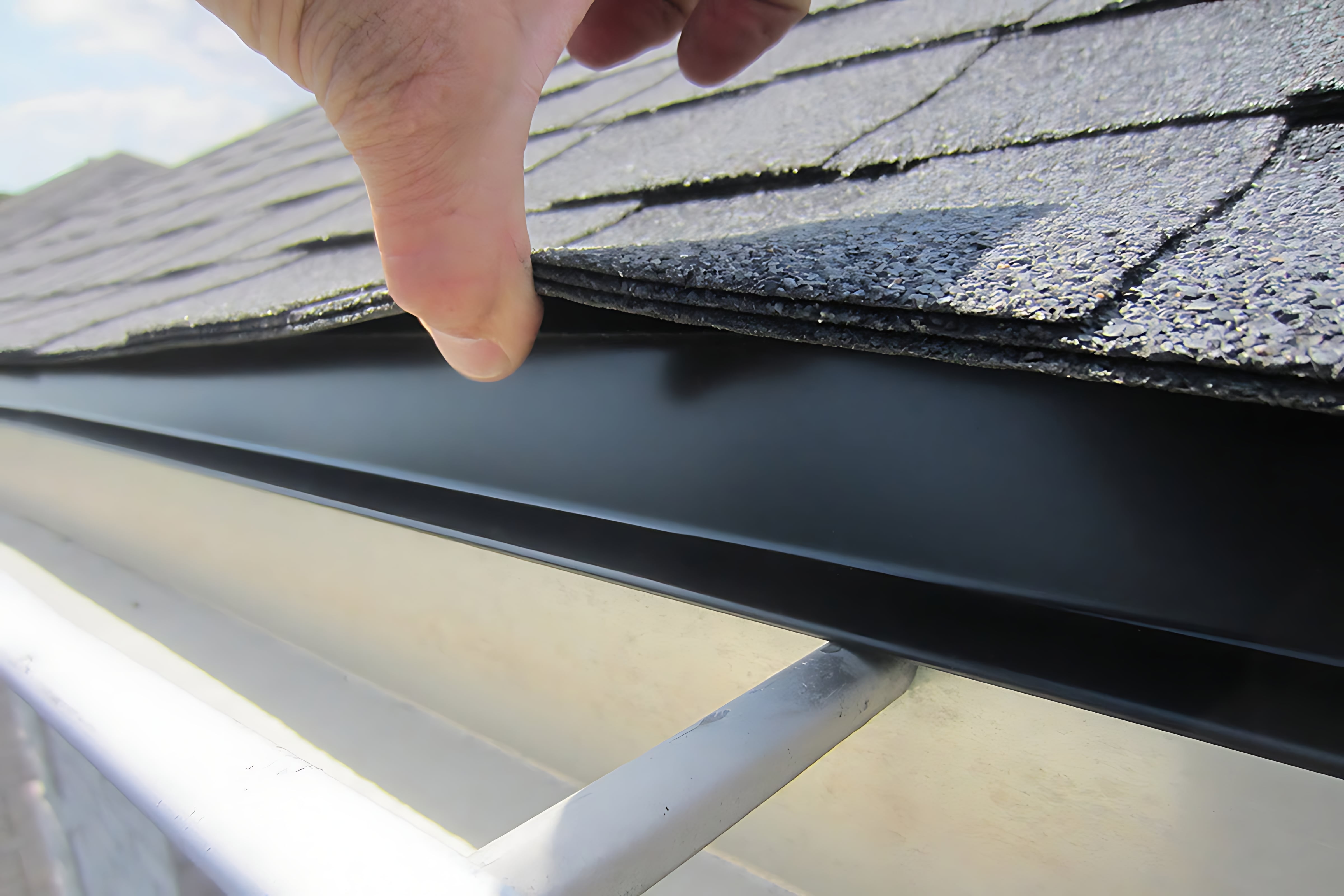
What makes industrial roofing different?
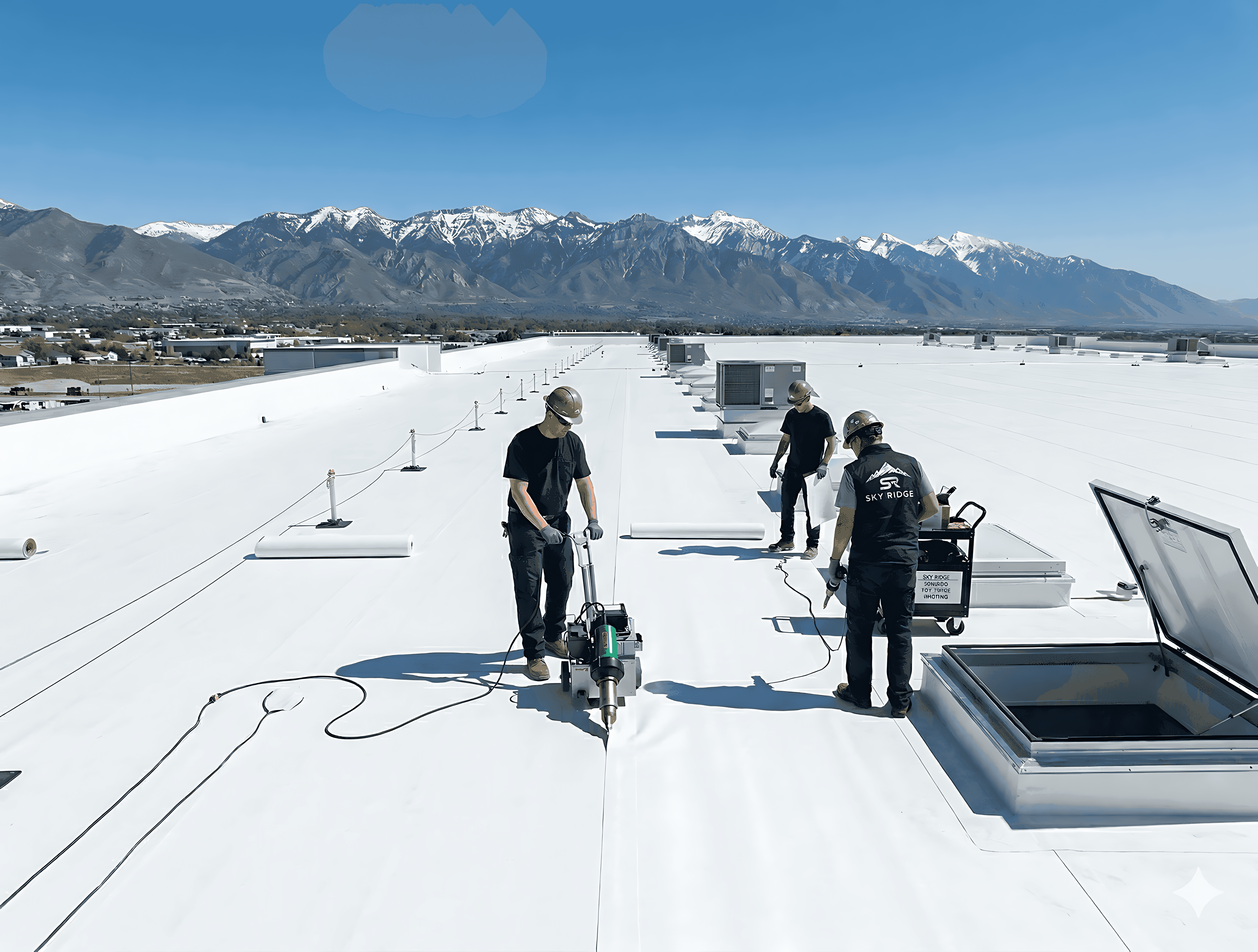
Industrial roofing in Utah is usually more operationally sensitive than ordinary commercial work. Warehouses, fabrication shops, logistics buildings, and production facilities often have tighter access rules, more rooftop equipment, more penetrations, and far less tolerance for surprise disruption. That means the roofing scope has to be built around the building’s operations, not just its square footage.
What this page should help you answer
The goal is to help you decide whether this service matches the actual roof problem, what details usually change the final scope, and which next step makes the most sense before you commit to a contractor proposal.
What to compare in real estimates
Compare material quality, flashing and ventilation details, cleanup, warranty terms, and whether the estimate clearly explains what is included versus what is only assumed.
Quick takeaways
- ●Built for warehouses, plants, and distribution centers.
- ●Roofing scopes planned around active operations and equipment density.
- ●Repair, restoration, and replacement guidance for industrial assets.
- ●Clear budgeting for low-slope membranes, coatings, and metal systems.
Industrial Roofing Hub
Access professional guidance, local details, and expert roofing services for your Utah project.
We provide direct access to roofing services hub, roofing blog and guides, Utah city service pages so you can easily explore related solutions, supporting professional guides, and clear next steps for your roofing project.
request a roofing estimate
Connect with our team for a professional scope.
request a roofing estimateRelated services
Supporting guides
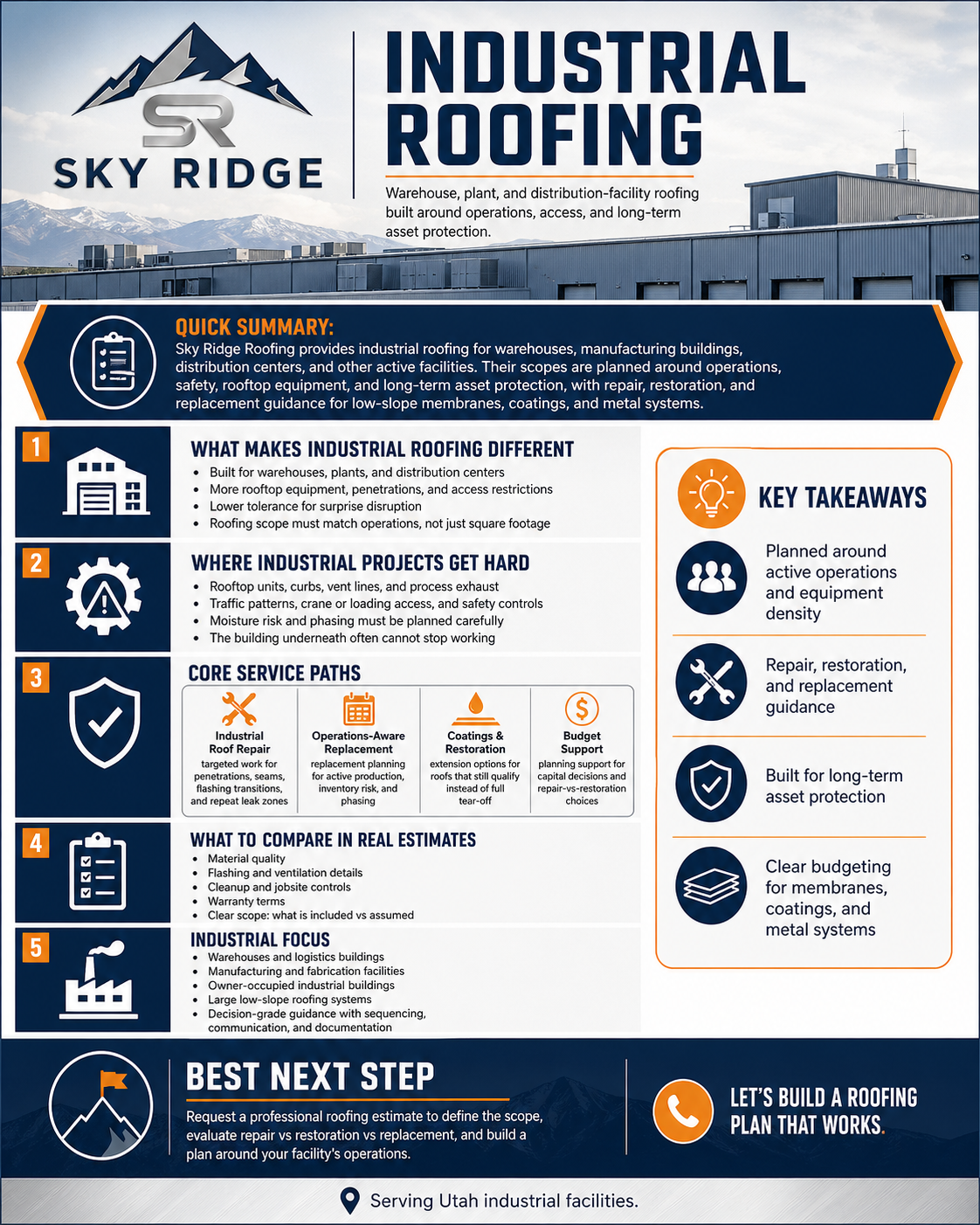
Visual Guide: Industrial Roofing Operations & Asset Protection
Where Industrial Roof Projects Get Hard
Most industrial roofs are not hard because of the membrane alone. They are hard because of rooftop units, curbs, vent lines, process exhaust, traffic patterns, crane or loading access, and the fact that the building underneath often cannot stop working.
That is why industrial roofing should be planned as an operations project as much as a roofing project. A low bid that ignores phasing, moisture risk, access limitations, or safety controls is usually not cheaper. It is just incomplete.
We focus on industrial scopes where sequencing, communication, and documentation matter: warehouse roofs, equipment-dense facilities, owner-occupied industrial buildings, and large low-slope systems that need decision-grade guidance instead of vague patch language.
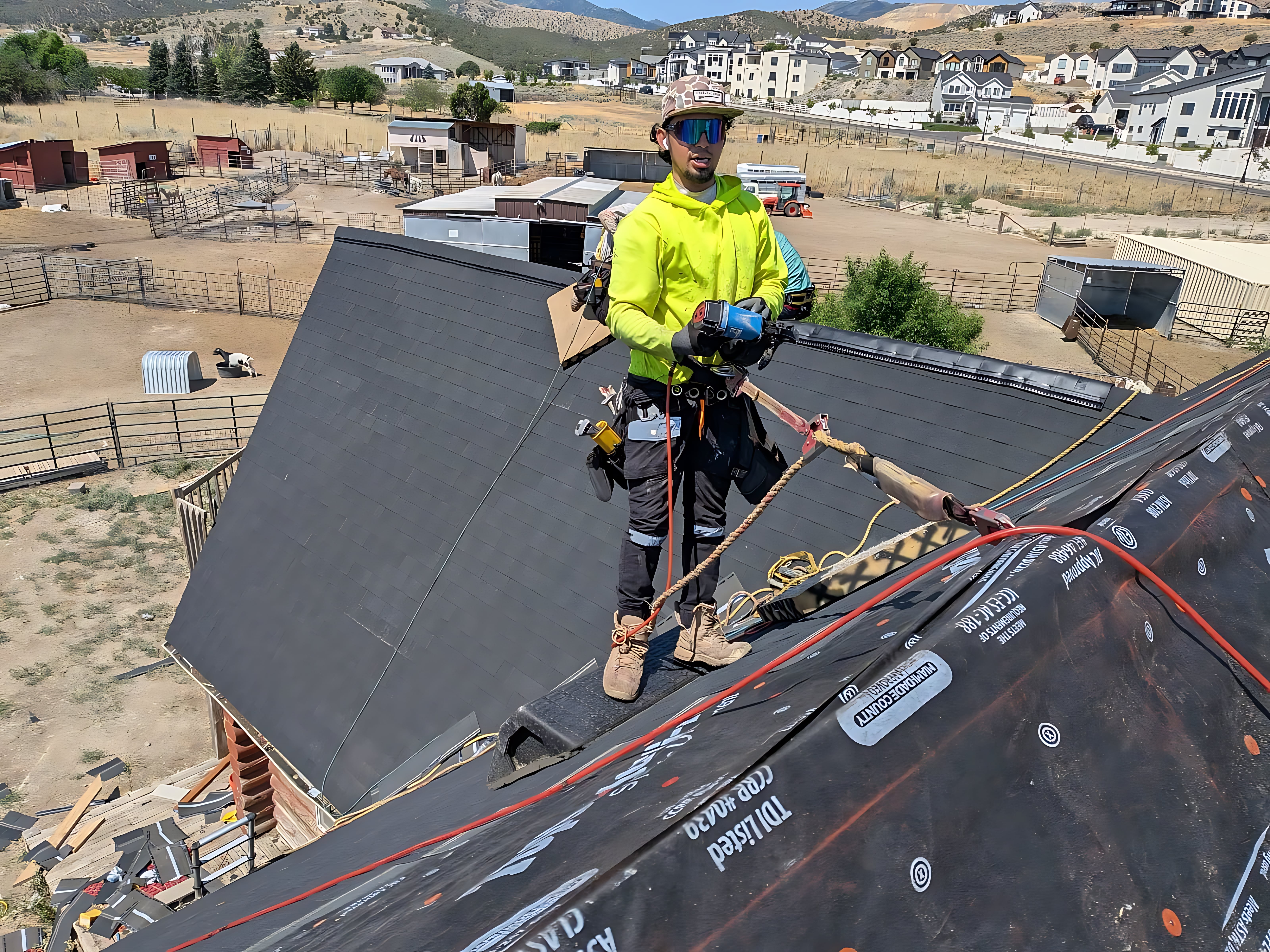
Industrial Focus
Warehouses, manufacturing buildings, distribution centers, and active facilities that cannot afford roofing chaos.
Operations-Aware Replacement
Replacement planning that accounts for active production, inventory risk, and phasing.
Industrial Roof Repair
Targeted repair work for penetrations, seams, flashing transitions, and repeat leak zones.
Coatings And Restoration
Restoration paths for roofs that still qualify for extension instead of full tear-off.
Budget Support
Planning support for capital decisions, replacement ranges, and repair-vs-restoration choices.
Need an Industrial Roofing Scope?
If the building is operationally sensitive, equipment-dense, or hard to phase, start with an inspection and a real planning conversation. For a builder-facing capability summary, use the builders packet.