
Commercial Roofing Cost Guide (2026)
By Skyridge Ricky • March 28, 2026 • 14 min read

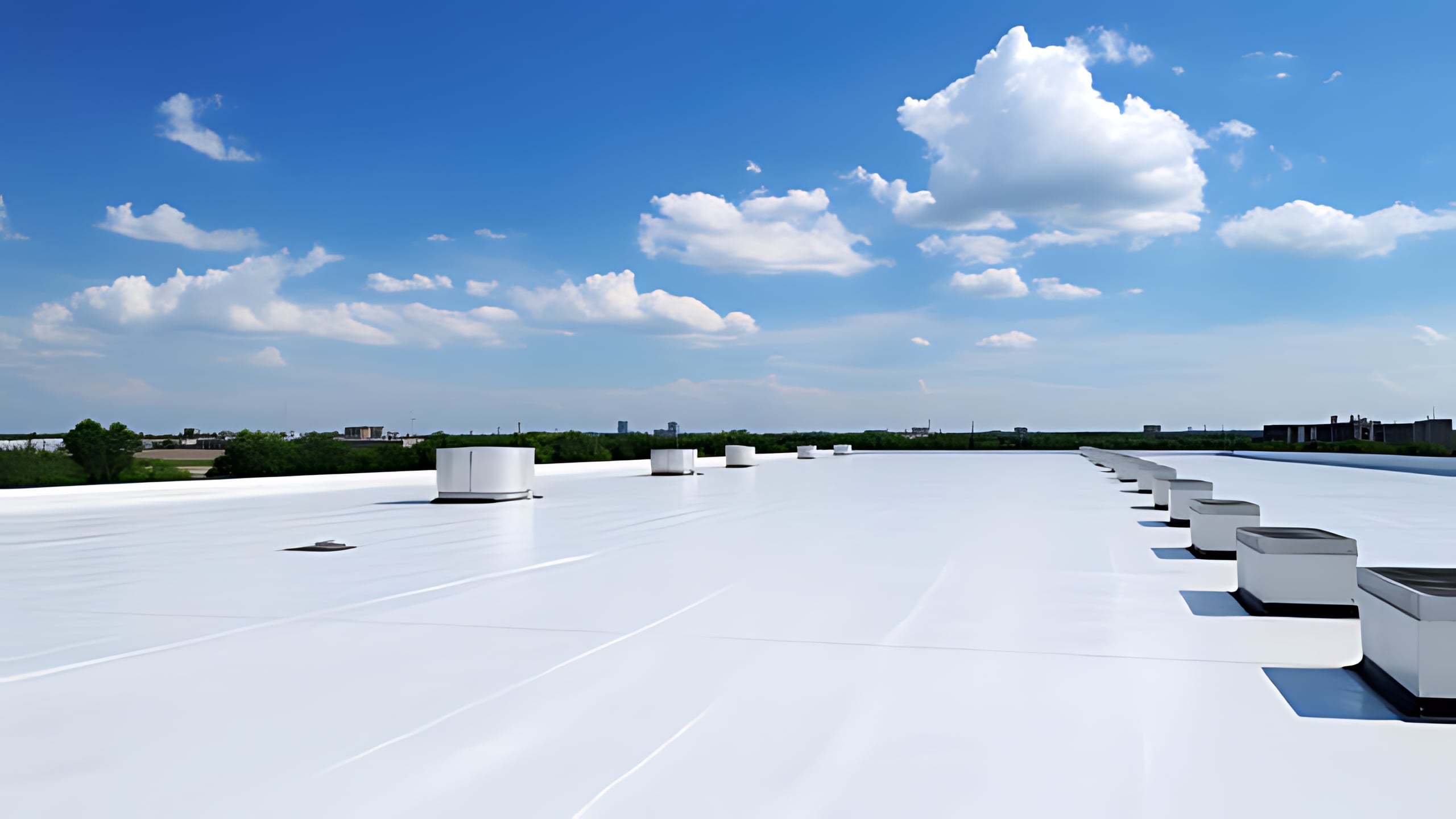
If you are trying to understand commercial roofing cost, the first thing to know is that there is no single price that answers the question well. Owners, property managers, and facilities teams often ask for a “cost per square foot” because they need a budget range before they commit to inspections or bids. That is a reasonable starting point, but it only becomes useful when you decide what kind of commercial roofing project you are actually budgeting. Maintenance, repair, restoration, recover, and full replacement all live under the broad heading of commercial roofing, but they behave like very different financial decisions.
This is why commercial roofing conversations often feel confusing. One contractor talks about TPO replacement, another talks about silicone restoration, another talks about repairs and annual maintenance, and everyone seems to be giving a different answer to the same question. In reality, they may be answering different questions. A warehouse with a repairable low-slope membrane is not in the same cost category as a multi-tenant retail center with wet insulation and drainage issues, even if the buildings are close in size. Commercial roofing cost depends on system type, roof condition, access, occupancy, warranty requirements, and how much risk the owner wants to remove in one project.
This guide is built to help you budget the topic more intelligently in 2026. We will cover the major commercial roofing cost categories, what makes costs rise or fall, how system type changes the budget, and how owners should compare repair, restoration, and replacement in a way that matches building goals instead of defaulting to the lowest first number.
Commercial Roofing Paths
This guide should keep sending readers back into the commercial service cluster so informational traffic supports bid-ready pages.
Next steps from this article should include commercial roofing services, flat roofing systems, commercial roof maintenance, property management roofing.
Request a commercial roofing bid
Turn research into a real scope review.
Request a commercial roofing bidThe Four Main Commercial Roofing Cost Buckets
The easiest way to understand commercial roofing cost is to separate it into four buckets: maintenance, repair, restoration, and replacement. Maintenance is the lowest-cost bucket and usually includes inspections, drain cleaning, seam checks, small preventative touch-ups, and documentation that helps owners extend the roof’s life. Repair is the next bucket and covers active leak correction, punctures, flashing issues, drain problems, seam failure, and localized substrate problems. These two buckets usually sit in the operating-budget conversation rather than the capital-budget conversation.
Restoration occupies the middle ground. It often includes repairs plus a coating or fluid-applied system that extends the life of an existing roof without full tear-off. Restoration is not a universal answer, but on the right roof it can preserve a sound assembly at a lower cost than replacement. Replacement is the full capital path and includes recover or tear-off scenarios, insulation upgrades, drainage correction, edge metal, warranty upgrades, and more disruptive work. It is the highest-cost bucket, but it also can deliver the highest reset in asset reliability when the roof has reached the end of economical maintenance.
Owners get into trouble when they compare numbers across these buckets as if they are interchangeable. A coating proposal may look dramatically cheaper than replacement because it is solving a different class of problem. A maintenance contract may look “expensive” only because the owner is comparing it against doing nothing, not against the emergency repair budget it may prevent later. The most important budget decision is often not the number itself. It is correctly identifying which bucket the roof belongs in right now.
Once that is clear, cost comparisons become much more useful. You stop asking for one generic commercial roofing price and start asking for the cost of the right kind of roofing action for the asset in front of you.
- Commercial roofing cost should be separated into maintenance, repair, restoration, and replacement.
- Each cost bucket solves a different building problem and should not be compared blindly.
- Maintenance and repair usually sit in operating budgets, while restoration and replacement often sit in capital planning.
- Owners make better budget decisions when they identify the roof’s true lifecycle stage first.
- The wrong cost comparison can make the best option look artificially expensive or artificially cheap.

How Roof System Type Changes Commercial Roofing Cost
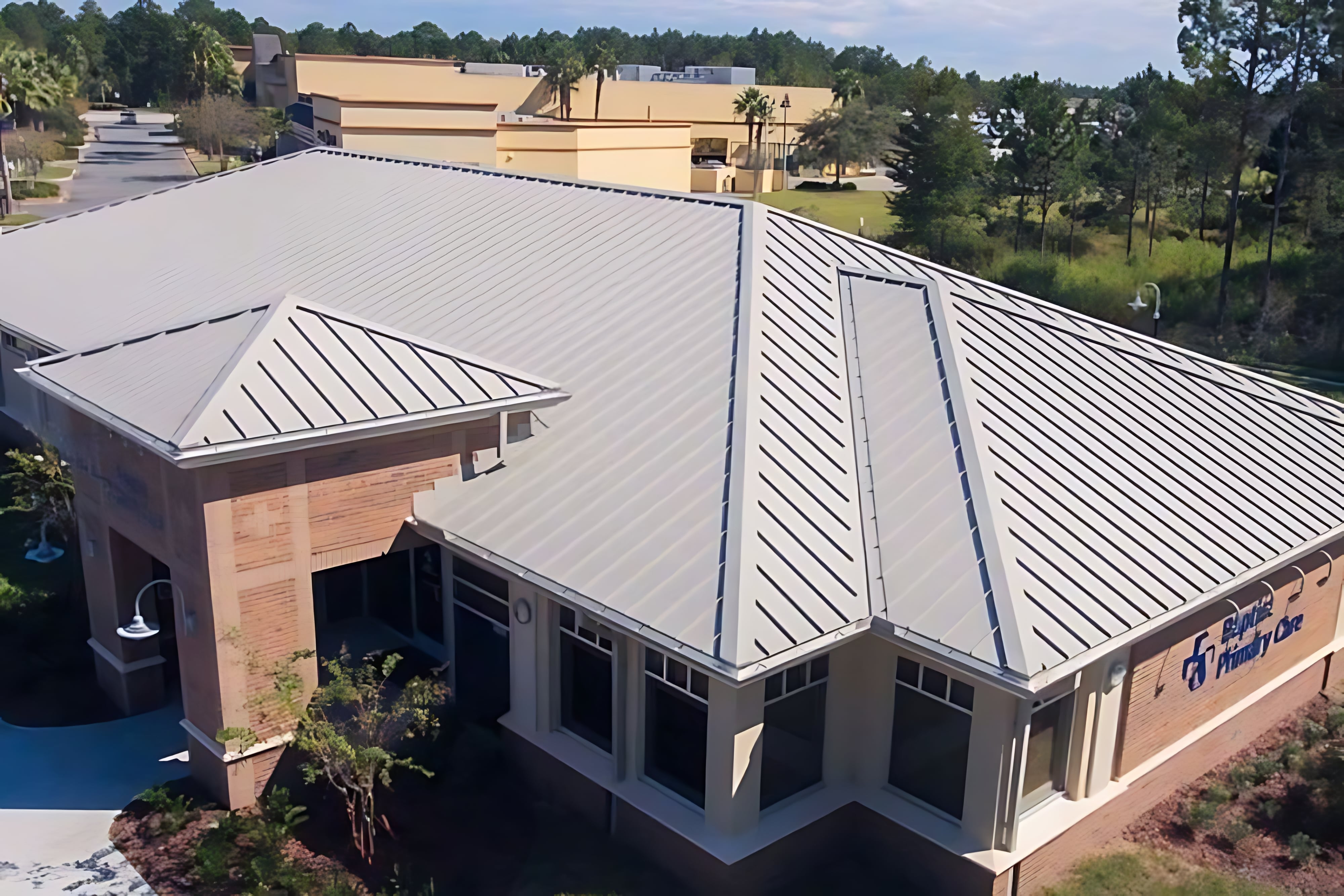
System type is one of the biggest cost variables in commercial roofing. TPO, PVC, EPDM, modified bitumen, BUR, coated metal, and standing seam all behave differently in installation, repairability, accessory detailing, and lifespan. Even within one family, thickness and attachment method change the budget. A mechanically attached TPO system does not price the same as a fully adhered TPO system. PVC for chemical or grease exposure usually carries a different price logic than a simple warehouse membrane. A commercial metal system brings another set of trim, penetration, and thermal-movement considerations entirely.
What owners often miss is that system type also changes the downstream cost conversation. Some systems are easier to repair or restore than others. Some support longer warranties with stronger manufacturer backing. Some handle ponding or rooftop contamination better. A lower initial number can still be the wrong value if the system choice does not match how the building is used. That is why a restaurant, medical facility, distribution warehouse, office, and multi-family property may all deserve different roofing strategies even when they appear similar in broad size.
Detail density matters too. Rooftop units, curbs, parapets, drains, skylights, traffic paths, and accessory penetrations all make a commercial roof more expensive, no matter what membrane you choose. The field membrane may be only part of the total budget. On some buildings, the real cost lives at the details because that is where labor slows and waterproofing risk increases. Owners who understand this are less likely to be surprised when a “simple” roof turns out to be detail-heavy once the scope is written carefully.
In short, commercial roofing cost is system-driven and detail-driven at the same time. The building’s roof type and roof complexity are both essential parts of the number.
- TPO, PVC, EPDM, modified bitumen, BUR, and commercial metal all carry different cost and performance profiles.
- Attachment method and membrane thickness can materially change budget even within the same roof family.
- Building use often determines which system is actually the best value over time.
- Detail density can drive cost as much as open-field membrane area.
- A low initial number is not always the best commercial roofing value.
Repair vs Restoration vs Replacement: Comparing the Real Dollars
Owners often ask which commercial roofing path is cheapest. The more useful question is which path buys the right amount of certainty for the building. Repair is cheapest when the problem is isolated and the rest of the roof is still structurally sound. Restoration can be the best value when the membrane is weathered but still salvageable, insulation is mostly dry, and the owner wants to extend life without full tear-off. Replacement becomes the best value when wet insulation, drainage defects, repeated leak history, or system deterioration make partial measures increasingly inefficient.
The trap is focusing only on first cost. A cheaper repair or coating may still be the wrong value if it leaves the owner with frequent disruptions, weaker warranty confidence, or a roof that cannot support the building’s hold period. A full replacement may be the smarter financial move if the roof has already crossed into heavy maintenance, even if the upfront cost is much higher. The same logic can work in reverse: a full replacement may be wasteful if restoration can safely buy the owner ten more years and the building strategy does not justify immediate capital spend.
This is why commercial roofing budgets work best when they include a lifecycle lens. Ask how much life the option is expected to buy, how much operational risk remains, how much disruption the building can tolerate, and whether the scope aligns with ownership plans. A coating that saves capital now may be perfect for a near-term sale. A full replacement may be the right answer for a long-term hold where unplanned leaks are more expensive than capital spend. Good commercial contractors help owners compare these outcomes instead of forcing every building into one service line.
When the budget is framed this way, cost becomes more than a number. It becomes a decision about certainty, disruption, timing, and lifecycle value.
- Repair is strongest when the failure is isolated and the surrounding roof still has life.
- Restoration is strongest when the roof can still be preserved structurally and moisture is limited.
- Replacement is strongest when systemic deterioration has made partial measures inefficient.
- First cost should be compared against ownership horizon, disruption risk, and remaining service life.
- The best commercial roofing choice is the one that matches the building’s asset strategy.
How to Use Commercial Roofing Cost Data Before You Request Bids
Commercial roofing cost data is most useful before procurement, not after you already have three wildly different proposals in hand. Start by deciding which cost bucket your roof likely belongs in: maintenance, repair, restoration, or replacement. Then gather as much building context as you can. Roof age, known leak history, prior repairs, occupancy sensitivity, access limits, and any existing inspection reports all make the next conversation more productive. The more clearly you understand the asset, the easier it becomes to spot whether a contractor is pricing the real building or just offering a generic square-foot guess.
It also helps to budget using ranges instead of one number. Create low, mid, and high scenarios based on likely roof condition and project complexity. If the roof may need tear-off, insulation replacement, or drainage correction, do not build the budget around the optimistic case and hope for the best. It is better to carry a wider planning range and then narrow it as inspection evidence improves. This is especially true for larger portfolios or owner-operator businesses where roofing capital planning affects more than one fiscal decision.
When bids arrive, use your range to read the assumptions, not just the totals. Did one contractor assume restoration while others assumed replacement? Did one ignore edge metal or drainage? Did another include a stronger warranty path? A good budget makes those differences visible before the contract stage instead of after the first change order. That clarity is where commercial roofing cost data becomes useful rather than theoretical.
The goal is not perfect prediction. The goal is informed comparison. Owners who treat budgeting as a way to understand scope drivers almost always make better commercial roofing decisions than owners who use cost data only to negotiate a lower number.
- Determine the correct commercial roofing cost bucket before asking for bids.
- Gather roof age, leak history, access conditions, and inspection data to improve budget realism.
- Use low, mid, and high scenarios instead of one optimistic number.
- Read contractor assumptions against your budget range to understand proposal differences.
- Commercial roofing cost data is most powerful when it improves comparison, not just negotiation.
How Smarter Commercial Roofing Budgets Get Built
The best commercial roofing budgets are built in stages instead of in a single guess. Stage one is broad categorization: maintenance, repair, restoration, or replacement. Stage two is building context: roof age, membrane type, leak history, occupancy sensitivity, access constraints, and whether there are known drainage or insulation issues. Stage three is risk allowance: what hidden conditions are reasonably likely, what code or warranty upgrades might appear, and what level of contingency should be carried so the project does not become unstable the moment work begins. Owners who budget this way usually feel far less blindsided when formal proposals arrive.
It also helps to decide what the budget is meant to do. Is it a capital placeholder for next year, a same-quarter project approval number, or a decision-support range to evaluate whether restoration is still viable? The answer changes how much conservatism belongs in the number. Capital placeholders may use broader bands. Immediate procurement budgets should be more tightly tied to actual roof evidence. Both are valid, but they serve different management needs and should not be treated as if they are the same level of precision.
Portfolio owners and multi-site operators can benefit even more from this staged approach because one bad roofing assumption repeated across several assets becomes a large financial planning problem fast. Better budget structure helps leadership compare roofs by lifecycle stage instead of by whoever shouted the lowest square-foot number most confidently. It also improves the timing of inspections, allowing the organization to gather enough evidence before emergency failure forces the project into a far more expensive path.
In that sense, commercial roofing cost is not just a construction issue. It is an asset-planning issue. The owners who budget well are usually the owners who understand that roofing dollars behave better when they are spent with context, timing, and honest scope logic behind them.
- The strongest commercial roofing budgets are built in stages rather than around one rough number.
- Budget structure should match whether the number is for planning, approval, or immediate procurement.
- Risk allowances are a normal part of sound commercial roofing budgeting.
- Portfolio owners benefit from comparing roofs by lifecycle stage instead of generic square-foot averages.
- Roofing cost planning is fundamentally part of asset planning, not just contractor procurement.
Wrapping it up
Commercial roofing cost is not one price and never has been. It is a set of decisions about maintenance, repair, restoration, or replacement shaped by roof system, building use, hidden conditions, and ownership goals. Once owners understand those categories and the variables behind them, the budget conversation becomes much more actionable.
That is where better roofing decisions start. Not with a random average pulled from the internet, but with a clearer understanding of what the building needs, what level of certainty the owner wants, and which roofing path actually fits the asset. When those things line up, the numbers start to make a lot more sense, and the owner is much less likely to chase a low bid that solves the wrong problem or a capital plan that is aimed at the wrong roof strategy altogether for the building’s real lifecycle stage.
That clarity is what turns commercial roofing from a recurring financial surprise into a more manageable asset-planning decision for owners, managers, and anyone responsible for the building’s long-term performance.
Questions this guide answers
Quick answers tied to commercial roofing cost.
Commercial Roofing Hub
Access specialized asset protection for Utah commercial properties, flat roofing systems, and multi-family developments.
Commercial Services
Utah Flat Roofing Hub
Specialized installation and repair of TPO, EPDM, and PVC membrane systems for Utah residential and commercial properties.